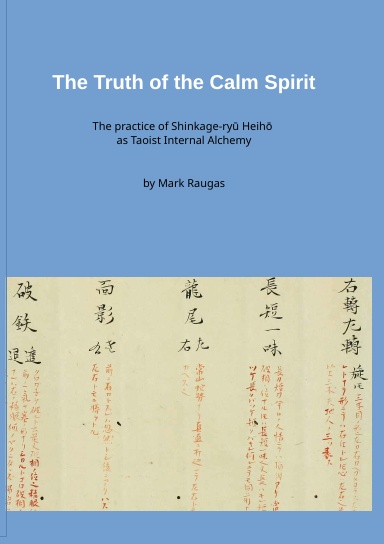
The Truth of the Calm Spirit (opens in a new tab), Inner Dharma, 2025. 335 pages. An examination of the practice of Jikishinkage-ryū kenjutsu through the lens of internal martial arts.
This work contains my research and notes on Kashima-shinden Jikishinkage-ryū (opens in a new tab), including a summary of its early history, including the travels of Ogasawara Genshinsai to Ming China, its kata, and descriptions of its philosophical content drawn from available Japanese language scholarship and library holdings. Its title is inspired from an earlier name of the art used by Ogasawara Genshinsai: Shin (True) no Shin (Spirit) In (Calm/Still/Yin) Heihō.
Foundations · Kata · Advanced Matters · Further Kata · Conclusion
Foundations
Introduction
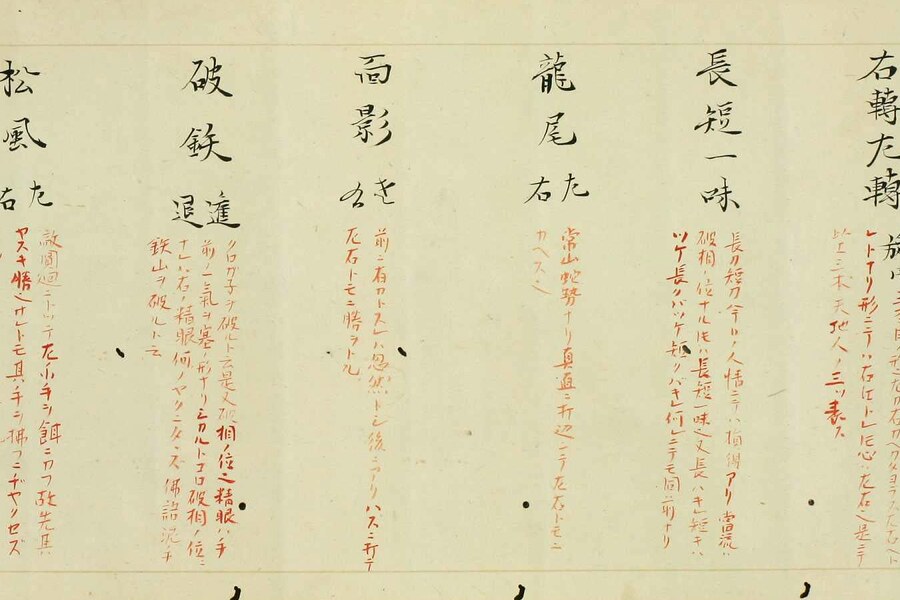
Kashima Shinden Jikishinkage-ryū is one of the strongest surviving forms of medieval Japanese kenjutsu. One should ask why, and this work is an effort to provide an answer to that question.
Lineage
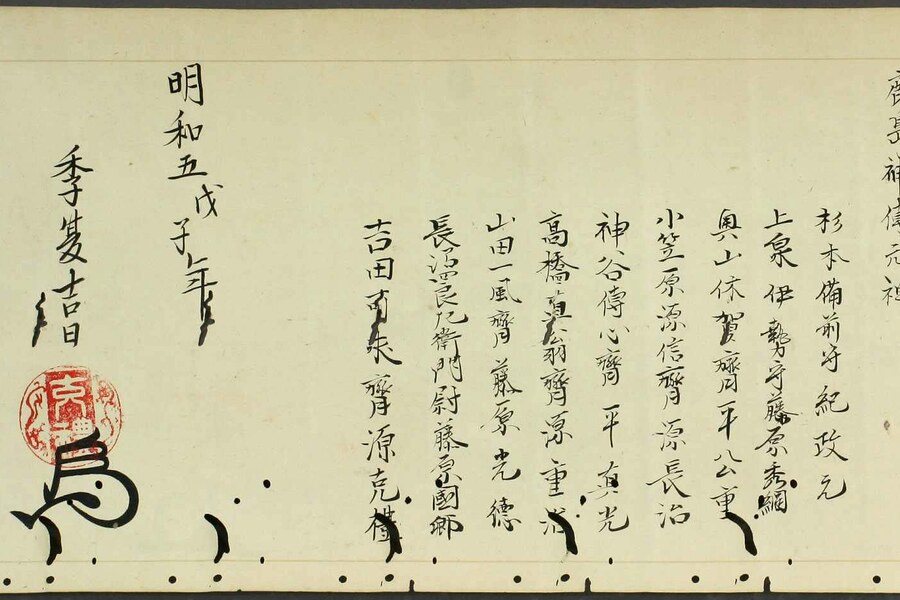
The lineage of the school set out briefly, from its own account of itself to the end of the Edo period in 1868.
Technical Overview
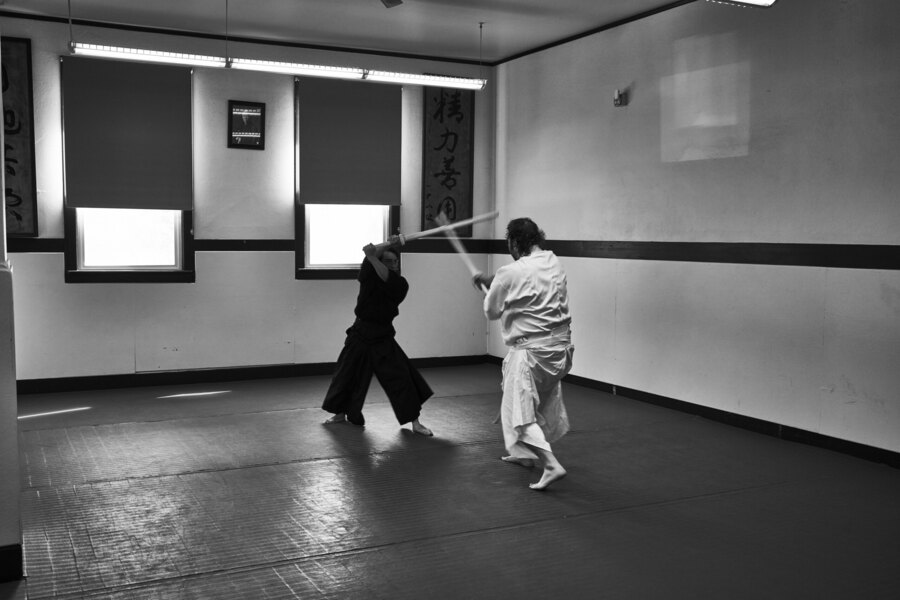
Niō-dachi, a-un breathing, walking and suburi: the ritual posture and the foundational practices on which the kata rest.
Kata
Hōjō
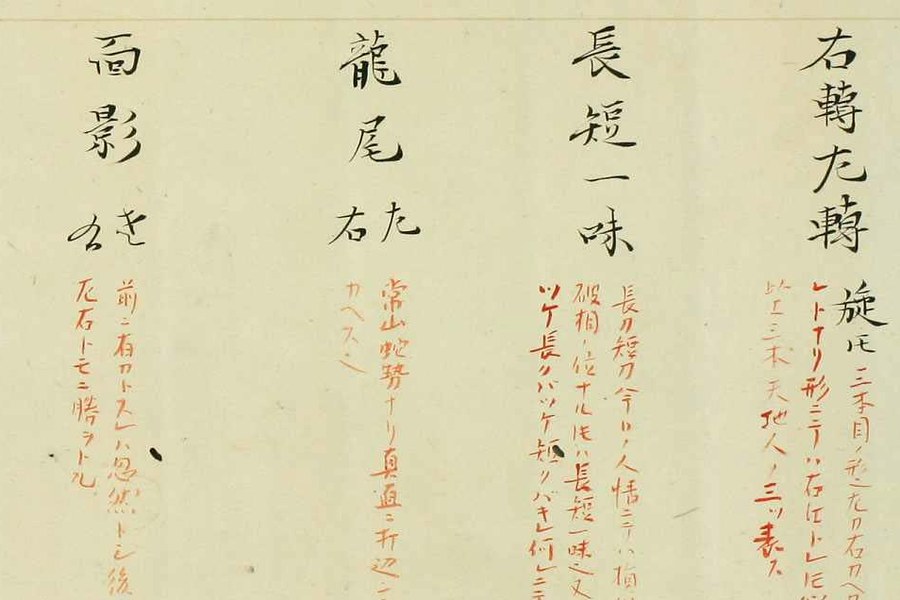
The four Hōjō, the foundational forms of the school, read against the densho.
Tō no Kata
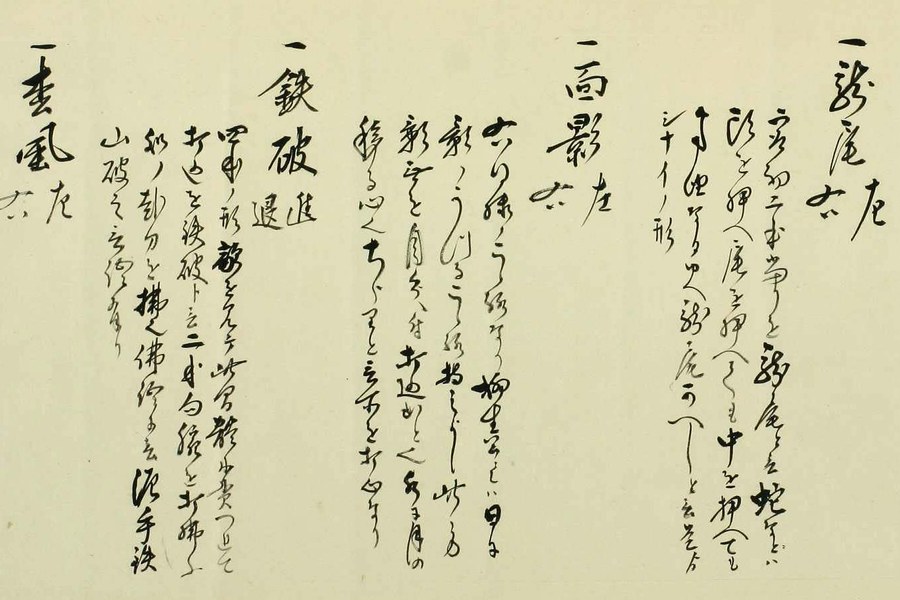
Tō no Kata, forms of containment or concealment: the study of tactics that encircle or surround an enemy.
Advanced Matters
Koto: Advanced Matters
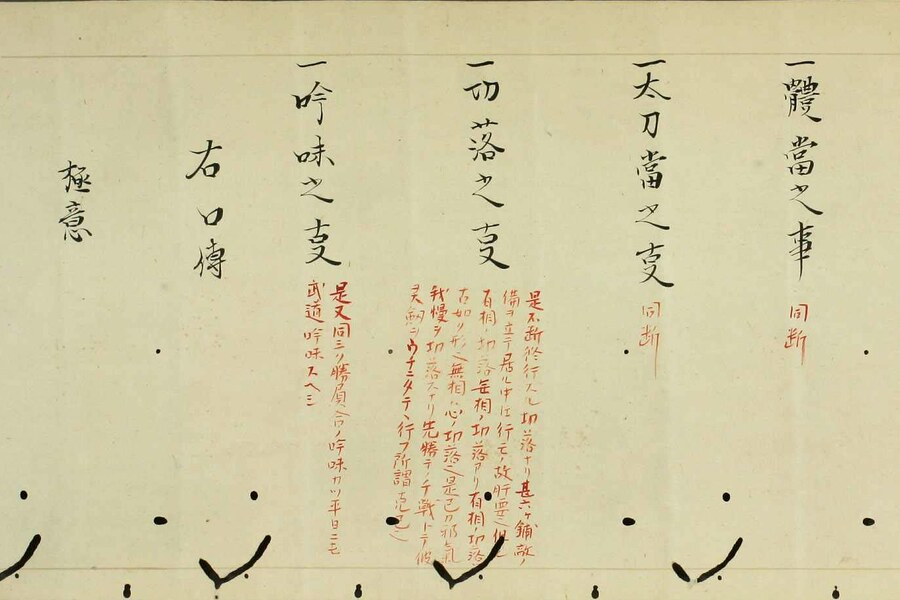
The koto, the important matters the mokuroku enumerates and briefly comments on after the kata.
Gokui
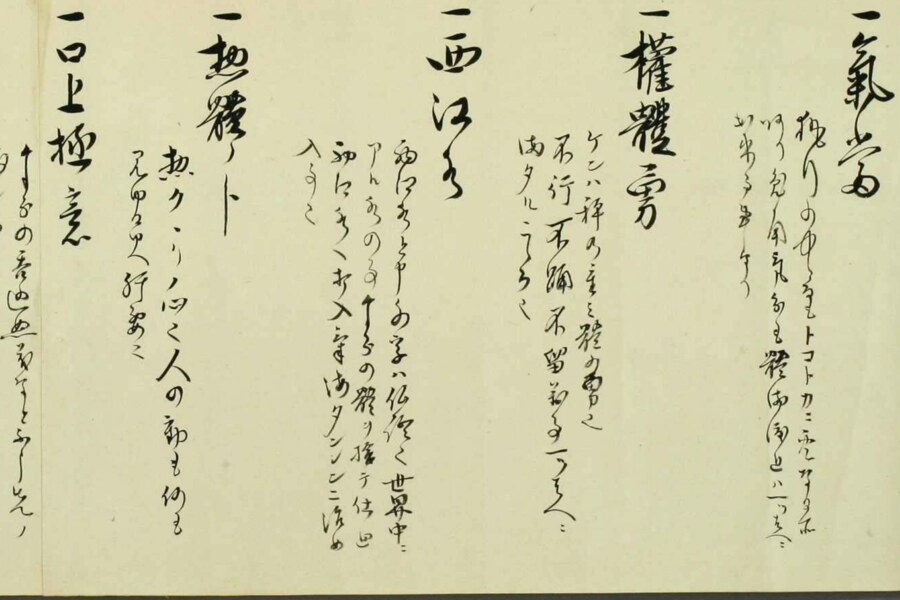
The gokui, the inner essence of the art: driving principles held in confidence, meant to be discovered as practice deepens.
Marubashi
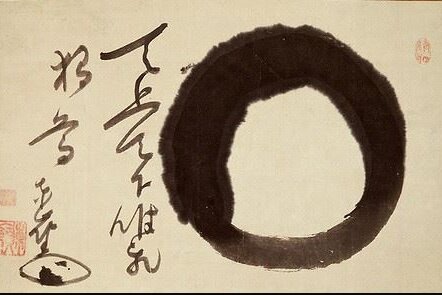
Marubashi, the round log bridge, is the central theme in Jikishinkage-ryū.
Ryū no Maki
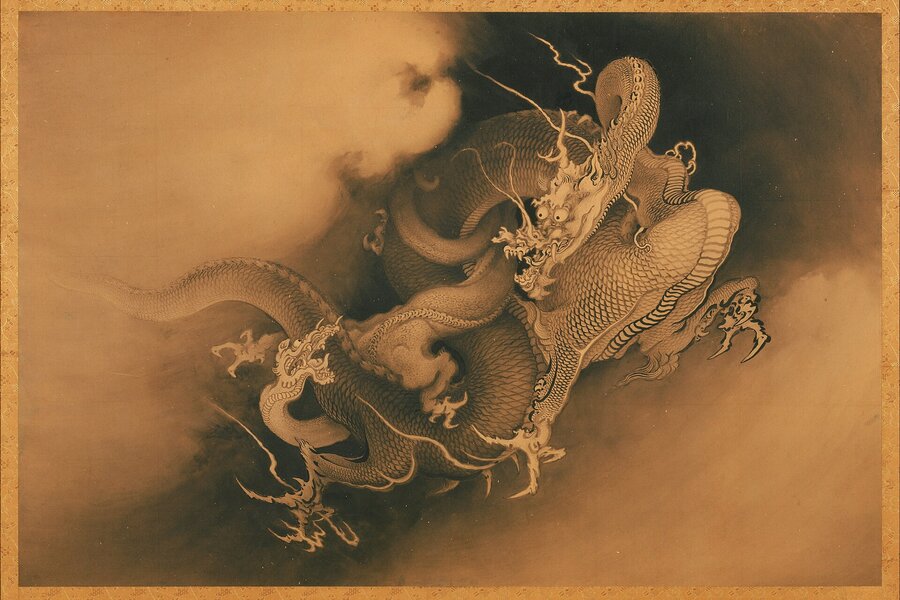
The Ryū no Maki, the dragon scroll, one of the texts of the Jikishinkage-ryū kirigami, the Heihō kyūri no maki.
Further Kata
Kodachi
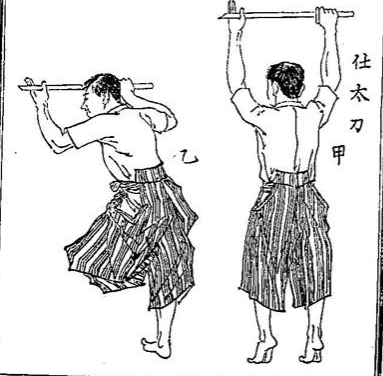
Formal practice of the short sword, kodachi: the cultivation of resolve, internal power and tactical facility at close-range armed grappling.
Habiki

What to do with the strength, stability and power developed through sustained kodachi practice.
Older Kata

The older Shinkage-ryū sets, Enpi, Kuka and Tengu-shō, as Ogasawara Genshinsai’s line kept them.
Conclusion
In Conclusion

On the sources of this work: historical records annotated by advanced practitioners and held in Japanese libraries, and twentieth-century Japanese scholarship.