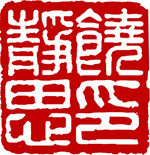
The Seieitai (精鋭隊) was a guard corps of Tokugawa direct retainers raised late in Keiō 3 (1867), after the restoration of authority, to protect the retired Tokugawa Yoshinobu (opens in a new tab).
Formed in the circle around Takahashi Deishū (opens in a new tab) (高橋泥舟) and Yamaoka Tetsutarō, it was commanded by Chūjō Kinnosuke, reckoned a first-rank swordsman, and counted Matsuoka Yorozu among its officers.
When Yoshinobu withdrew to Mito and the Tokugawa house was then removed to Suruga, the corps escorted him aboard the warship Banryū-maru (蟠龍丸) from the Chōshi coast to Shimizu and on to the Hōdaiin (宝台院); once his safety was secured near Kunō it was renamed the Shinbangumi (新番組) and attached to Tokugawa Iesato’s Shizuoka domain.
Accounts differ on the nominal headship — variously naming Chūjō Kinnosuke, Yamaoka Tesshū, or Takahashi Deishū, with Matsuoka Yorozu leading a detachment of some fifty men — a spread that most likely reflects overlapping roles of overall organizer, field head, and detachment leaders rather than a single contradiction.
It belongs to a tier the Keiō reforms deliberately created. When Yoshinobu’s reforms from 1866 dissolved or shrank the old-style organizations such as the Ōban, the ablest of the surplus personnel were folded into the army as units of praetorian character (親衛隊的な性格; elite guard character): the Okuzume-jūtai (奥詰銃隊) and the Yūgekitai (遊撃隊, the successor to the okuzume inner guard).
The Seieitai is of that same family: a guard close to the shōgun’s person, formed from the best of the dissolved guards plus the old Kōbusho academy’s sword and spear masters. The academy was effectively the recruiting pool for this guard tier, which is why the same handful of names keeps reappearing in the units’ rosters.
After Tokugawa Yoshinobu (opens in a new tab)’s Taisei Hōkan (大政奉還, return of governing authority to the throne) in Keiō 3 (1867), Katsu Kaishū and others, fearing for Yoshinobu’s safety, organized the Seieitai to guard him, and Chūjō Kinnosuke Kageaki was selected as its head as the foremost swordsman of the day. It was a hand-picked unit of skilled bakufu retainers.
Chūjō Kinnosuke Kageaki (中條金之助景昭, 1827–1896) was the son of a koshōgumi hatamoto, trained in Yamaga-ryū, Shingyōtō-ryū and Hokushin Ittō-ryū, served the 13th shōgun Tokugawa Iesada from Kaei 7 (1854) as a household martial-arts attendant (kenjutsu/jūjutsu sewa-kokoroe).1
He became a kenjutsu kyōjukata at the Kōbusho after it opened, associated with its Shingyōtō-ryū (心形刀流) contingent. At that time at the Kōbusho, the 9th-generation Iba Hidetoshi was kenjutsu shihan-yaku, and from this school Mitsuhashi Torazō, Chūjō Kinnosuke (Kageaki), and Minato Shinpachirō became kenjutsu kyōjukata, forming a major bloc there.2
In Bunkyū 2 (1862) he became a superintendent of the Rōshigumi alongside Yamaoka Tesshū, and afterward held oversight posts over the Shinchōgumi.
Chūjō studied Totsuka-ha Yōshin-ryū under Totsuka Hikosuke. That shared Totsuka/Yōshin-ryū lineage is a plausible reason Matsuoka ended up assigned under Chūjō in the Seieitai in 1867, beyond their both being bakushin swordsmen.
When Tokugawa Yoshinobu withdrew from Edo, his escort to Mito in the fourth month of 1868 was provided by Seieitai and Yūgekitai men, among them Chūjō Kageaki and Takahashi Deishū.3 The unit then accompanied the Tokugawa house to Sunpu (駿府, modern Shizuoka).
Chūjō led the Seieitai — later the Shinbangumi (新番組) — and their families, some two hundred people, to Sunpu; one account puts the escorting “bakufu elite” at around three hundred.
Disbanded as a military body when Iesato became domain governor, the corps turned in the seventh month of Meiji 2 (1869), with his leave, to reclaiming the Makinohara (牧之原) plateau south of Kanaya as the “Kanayahara Reclamation Party” (金谷開墾方).
Under the job-ranked allotment recorded in the Shizuoka-ken Chagyō-shi (静岡県茶業史), Chūjō Kageaki held the post of reclamation head (開墾方頭) with 76 chōbu and Ōkusa Takashige (大草高重) the deputy post (開墾方並) with 65 chōbu, against a settler average near 4.8 chōbu; roughly 250 Shinbangumi households — with about 85 Shōgitai remnants — took up some 1,425 chōbu (5,000 hectares), planting the tea for which the plateau became known. Matsuoka Yorozu, by then the domain’s suiri-rotei-gakari (水利路程掛; water-and-road commissioner), supported the venture and is named among its backers alongside Katsu Kaishū, Yamaoka Tetsutarō, and Ōkubo Toshimichi. The individual settlers’ plots and names are preserved in the Makinohara shizoku kaikonchi ezumen (牧之原士族開墾地絵図面). 4
End Notes
-
On Chūjō’s biography: “中條金之助,” Japanese Wikipedia — core account of 1827–1896, training in Yamaga-ryū / Shingyōtō-ryū / Hokushin Ittō-ryū, service to the 13th shōgun Iesada from 1854, appointment as Kōbusho kenjutsu kyōjukata and jūjutsu randori sewa-kokoroe, the 1862 move to the Rōshigumi with Yamaoka Tesshū and later Shinchōgumi oversight, and the Totsuka-ha Yōshin-ryū study under Totsuka Hikosuke (https://ja.wikipedia.org/wiki/中條金之助); and the Shimada City Tourism Association (opens in a new tab), “中條金之助景昭の像,” a narrative sketch tying together the Iesada service, the Kōbusho post, selection as head of the Seieitai, and the Makinohara venture. ↩
-
“心形刀流,” Japanese Wikipedia — situates him among the Shingyōtō-ryū Kōbusho instructors (with Mitsuhashi Torazō and Minato Shinpachirō, under Iba Hidetoshi as shihan-yaku). https://ja.wikipedia.org/wiki/心形刀流 ↩
-
“徳川慶喜,” Japanese Wikipedia — the 1868 escort of Yoshinobu to Mito by Seieitai and Yūgekitai men (Chūjō Kageaki, Takahashi Deishū). https://ja.wikipedia.org/wiki/徳川慶喜 ↩
-
Shizuoka Prefecture (opens in a new tab), “牧之原開拓” — the bakushin guard corps escorting Yoshinobu to Sunpu and the Meiji 2 (1869) Makinohara reclamation under Chūjō Kageaki; and the Ichikawaen Tea Museum (opens in a new tab), “徳川家と縁の深いお茶の国,” on the Seieitai’s renaming as the Shinbangumi and the corps’ transition into the Makinohara tea pioneers. ↩