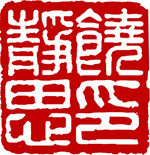
Chūjō Kinnosuke [中條金之助]
☰ Introduction
Chūjō Kinnosuke (中條金之助; imina Kageaki 景昭, 1827–1896) was a bannerman (旗本), one of the few Kōbusho men to hold appointments in two disciplines — kenjutsu kyōju-kata and jūjutsu randori sewa-kokoroe — and, after the Restoration, head of the Seieitai (精鋭隊) and leader of the Makinohara (牧之原) tea-plantation reclamation. He moved through the same bakumatsu circles as Matsuoka Yorozu: the two served together as rōshigumi torishimari and later worked side by side as Makinohara pioneers.
A note on the reading: Japanese reference works (Wikipedia, Weblio) gloss the surname ちゅうじょう (Chūjō), whereas なかじょう (Nakajō) is the more common modern reading of 中條 and the form used across this site. The point is worth settling against a primary genealogy or the Shimada monument before print.
☰ House and Early Training
He was born in the sixth month of Bunsei 10 (1827), son of Chūjō Ichiemon Kagetoshi (中條市右衛門景利) of the o-koshōgumi (御小姓組) — a direct bannerman house. In his youth he took up Yamaga-ryū military science (山鹿流兵学) under Kubota Sugane (窪田清音) — the same Kubota who taught heigaku at the Kōbusho — and swordsmanship in Shingyōtō-ryū (心形刀流) and Hokushin Ittō-ryū (北辰一刀流). A telling detail of that discipleship: Chūjō coveted a blade the swordsmith Minamoto Kiyomaro (源清麿) had presented to Kubota, and Kubota ceded it to him.
Beyond the sword he was accomplished in jūjutsu, studying under Totsuka Hikosuke — later tōdori of the Kōbusho jūjutsu instructors — and earning a mokuroku (目録) in Totsuka-ha Yōshin-ryū (戸塚派楊心流). His name is carved first among the many mokuroku-holders on the Totsuka-ha Yōshin-ryū disciple stele at Injū-ji (胤重寺) in Chiba.
☰ Shogunal Service and the Kōbusho
From Kaei 7 (1854) he served the thirteenth shōgun Iesada, instructing the household’s samurai and holding posts including kenjutsu and jūjutsu sewa-kokoroe. When the Kōbusho was founded he was appointed both kenjutsu kyōju-kata (剣術教授方) and jūjutsu randori sewa-kokoroe (柔術乱取世話心得), bridging the sword and jūjutsu cadres.
In the rōshigumi affair he served as a torishimari alongside his close friend Yamaoka Tetsutarō and Matsuoka Yorozu. When Matsudaira Chikaranosuke (松平主税助; imina Tadatoshi 忠敏) — himself a Kōbusho kenjutsu instructor of the Ryūgō-ryū — abruptly resigned the senior superintendency, Chūjō was named to succeed him as rōshi-toriatsukai (浪士取扱) on 1863/1/26, and later moved to oversight of the Shinchōgumi.
☰ Restoration and Makinohara
After the 1867 restoration of authority the Seieitai (精鋭隊) was raised to guard the retired Yoshinobu; Chūjō, reckoned a first-rank swordsman, was made its head, with Yamaoka among its officers. He meant to die by his own hand inside Edo castle at the surrender but was dissuaded by Katsu Kaishū; in the fourth month of Keiō 4 he went down with Yoshinobu to Mito, then followed the Tokugawa house to Suruga with some two hundred Seieitai men and their families.
In the seventh month of Meiji 2 (1869), with Tokugawa Iesato’s leave, he and Ōkusa Takashige (大草高重) led about 250 former-bannerman households onto the Makinohara plateau south of Kanaya as the “Kanayahara Reclamation Party” (金谷原開墾方), turning roughly 1,425 chōbu of waste land to tea — a crop chosen partly on the counsel of Yamaoka and Katsu and aimed at the new government’s export trade. The planted area grew from about 200 chōbu in 1871 to 500 by
- Offered the governorship of Kanagawa in 1874, he declined — saying he would sooner “become fertilizer for the tea fields” (茶畑の肥やしになる) — the overture reportedly carried to him by Yamaoka, by then a court chamberlain. He died on 1896/1/19, aged 77, and was buried at Shugetsu-in (種月院), with Katsu Kaishū as chairman of his funeral. Shimada City raised a statue and commemorative stele to him in 1988.
☰ References
The lineage and career outline, the Kubota Sugane discipleship, and the Kiyomaro blade follow the Japanese encyclopedic entries (中條金之助, Wikipedia / Weblio). The rōshigumi succession — Matsudaira Chikaranosuke’s resignation and Chūjō’s appointment as rōshi-toriatsukai on 1863/1/26, per the Fujiokaya Nikki — is set out in Odaka Teruyuki’s study of the rōshigumi’s formation (odknobu.hateblo.jp, 2021). The Kōbusho appointment is corroborated by the Tokyo city history (東京市史外編, 講武所). The two web sources are careful but self-published or encyclopedic, and are used as secondary synthesis rather than independent corroboration.