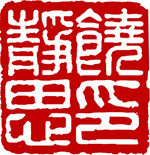
Matsuoka Yorozu (松岡万, 1838–1891) — tsūshō Shōichirō (昌一郎), gō Kodō (古道) — was a shogunal retainer (幕臣), a member of Kiyokawa Hachirō’s Torao-no-kai (虎尾の会), one of the rōshigumi (浪士組) torishimari, and later commander of the Seieitai (精鋭隊).
Yorozu is a different person than the jūjutsu teacher Matsuoka Katsunosuke, with whom he is often been conflated: the “松岡昌一郎” recorded in the Kōbusho fascicle of the Tokyo city history as Kōbusho-bugyō shihai (講武所奉行支配) is this man, not Katsunosuke.
The reading of his given name is unsettled — the sources closest to him (Ogura Tetsuki’s Ore no Shishō 『おれの師匠』 and Ōhashi Bishō’s memoir) give Yorozu (よろず), while regional gazetteers offer Tsumoru (つもる) and Mutsumi (むつみ) — but Yorozu is followed here.
House and Status
This line of Matsuoka was a hereditary bannerman house of falconers (鷹匠; takajō), a Fujiwara branch recorded in the Kansei Chōshū Shokafu (寛政重修諸家譜). The line entered shogunal service when Matsuoka Takamichi (松岡孝道), a Kishū-han retainer, was taken on as a takajō in Kyōhō 2 (1717) and rose to kumigashira; the house held a 100-hyō, three-man stipend and repeatedly used the graphs 万 and 古 in its names. Yorozu was born in the twelfth month of Tenpō 9 (1838) in Edo, son of the takajō Matsuoka Daisuke (松岡大助); whether he himself succeeded to the falconer’s post is not certain.
Martial Training
Every account agrees Matsuoka was an accomplished swordsman — described as “of hard temperament and much accomplished in the way of the sword” (性剛にして頗る 剣道に達していた) — but the line he trained in is not firmly established, and the sources disagree.
- A Shinkage-ryū (新陰流) mokuroku survives among his relics at the Matsuoka shrine, implying study in a line under that name, which branch is unclear.
- Tsukamoto Shōichi’s Makinohara Zanshō (牧之原残照) calls him “a disciple of Odani Seiichirō, Jikishinkage-ryū” (男谷精一郎の門弟・直心影流), but cites no source;
- Fujishima Ikko’s Bakumatsu Kenkaku Monogatari (幕末剣客物語) makes him a near-menkyo pupil of Kondō Yanosuke (近藤弥之助) of Chūya-ha Ittō-ryū (忠也派一刀流), himself a Kōbusho kenjutsu kyōju-kata from 1856;
- Ogura’s Ore no Shishō (おれの師匠) has him taking up Hokushin Ittō-ryū (北辰一刀流) at Yamaoka Tetsutarō’s dōjō after the two became associated;
- Ezaki Shunpei’s Nihon Kengō Retsuden (日本剣豪列伝) says he served no single teacher and styled himself a posthumous disciple of the martial-scholar Hirayama Shiryū (平山子竜; Kōzō 行蔵).
Matsuoka Yorozu is also said to have pursued naginata, iai, and Zen. The defensible statement is that he was a strong, largely self-directed swordsman with attested contact with the Shinkage / Jikishinkage and Ittō lines, but no single documented lineage.
Bakumatsu Career
Matsuoka was a founding member of the Torao-no-kai (虎尾の会), the sonnō-jōi society around Kiyokawa Hachirō, and is named among the planners of the 1861 (Bunkyū 1) scheme to burn the Yokohama foreign settlement; he appears on the Zenshōan “Sonnō-jōi-tō Hokki” (尊皇攘夷党発起) roll. Through this period he held a post under the Kōbusho magistrate (講武所奉行支配) — an administrative, not a teaching, appointment, and probably held from before Bunkyū 1, contemporaneous with Yamaoka Tetsutarō serving there as a kenjutsu sewa-kokoroe. When the bakufu formed the rōshigumi he became one of its torishimari alongside Yamaoka and Chūjō Kinnosuke (中條金之助).
After the Restoration he led the Seieitai (精鋭隊; later Shinbangumi), escorting the retired Yoshinobu from Shimizu to the Hōdaiin with some fifty men, then served the Suruga domain as suiri-rotei-gakari (水利路程掛) and joined the Makinohara reclamation with Nakajō, himself a former Seieitai head. He died in 1891 (Meiji 24) and is enshrined at two Shizuoka shrines, among them the Matsuoka / Ikenushi shrine (松岡霊社・池主神社) at Iwata Ōhara.
In 慶喜公伝 巻四 we see written (渋沢 栄一 1918): 「或夜半に、公は松岡萬を以て急に良輔を召されたり、良輔恐懼して是れ必ず重き御咎をや蒙るべき…」
One night the lord [Yoshinobu] urgently summoned Ryōsuke by way of Matsuoka Yorozu (松岡萬); Ryōsuke, in dread, [supposed] he must surely be about to receive some grave reprimand…
Shibusawa’s authorized life of Yoshinobu puts Matsuoka Yorozu in close personal attendance, carrying the lord’s summons at night — the same role he plays in the 彰義隊戦史 vignette where he gallops to fetch Yamaoka for an urgent 御召 (go-meshi; summons). The man summoned here, 良輔, is on the natural reading Sekiguchi Ryōsuke (関口良輔), who stands beside Yorozu on Yamazaki’s Seieitai roster.
Two independent works from the 1910s thus place the same small set — Yorozu, Sekiguchi, Yamaoka, Chūjō — around Yoshinobu, which is good mutual corroboration for the Seieitai membership.
In the Tōkyō Shishi Gaihen, frame 98, the one substantive Matsuoka is 松岡昌一郞 (Yorozu’s tsūshō), named among direct bakufu appointments “responsive to the times” — alongside the sōjutsu instructor Takahashi Ise-no-kami (高橋伊勢守) and Yamaoka Tetsutarō (山岡鉄太郎) — in the passage leading into the Shinchōgumi and the Kōbusho.
In the Shōgitai Senshi, the Seieitai material names Yorozu three times as 松岡萬 — in the section-26 roster beside Yamaoka, Sekiguchi Ryōsuke (関口良輔), Ōkusa Takijirō (大草瀧次郎), and Umeda Katsutarō (frame 159); in a narrative where he rides at one in the morning to summon a comrade on the shogun’s urgent call (frame 192); and beside Chūjō and Yamaoka with the aside that he was “recently deceased,” gō Kodō (古道), and that a 松岡萬傳 (a Life of Matsuoka Yorozu) stands in the first volume of the Kinsei Ijin-den (近世偉人傳) (frame 36).
Distinguishing from Matsuoka Katsunosuke
Matsuoka Yorozu is a different person than Matsuoka Katsunosuke.
The confusion is intelligible: both men were surnamed Matsuoka, both had Kōbusho connections in the same years, and both ended in Suruga after the Restoration. They are nonetheless distinct. Matsuoka Yorozu was a direct bannerman of a falconer house who held an administrative post under the Kōbusho magistrate and led rōshigumi and Restoration-era guard units; Matsuoka Katsunosuke was a Kuroda-han sub-vassal (陪臣) who trained in jūjutsu as a Kōbusho shugyōnin and later founded a Shindō Yōshin-ryū (神道楊心流) in Hitachi.
The identification is fixed by name: Yorozu’s tsūshō was 昌一郎 — exactly the form in the Kōbusho-magistrate line of the city history — and two 1861 (Bunkyū 1, seventh month) exculpatory statements (弁明書) reproduced in Kuzuu Yoshihisa’s Kōshi Yamaoka Tesshū (高士山岡鐵舟) are signed jointly “Yamaoka Tetsutarō / Matsuoka Shōichirō.” The command-tier Matsuoka of the bakumatsu record is therefore Yorozu, and any account placing “Matsuoka” in a Kōbusho command or magisterial role refers to him, not to the jūjutsu trainee.
The administrative placement is from the Tokyo city history (東京市史外編, 講武所, p. 98); the signed benmeisho are transcribed in Kuzuu Yoshihisa, Kōshi Yamaoka Tesshū (高士山岡鐵舟). Biographical detail follows Gamō Shigeaki’s “Matsuoka Yorozu-den” (松岡萬傳) in Kinsei Ijin-den (近世偉人伝, 1878) and Ōhashi Bishō’s “Bakushi Matsuoka Yorozu no Den” (幕士松岡萬の傳, Dōhōkai-shi), with house data from the Kansei Chōshū Shokafu and the bukan. The synthesis draws on Odaka Teruyuki’s multi-part study of Matsuoka (odknobu.hateblo.jp, 2024), which should be treated as a careful secondary compilation.