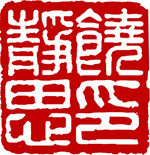
Shingyōtō-ryū was founded by Iba Zesuiken Hideaki (伊庭是水軒秀明) and from the second generation was carried by successive heads bearing the name Iba Gunbei (伊庭軍兵衛); a defining feature of the house was that the headship passed not by blood but to the most capable disciple, who was adopted as heir. The eighth head, Iba Gunbei Hidenari (伊庭軍兵衛秀業, 1811–1858), opened the Renbukan (練武館) dōjō in Shitaya in Edo, which was sometimes counted as a fourth beside the “three great Edo dōjō” of the late Tokugawa period (the Genbukan of Hokushin Ittō-ryū, the Renpeikan of Shintō Munen-ryū and the Shigakukan of Kyōshin Meichi-ryū). Hidenari is credited with introducing full-contact practice with shinai (竹刀; bamboo sword) and bōgu (防具; protective armor) into the school, and its austere, old-fashioned rigor drew the attention of the senior councilor Mizuno Tadakuni. Three of the Kōbusho’s eleven kenjutsu instructors came from this single school.
Shingyōtō-ryū survives today only at Kameyama (亀山) in Mie Prefecture, where it was established by Yamazaki Setsuryūken (山崎雪柳軒), a student of the eighth head, who returned home in Genji 1 (1864); the Kameyama tradition is designated an Intangible Cultural Property of Mie Prefecture and Kameyama City. It is represented in the Nihon Kobudō Kyōkai and maintains a Japanese-language website (shingyoutouryu.com); English-language material is limited.
In the Gekiken Sōdan (1790)
Shingyōtō-ryū is one of the later Edo schools surveyed in kan 5 of the Gekiken Sōdan, reported by Mikami Genryū as a living tradition of his own day rather than a reconstructed lineage. He places it after its parent school, Honshin-ryū (本心流) — a sword “with many techniques” that he cannot date or locate, begun by one Tsumagata Kenjusai (妻片謙壽齋) and passed to Ōfuji Yajizaemon (大藤彌次左衞門) and Shiga Jūrōbee (志賀十郞兵衞).
一、心形流は、伊庭是水軒秀明といふ者、本心刀流の妙を極めて、後自意を造立して心形刀流と號し、元祿寶永の比專ら世に鳴り、門人も最多し。
Iba Zesuiken Hideaki (伊庭是水軒秀明), “having mastered the subtlety of Honshin-tō-ryū, afterwards established his own conception and styled it Shingyōtō-ryū”; around the Genroku and Hōei years (1688–1711) it was widely renowned and its students very many.
Unusually for this text, the entry lists the curriculum by name across three categories — the school transmits ittō, nitō, and kodachi alike — rising through a set of gokui (極意; innermost teachings) conveyed orally to a final triad reserved for a single heir:
Ittō (一刀): ōrantō (大亂刀), korantō (虎亂刀), hiryūken (飛龍劔), maruhashitō (丸橋刀), uratō (裏刀), seigantō (清眼刀), tainaitō (胎內刀), yōjūken (陽重劔), sankaku kiridome (三角切留), hasshatō (發車刀), uken-soku (右劔足), saken-soku (左劔足), yōyūken (陽勇劔), chūdō shihaki (中道志破記), hizagurumatō (膝車刀), hikitsukare (引疲) and its reverse (同逆).
Kodachi (小太刀): chūjū betsuken (中住別劔), seigan hidariashi (清眼左足), seigan migiashi (清眼右足), ryōtegiri (兩手切), ura no nami (浦の波), seimeiken (清明劔).
Nitō (二刀): kō-manshi (向滿子), yoko-manshi (橫滿子), yoko-manshi zantō aigiri (橫滿子殘刀合切), aimaki (相捲), seigan-yaburi (清眼破), ryūsetsutō (柳雪刀), taka no ha (鷹の羽).
Gokui (極意): suigetsutō (水月刀; “water-moon sword”), sanshintō (三心刀; “three-mind sword”), muhyōshi (無拍子; “no-rhythm”), transmitted as kuden.
Isshi sōden (一子相傳; transmission to a single heir): raishintō (雷心刀; “thunder-mind sword”), fūshintō (風心刀; “wind-mind sword”), muichiken (無一劔; “not-one sword”).
Shingyōtō-ryū uses the character sei (清; pure) in its seigan, not the sei (晴; clear) commonly found in Ittō-ryū. The entry also preserves two restricted verses (hika 祕歌) of the school:
ふしおがむ いがきのうちは 水なれや 心の月の 澄めばうつるに, 花紅葉 冬のしら雪 見し事も おもへばくやし 色にめでける
“As I bow in reverence, the water within the fence reflects the moon of my heart—clear and unclouded. When I reflect upon the blossoms, the autumn leaves, and the white winter snows I once beheld, I feel a pang of regret; for I had merely admired their outward colors.”
Mikami closes the pair with 「悟道發明の境面白し」 — “the realm of awakening they disclose is of great interest”.
The teacher current in his day was Iba Hachirōji (伊庭八郎次), grandson of Zesuiken, at Shitaya (下谷) in Edo, “one of the masters of the day” (當時上手の一人なり) — the Iba line whose Renbukan dōjō continues on to the bakumatsu period.