Register record
Identity & authority
- Disambiguation
- Jikishinkage-ryū swordsman of the Tenpō era (1798–1864); reckoned tenth-generation legitimate holder of the main line, teacher at the Kamezawa-chō / Azabu Mamiana dōjō whose pupils included Sakakibara Kenkichi, Shimada Toranosuke and Mitsuhashi Torazō.
- Reliability
- Skeleton migrated from the id entry; core facts (teacher Danno, the ancillary arts, the Hirayama/Naganuma military science) are sourced there. Dates and the name breakdown follow the register's factions-of-jiki roster; verify against authorities.
- Attestation
- corroboration: external
Names
| type | kanji | romaji | reading |
|---|---|---|---|
| myoji | 男谷 | Odani | おだに |
| tsusho | 精一郎 | Seiichirō | |
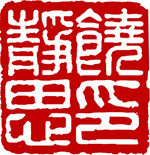
| go | 静斎 | Seisai | |
| uji | 源 | Minamoto | |
| imina | 信友 | Nobutomo |
Dates
- Born
- (1798)
- Died
- (1864)
- Floruit
- Tenpō–bakumatsu
Lineage & parentage
- Father
- Odani Shinjirō Nobutsura (男谷新次郎信連)
- Teacher
- Danno Gennoshin Shinpansai (団野源之進 真帆斎)
- Generation
- 〔tenth-generation legitimate holder — see body〕
- Attestation
- external
- Attestation
- —
- Attestation
- —
- Attestation
- internal
Born in Honjo, Edo, as the eldest son of Odani Shinjirō Nobutsura.
Odani studied Jikishinkage-ryū under Danno Gennoshin (真帆斎 Shinpansai), and was also accomplished in Hōzōin-ryū sōjutsu and Yoshida-ryū kyūjutsu.
His kinsman Odani Hikoshirō Tadamasa was the eldest son of Odani Heizō Tadanaga, and that man’s third son was Kokichi (Saemontarō), the father of Katsu Kaishū.
Odani’s military science came from Hirayama Shiryū (平山行蔵 / 子竜), at whose Heigen Sōro academy he was a live-in pupil. The kotobank biography of Hirayama records his two specialties separately: he was especially accomplished in military science of Naganuma-ryū (長沼流) and in Shinkan-ryū kenjutsu. The sword side was distinct — Hirayama studied Shinkan-ryū (真貫流) under Yamada Shōsai (Mohei), founded his own Chūkō Shinkan-ryū, and later renamed it Kōbu Jitsuyō-ryū (講武実用流), the composite system he’s usually remembered for. So the military-science tradition Odani absorbed as a live-in pupil at the Heigen Sōro was Naganuma-ryū; his sword was a separate matter, taken in Jikishinkage-ryū under Danno, not from Hirayama’s Shinkan line.
One disambiguation: this 長沼流 is the heigaku house in the Naganuma Tansai (長沼澹斎) line and has nothing to do with the Naganuma-ha (長沼派) of Jikishinkage-ryū kenjutsu.
Sources cast Odani as an uchi-deshi whose eyes were “opened to practical martiality” under Hirayama rather than recording a formal Naganuma-ryū licence, so the safe formulation is that his military science derived from Hirayama’s Naganuma-ryū — not that he was a lineage holder of that tradition.
Totsuka-ha Yōshin-ryū was the Numazu domain’s jūjutsu — Totsuka Hikosuke Hidetoshi served the Mizuno house of Numazu as jūjutsu shihan and is called the reviver of early-modern randori — and Kashiwazaki was born in Numazu castle, trained under Totsuka, became the domain’s shihan-yaku, and served as Totsuka’s teaching proxy at the Kōbusho.
Yōshin Ko-ryū frames the teaching of grappling at Odani’s dōjō as student-driven: dozens of Odani’s swordsmen who wanted jūjutsu training requested instruction from Kashiwazaki, and Aizawa taught the large group with him at the Odani dōjō. Names listed alongside Sakakibara include Amano Shōzō, Kikuchi Tamenosuke, Chūjō and Mitsuhashi.
Sakakibara Kenkichi’s biography records that the Odani dōjō had arranged for instruction in Totsuka-ha Yōshin-ryū (戸塚派楊心流) from the Numazu-domain jūjutsu instructors Kashiwazaki Matashirō (柏崎又四郎) and Aizawa Katsuyuki (藍澤勝之). Sakakibara learned jūjutsu along with the other pupils.
The Jikishinkage-ryū dōjō was, in other words, a node of Totsuka-ha Yōshin-ryū transmission, sword and jūjutsu running side by side under one roof. The same account has Aizawa regularly sparring at the Odani dōjō with Iikubo Tsunetoshi, Kanō Jigorō’s Kitō-ryū teacher — so the jūdō-genesis world brushes against this room too.
Odani is recorded as having mastered Hōzōin-ryū sōjutsu (宝蔵院流槍術; Hōzōin-ryū spear art) and Yoshida-ryū archery in addition to his Jikishinkage-ryū kenjutsu and the military science from Hirayama. Odani broke the Jikishinkage-ryū taboo on inter-school matches and actively sought them out, albeit with bogu and shinai. He is said to have refused unarmored challenges with bokutō.
Spear was present at the dōjō as something his swordsmen crossed blades against — the same cross-discipline sparring that later produced the celebrated sword-versus-spear bout between Sakakibara and Takahashi Deishū at the 1860 Kōbusho opening. Spear was formally taught where Odani and Sakakibara actually worked, since the Kōbusho ran a separate sōjutsu department — just not, on the record, at the private dōjō.
Amano Shōshō (天野将曹, also written 将監) was a Odani-ha fellow-disciple Sakakibara fought and beat inside Nijō Castle in 1863. Mitsuhashi Torazō is named among the swordsmen the Kamezawa-chō Odani dōjō produced, alongside Shimada Toranosuke, Yokokawa Shichirō and Sakakibara Kenkichi.
References