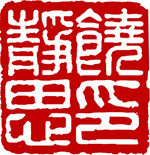
Gassan Heihō (月山兵法) is the name of my kenjutsu practice. Its core is the kenjutsu of Jiki Shinkage-ryū (opens in a new tab) (直心影流) as transmitted to me by the late David Hall, together with a small number of kata from other lines of Shinkage-ryū.
Hall trained in Japan at the Hōbyōkan under Namiki Yasushi and Itō Masayuki of Jiki Shinkage-ryū Seitō-ha. He was their first Western student, learned the full kata curriculum through the habiki (刃引き; blunted-blade) forms, and demonstrated those practices publicly as their student. In 1981, he was given verbal permission to teach in the United States. He did so, working with a small number of people.
I was fortunate to be counted among them.
Gassan Heihō is not a sanctioned branch (-ha 派) of Shinkage-ryū, nor a new ryū of its own. It is independent practice, continued after my teacher’s death, by someone who received his teaching but does not represent the teachers he learned from.
The word heihō (兵法) is used here in its broader sense — the art of strategy and martial method, not swordsmanship alone. My own study integrates the body mechanics of the Chinese internal martial arts into this practice; that synthesis, which is the subject of my book. It is my own interpretation and continuation rather than a part of the received tradition of Jiki Shinkage-ryū, but I feel it is compatible with what I had earlier learned.
I keep the distinction deliberate: kata are received, but the internal-mechanics framework is my own.
My school is the Gassankan (月山館). I continue my training in natural settings in the Pacific Northwest. Two of my students are now practitioners in their own right. Their activity is called Tōsha Dōjō and meets as part of Lonin League in Seattle.
More information for current members and colleagues is at gassankan.org (opens in a new tab).