I place a special emphasis on unarmed combative applications and traditional weapons practices (sword, saber, spear) associated to internal martial arts.
Bāguà
Bāguà is known for its smooth and fluid nature, giving practitioners the ability to change spontaneously in response to an opponent’s actions.
Bāguà Shibajie Dao is a circular practice of the goose feather saber (a long and narrow saber with guard) made famous by Ma Gui, who used its methods to great effect during the fall of the Qing dynasty. After an introductory sequence, eight sections of eight movements are performed walking on the circle.
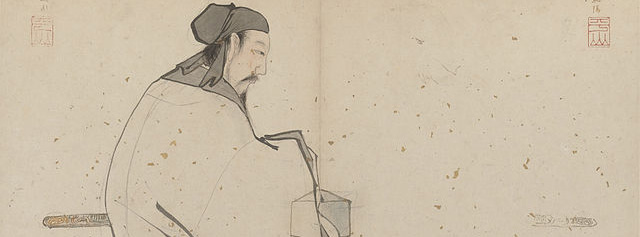
Bāguà Chun Yang Jian is a linear Bāguà sword practice developed by Liu Dekuan. Chun Yang (純陽) is a reference to Lü Dongbin (opens in a new tab) (呂洞賓) who is revered as one of the members of the group known as the Eight Immortals, and is commonly depicted wearing a sword. Lü Dongbin’s literary name is Chunyang Zi (純陽子) or “Master Pure Yang”, which is what the form’s name derives from – pure, complete, entirely transformed.
Xíngyì
Xíngyì is known for its stability, giving practitioners an ability to express sudden and explosive power. Xíngyì weapons training is direct and practical, with drills for saber, sword and spear performed modeled on the art’s five element practices.
Tàijí
Wú Tàijí is known for its relaxed character, giving practitioners the ability to off-balance an opponent at first touch by borrowing their force. Tàijí Jian forms include the 64 posture long form of Wang Maozhai and the condensed 32 posture form arranged by Wang Peisheng. Tàijí Dao consists of a traditional long form that has commonalities between Wu and Yang style, as well as a 12 posture two-handed dao routine that includes partner exercises. The Tàijí dao includes a partial edge, narrow guard and ring pommel that can be manipulated to quickly change direction. The Tàijí spear 24 posture form is a longer routine with the long hardwood spear, approximately 3m in length (this is a different weapon to the shorter flexible flower spear and the long pole used for body development).
Tàijí does not have a staff practice – only a spear practice. But its spear practice is one of the higher level portions of the art. A related practice is Tàijí Sticking Spear (Tàijí Zhan Gan (opens in a new tab)), a paired practice that helps develop Tàijí skill, similar to tuī shǒu, with the spear.
Here is a nice clip on Youtube of the late Grandmaster Wang Pei Sheng (opens in a new tab). Also on Youtube is footage of Wang practicing Tàijí Zhan Gan (opens in a new tab).
Tongbei
Tian Gang Dao, the 36 star form of long sabre called the miao dao 苗刀; miáodāo, which is similar to the Japanese odachi (大太刀; great sword). Tian Gang Dao is a form passed down within Baiyuan Tongbeiquan and is taught in 13 sections. It dates from the mid 18th century. Zhang Yun’s Tongbeiquan lineage includes Li Shusen (1902-1975), who trained with Li Zhendong (1882-1977), who taught members of the Chinese 29th Army sword skills during the Sino-Japanese War.