Yueshan Bagua, Xingyi, and Taiji
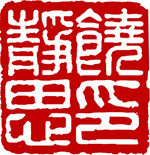
I practice traditional internal martial arts as taught by Zhang Yun laoshi, who leads Yin Cheng Gong Fa (YCGF) North America. This lineage maintains the teachings of the late grandmaster Wang Peisheng. Yueshan-guan (月山館) is the formal name of my practice as recorded in the register of YCGF practitioners.
Information on the arts we practice, their lineage and curriculum, can be found at YCGF Pittsburgh (opens in a new tab) and YCGF North America (opens in a new tab).
I began training in 2005 in Maryland, where I was introduced to Paul Cote’s Wu Taiji and Yin style Bagua classes by Bob Galeone, my Gao lineage Bagua instructor. I began traveling to Pittsburgh regularly in 2010 to train under Zhang Yun. In 2015, I was accepted as Zhang Yun’s 40th lineal student in Princeton, NJ, with Paul Cote and Clayton Shiu as my sponsors.