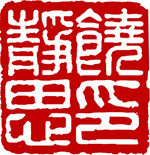
Matsuoka Katsunosuke (松岡克之助, 1836–1898), founder of Shindō Yōshin-ryū (新道楊心流, later written 神道楊心流) jūjutsu, was the second son of a Kuroda-han (Fukuoka) physician he studied several martial traditions, becoming licensed in two:
- He enrolled in Hōzōin-ryū sōjutsu (宝蔵院流槍術) under Komazawa Yoshitsugu (駒沢義次) in the 5th month of 1842 as a young child. This may have been somewhat of a formality, given the size of spear used in the art. He trained into his adolescence and at age 16 received inka (印可) in the 5th month of 1852.
- He entered the Tenjin Shin’yō-ryū at Kanda Otamagaike in the 1st month of 1853 at age 17, and in the 9th month of 1855 at age 19 received menkyo kaiden from the third head, Iso Masatomo (磯正智), then served as shihan-dai at the Iso dōjō.
Sent by his domain to the Kōbusho as a shugyōnin (修業人; trainee) from January 1860 at age 24, he took a three-bout randori loss to Totsuka (aged 49). This drew him into Totsuka’s orbit as well as that of Sakakibara Kenkichi.
In the 4th month of 1862 (Bunkyū 2) he was made jūjutsu kyōju-kokoroe hosa (柔術教授心得補佐) — “assistant to the provisional jūjutsu instructor,” a junior teaching-aide grade. He trained at the the Kōbusho for two years, nine months – six months after reaching the assistant grade, and during that time learned Jiki Shinkage-ryū from Sakakibara Kenkichi.
He is said to also have studied Ittō-ryū kenjutsu at the Otamagaike neighborhood Genbukan of Chiba Shūsaku – it is unclear if this is before or during his time at the Kōbusho.
Moving to Ibaraki
After attending the Kōbusho he left Edo: in the 12th month of 1862 he married into the Ishizuma (石妻 [?]) family of Ueno-machi in rural Hitachi (modern day Ibaraki). This was some distance from Edo: Ueno-machi is not the Ueno ward of Edo, the battle of which would be fateful for Matsuoka later on). He set up as a kanpō and bone-setting doctor, opening a clinic in Ueno-machi.
Once he settled in Hitachi, Matsuoka had no training partners, and examined his martial practice alone — shutting himself in his room after seeing patients to analyze Tenjin Shin’yō-ryū, Totsuka-ha, and Jiki Shinkage-ryū and work out their riai. He founded his own school of jūjutsu in 1864 (元治元年), combining the Tenjin Shin’yō-ryū he had first learned with Totsuka-ha methods and folded in the riai (理合; coordinating principle) of Jiki Shinkage-ryū he had experienced. He first taught in the courtyard of his medical clinic, attracting fifty students before he was called into bakumatsu service.
Timeline of Later Bakufu Service
A domain could command a retainer in active service, and the Kuroda did exactly that to Matsuoka, once. In the first month of 1860 Matsuoka was summoned by the Kuroda domain and ordered to become a Kōbusho trainee (修業人). But in the 10th month of 1862, Kōbusho jūjutsu training was abolished and Matsuoka was released from his trainee status. Two months later, he married and moved to Hitachi, which was neither in Edo (this is not the Ueno area near Edo) or Kuroda territory – Matsuoka would have been firmly in his new life, except for war.
Matsuoka was indeed recalled, but by the bakufu, not the Kuroda-han of Kyushu. In the 7th month of 1866, he received orders of elevation to bakushin (幕臣登用; shogunal retainer), with the rank sashizu-yaku kakushiki (撒兵指図役格式; “[granted] the standing of an officer of the skirmisher / light-infantry corps”):
- sappei (撒兵; alternatively ‘sanpei’) — the Edo bakufu’s Western-style light infantry, or skirmishers. The bakufu army divided its foot soldiers into line infantry (歩兵) and light infantry, the latter called sappei (撒兵), Western-style infantry the Edo bakufu created in the Bunkyū era (1861–64), trained by Frenchmen and posted at the gates of Edo Castle.
- sashizu-yaku (指図役; directing officer) - The standard bakufu-army spelling is 差図役 (same reading and sense, sashizu = “direction, orders”).
- kakushiki (格式) — “rank, formal standing.” As a suffix to an office it denotes being granted the formal status of that post; so the whole phrase is “with the rank/status of a sappei directing officer,” conferred as part of his elevation to bakushin.
In the bakufu army, sashizu-yaku and sashizu-yaku tōdori were the junior-officer grades, both chronically understaffed. Sashizu-yaku is similar to a platoon leader or company commander in modern military. This was a bakufu military appointment, incompatible with still being under Kuroda command.
In 1867, 2nd–3rd month — the suppression completed, he was ordered to report to Edo Castle, guarded Tokugawa Yoshinobu, and was assigned to the elite Seieitai corps (精鋭隊) under Chūjō Kinnosuke that was hand-picked by Katsu to guard the shogun Yoshinobu, who was under house arrest at the Tokugawa family temple of Kan’eiji in Ueno (Edo this time, not Hitachi).
Matsuoka is said to have been shot at the Battle of Ueno in May 1868, and then returned to Hitachi to convalesce instead of traveling with the majority of bakufu retainers (including his Shōgitai comrades) west to Sunpu (Shizuoka).
From 1866 to 1869, while Matsuoka was attached to the Seieitai and then convalescing, Sakakibara was doing the exact opposite, resigning from bakufu service and refusing to join the Shōgitai corps. Sakakibara was not able to avoid the battle of Ueno, but spent his time protecting prince Rinnōji-no-miya instead of joining his fellow Jiki Shinkage-ryū colleage Amano in the battle.
Notable Teaching
Matsuoka had recovered enough to resume his medical practice in April of 1870 and in September of that month his Shindōkan (神道館; alternatively Shintōkan) dōjō was built. He taught thousands of students; one early student that became well-known in kendō circles was Nakayama Tatsusaburō.
The license that attached to Matsuoka’s early sword teaching of Nakayama according to Fujiwara (1983) is his own school’s betsuden (別伝; separately-transmitted line) menjo. This included:
- kotachi-dori (小刀捕; short-sword capture)
- ōdachi-dori (大刀捕; long-sword capture)
- gokui atemi (極意当身; secret-essence striking)
- kappō (活法; resuscitation) material
- ki-ate (気当)
The betsuden was considered by Matsuoka to be the ura-waza (裏技; the “back techniques”) of kenjutsu, and was assocaited to an upper-level license, although it may also have been awarded to people who only trained in kenjutsu.
Resuscitation appears as earlier as well, given Matsuoka’s profession: yūkatsu (誘活) and eri-kappō (襟活法) already at the entry kirigami licence, and kappō plus koppō (骨法; bone methods) at the next mokuroku license. Striking appears as the 103 kyūsho (急所; vital points) taught under sappō (殺法; killing methods) at that same level.
Matsuoka referred the promising Nakayama to a Jiki Shinkage-ryū teacher to continue his training of that art. He did not appear to issue traditional licenses in Jiki Shinkage-ryū himself. Rather we see ki-ate listed as a betsu-den – ki-ate is an advanced matter of Jiki Shinkage-ryū he may have learned at the Kōbusho.
References
- Fujiwara Ryōzō’s Shindō Yōshin-ryū no Rekishi to Gihō (神道揚心流の歴史と技法, 1983) - Biography of Matsuoka.
- Japanese Wikipedia articles 「松岡克之助」「神道楊心流」 — Matsuoka’s study of Jiki Shinkage-ryū kenjutsu under Sakakibara (and a brief period under Chiba Shūsaku), his Kōbusho service from 1860, the randori loss to Totsuka, and the 1864 founding of Shindō Yōshin-ryū incorporating Jiki Shinkage-ryū riai.