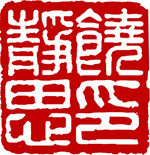
Katōda Shinkage-ryū

Katōda Shinkage-ryū (加藤田神陰流 (opens in a new tab)) was the art practiced by the famous late 19th century kenshi Matsuzaki Namishirō.

The art was a Kurume-han Shinkage line founded by Katōda Shinsaku (加藤田新作), a student of Nakamura Gonnai of Mujūshin-kenryū (無住心剣流) who was invited to the domain in 1716 .

Its name was attached from the ninth generation onwards under Katōda Heihachirō, author of the Katōda Nikki (加藤田日記).

After Heihachirō’s death, in 1875 his son Daisuke opened a dōjō teaching Katōda Shinkage-ryū kenjutsu (剣術; swordsmanship) together with Yōshin-ryū naginata (薙刀術; glaive) and kusarigama (鎖鎌術; chain-sickle art).

The 1925 Kendō no Hattatsu (剣道の発達) - first chapter, 緒論, listing densho and diaries item by item, numbered), and two of the entries touch Matsuzaki Namishirō directly.1

In entry 29, 剣道比試記, the annotation reads that it collects, from the early Kaei years through early Meiji, the musha-shugyō diaries and records of contemporary teachers’ houses of Katōda’s senior disciple Matsuzaki Namishirō (加藤田家の高弟松崎浪四郎) — and it calls this a peerless historical source (無二の史料) for knowing the state of the kendō world, especially in Edo. In entry 27, 遊歴日記, is glossed as a musha-shugyō diary of the Tenpō years — very likely part of the same body of Katōda-house travel-diary material, sitting two entries up from the Matsuzaki item under the same run of Katōda densho.

The Katōda Shinkage-ryū mokuroku issued from Katōda Heihachirō to Hara Zenzo, Keio (4) 1868, begins with a san-kyō (Shintō-Confucian-Buddhist) syncretic charter with a Kiki-mythology sword-origin (totsuka-no-tsurugi slaying Yamata-no-Orochi) and is quite different in flavor from the Zen-inflected austerity of the Sekiun/Mujūshin side. Katōda Shinkage-ryū used Confucian scholar levels to denote ranks, and was influenced by Mujūshin-kenryū (無住心剣流; むじゅうしんけんりゅう) — also called 夕雲流 (Sekiun-ryū) or 破想流 (Hasō-ryū) was founed by Harigaya Sekiun (針ヶ谷夕雲; imina 正成 Masanari, tsūshō 五郎右衛門 Gorōuemon), d. 1669. The disciple he is paired with, 一雲, is Odagiri Ichiun (小田切一雲), author of the Sekiun-ryū Kenjutsu-sho and Tenshin Dokuro. The figure who carries the line to Kurume is 中村権内 (Nakamura Gonnai), whose pupil 加藤田新作 (Katōda Shinsaku) was invited to Kurume-han in 1716 and named his line 神蔭流/神陰流. Mujūshin-kenryū itself descends from Ogasawara Genshinsai’s Shin-Shinkage-ryū (真新陰流) — Sekiun was Genshinsai’s pupil — so the Katōda house’s “Shinkage” name reflects that deeper root even though its proximate parent is the Sekiun/Mujūshin line. Katōda Shinkage-ryū’s introductory curriculum includes the Hassō-ken (八相剣), Ittō-ryōdan-ken (一刀両断剣), and Chōtan-ichimi-ken (長短一味剣 ) found in other lines descending from Ogasawara’s Shin-no-Shinkage heihō, but includes a kata called Seigan-ken (誓眼剣) using 誓 (“vow”) a deliberate homophone play on 正眼/青眼. One Sekiun/Shinkage-line inka scroll frames its opening form through Tendai perfect-sudden vocabulary, which is evidence of the religious theme of the naming — the same Shintō-Buddhist doubling as in related Katōda Shinkage charter — without implying the swordsmen were doing formal Tendai precept-exegesis.2

Mokuroku

Below we describe a little information on this art. The work above contains the Katōda house’s own Shinkage-ryū transmission documents (加藤田家の新陰流傳書). The book lays out the line’s licensing hierarchy as a five-grade system, with the techniques (業) distributed across the grades — organized, it notes, much like Shibukawa-ryū jūjutsu and Jigen-ryū kenjutsu. The five grades, in order, are:

  1. 目錄 (mokuroku)
  2. 後卷目錄 (go-kan mokuroku — “latter-scroll” mokuroku)
  3. 免狀 (menjō)
  4. 奧免許 (oku-menkyo)
  5. 直面目印可 (jikimen-moku inka)

They were mapped onto a parallel set of Confucian rank-names, 初學 → 學士 → 賢 → 聖 → 君子 (beginner, scholar, sage, saint, gentleman). The book adds that the top grade, 直面目印可, was withheld unless a worthy recipient existed — likened to a deliberately-vacant office — so it was rarely conferred. A kikigaki it quotes explains the logic: the techniques fall into four “phases,” hence the staged grades, with separate transmission-documents (傳授書) for the higher stages.

That hierarchy maps directly onto the catalogue entries on page 38, which are the actual grade-documents held in the Katōda collection at Kurume — so the mokuroku exists, even though this book doesn’t transcribe its contents.

Matsuzaki’s own licensing maps cleanly onto the five-grade structure from the 1925 book: he took the 神蔭流免許 in 1848 (grade 3, menjō) and the 神蔭流奥免許 in 1854 (grade 4, oku-menkyo) — i.e., he held the fourth of the five grades, one below the rarely-conferred 直面目印可, and stands as one of Heihachirō’s twelve oku-menkyo men.

The relevant items are entry 一九 新陰流後卷目錄口傳書 (the go-kan mokuroku — grade 2, which is precisely where the kata names would be listed), 二〇 免狀八箇條解, and 二二 直面目印可, plus 二五 劒術等級傳書, which records the grade system itself along with the naginata, iai, kishōmon, shikatsu (death/revival) and Shōkoku-tai enrollment rules. The line’s kata list is documented — it’s inside entry 19 — but the book provides a skeleton (the grades and how techniques are apportioned) without the individual kata names.

Page 66 records that the Katōda house’s Shinkage-ryū originally carried an attached jūjutsu, which split off under the third-generation instructor and passed to another house before the Restoration — corroborating the grappling/naginata component of the Katōda-ha, and situating it among the “Shinkage-ryū jūjutsu” offshoots the book says were scattered around Kyūshū.

The catalogue’s entry 23, 先師口授, is explicitly the kuden of Hariya Sekiun (針谷夕雲) and his disciple Ichiun — i.e., Mujūshin-kenryū material in the Katōda holdings, consistent with the line’s descent through Nakamura Gonnai’s Mujūshin-kenryū rather than the Yagyū trunk. So, is important to recognize that the Katōda “Shinkage-ryū” carried a Sekiun/Mujūshin-kenryū inheritance, which may mean its inner curriculum diverges substantially from the standard Yagyū line of Shinkage-ryū.3

Katōda Heihachirō — the ninth-generation head, 1808–1875, imina Shigehide (重秀), gō Ekitei (益亭) — kept a detailed diary every night after practice from 1837 to 1874, and that corpus survives, partially: it is now somewhat scattered, but the extant portion is preserved as the Katōda Nikki (加藤田日記) and is treated as a valuable Kurume local-history source (久留米の貴重な郷土史料)4

Its mokuroku contain yawara and then 表之術太刀合 that include several Shin-no-shinkage kata: 八相剣 — Hassō-ken; 一刀両断剣 — Ittō-ryōdan-ken ( single-sword “one-cut severing”); 誓眼剣 — Seigan-ken (誓眼 written with 誓 “vow,” a deliberate homophone play on 正眼/青眼); 長短一味剣 — Chōtan-ichimi-ken (“long-and-short, one-flavor”); and 二刀合 — Nitō-ai. There are the fundamental or earlier proto-forms of Hōjō or Sangaku, except for Utten Satten.

Mujūshin-kenryū

Mujūshin-kenryū (無住心剣流; むじゅうしんけんりゅう) — also called 夕雲流 (Sekiun-ryū) or 破想流 (Hasō-ryū) was founed by Harigaya Sekiun (針ヶ谷夕雲; imina 正成 Masanari, tsūshō 五郎右衛門 Gorōuemon), d. 1669. The 1925 catalogue renders his name as 針谷五郎左エ門 — that’s a spelling drift (針谷 for 針ヶ谷, and 左エ門/Zaemon for the standard 右衛門/Uemon).

The disciple he is paired with, 一雲, is Odagiri Ichiun (小田切一雲), author of the Sekiun-ryū Kenjutsu-sho and Tenshin Dokuro. The figure who carries the line to Kurume is 中村権内 (Nakamura Gonnai), whose pupil 加藤田新作 (Katōda Shinsaku) was invited to Kurume-han in 1716 and named his line 神蔭流/神陰流.

Katōda Shinsaku, a pupil of Nakamura Gonnai of Mujūshin-kenryū, was invited to the Kurume domain in 1716 and taught swordsmanship, calling his line “Shinkage-ryū”, and from the ninth-generation Katōda Heihachirō it came to be called “Katōda Shinkage-ryū”.

Mujūshin-kenryū itself descends from Ogasawara Genshinsai’s Shin-Shinkage-ryū (真新陰流) — Sekiun was Genshinsai’s pupil — so the Katōda house’s “Shinkage” name reflects that deeper root even though its proximate parent is the Sekiun/Mujūshin line.5

The “empiken” blog (Enpi no kenkyū compares the opening sections of the mokuroku (目録) across the branches of the Shin-Shinkage-ryū / 真心陰流 family, and it works directly from the 加藤田神陰流 densho.6

The Katōda Shinkage-ryū transmission documents give the source figure as Ogasawara Kazusa Genshinsai Nagaharu, and the author notes that across the branches the first part of the mokuroku is largely shared while the latter half diverges considerably by line — which is precisely the structural point, and means the Katōda list can be read against its cousins to see what’s common Shinkage inheritance and what’s Kurume-specific.

Matsuzaki Namishirō

Matsuzaki Namishirō ( 松崎浪四郎 (opens in a new tab)), personal name Naoyuki (直之), was a swordsman of the late Bakumatsu and Meiji eras, born on 30 March 1833 in Shōjima-machi, Kurume, the son of the Kurume-han samurai Matsuzaki Hachiemon.

In 1844 he entered the Katōda Shinkage-ryū (加藤田神陰流) kenjutsu practice of Katōda Heihachirō (加藤田平八郎), the ninth-generation head of the Kurume-han Katōda line. Katōda Shinkage-ryū was founded by Katōda Shinsaku (加藤田新作), a student of Nakamura Gonnai of Mujūshin-kenryū (無住心剣流).

At the same time, he took up Hōzōin-ryū sōjutsu (宝蔵院流槍術; spear) under Mori Heiemon. He received his Shinkage license in 1848, Hōzōin license in 1849, and the inner license oku-menkyo (奥免許; advanced full license) in Katōda Shinkage-ryū in 1854 . He was reputed to “always take the first point” and came to be called the foremost swordsman of Kyūshū.

Of Heihachirō’s twelve inner-license holders, the two best remembered are Matsuzaki Namishirō and his dōmon (同門; fellow disciple) in the Katōda Shinkage-ryū line, Umezaki Yaichirō (梅崎弥一郎, 1847–1913), who also practiced Tsuda Ichiden-ryū.

The two men jointly received the Seirenshō at the 1895 Butokukai Taikai — co-recipients in the same group, not teacher and student, Umezaki the junior by fourteen years — and he became a Butokukai kendō hanshi in 1909.7

Matsuzaki’s kenjutsu was forged through shiai and inspired by the swordsmanship and philosophy of Yamaoka Tesshū later in life. From historical records, his teachings most likely survive as influence on higher-level kendō of Sasaburō and his own legacy, rather than through the direct kata-geiko transmission of the Katōda Shinkage-ryū he himself practiced as a youth. Katōda Shinkage-ryū itself is not represented in either the Nihon Kobudō Kyōkai or the Nihon Kobudō Shinkōkai today and appears to survive only as documentary record rather than as a living transmission in Japan.

Musha Shugyō and Gekken

In 1855 he set out on a warrior’s pilgrimage musha shugyō (武者修行; martial arts pilgrimage) to Edo. In a celebrated series of bouts at the Oka-han Edo residence he defeated Momoi Shunzō (桃井春蔵) of Kyōshin Meichi-ryū and Saitō Shintarō (斎藤新太郎) of Shintō Munen-ryū, drew with Ueda Umanosuke, and lost to Chiba Eijirō (千葉栄次郎) of the Genbukan — that is, he bested the representatives of two of Edo’s three great dōjō and fell only to the third.

There is a phrase: “dignity to Momoi, technique to Chiba, power to Saitō”:

(位は桃井、技は千葉、力は斎藤)

that arises from these encounters and spread in the Meiji period. Namashirō encountered all three.

The Shigakukan (士学館) of Kyōshin Meichi-ryū (鏡新明智流), associated with “dignity”. Opened in 1773 by the first Momoi Shunzō, Momoi Naoyoshi (桃井直由), at Kayaba-chō, and moved by the second Shunzō to Ōtomi-chō on the Asari-gashi, where it took the name Shigakukan. In Matsuzaki’s day the head was the fourth Momoi Shunzō, Momoi Naomasa (桃井直正, 1825–1885); a Numazu-han samurai’s second son who took full transmission at twenty-four and sharply raised the school’s standing and enrollment. This is the “Momoi” Matsuzaki defeated, and the “位の桃井” of the saying. Among its men were the Tosa figures Takechi Hanpeita and Okada Izō.

The Genbukan (玄武館) of Hokushin Ittō-ryū (北辰一刀流), the “technique” house. Founded in 1822 by Chiba Shūsaku (千葉周作) at Nihonbashi Shinagawa-chō, later moved to Kanda Otamagaike. The founder Chiba Shūsaku (1792/94–1855) was still the nominal head but was in his final year; the man Matsuzaki actually faced — and the only one of the three to beat him — was Shūsaku’s gifted second son, Chiba Eijirō (千葉栄次郎). So in the saying’s terms Matsuzaki fell only to “技の千葉,” technique. The Genbukan was the largest and most famous of the three.

The Renpeikan (練兵館) of Shintō Munen-ryū (神道無念流), the “power” house. Founded in 1826 by the first Saitō Yakurō (斎藤弥九郎, 1798–1871), who had trained under the third-generation Shintō Munen-ryū head Okada Jūmatsu (岡田十松) at the Gekkenkan, at Kudanshita near the Manaita-bashi; it later stood at Kudan-zaka-ue, on what is now the Yasukuni Shrine grounds. Yakurō remained the patriarch, but daily instruction was led by his sons, and the one Matsuzaki beat was Saitō Shintarō (斎藤新太郎), later the second Yakurō — the “力の斎藤,” power. Katsura Kogorō (Kido Takayoshi) was the Renpeikan’s best-known student.

Matsuzaki bested dignity (Momoi) and power (Saitō). He was stopped only by technique (Chiba Eijirō).8

Shunpūkan Training

It was during this period that Matsuzaki Namishirō formed his lifelong friendship with Yamaoka Tesshū (山岡鉄舟).

Matsuzaki fought in the battle of Iwaki-Taira during the Boshin War, on behalf of the Kurume domain. It is said that Matsuzaki also participated in the Battle of Taharazaka during the Satsuma Rebellion.

On 17 November 1870 (Meiji 3) Matsuzaki was appointed official kenjutsu instructor shinan-yaku (指南役; instructor/guidance role) to the Kurume-han (久留米藩), receiving one-generation samurai (shizoku) status; among the domain’s instructors he was made chief.

When the domains were abolished in Meiji 5 (1872), the post of shinan-yaku lapsed with the institutions that had sustained it, and for the next several years Matsuzaki served as a civil official in Mizuma Prefecture (三潴県) as a village headman kochō (戸長; village headman) and head of its second district, retiring in March 1876 when Mizuma was absorbed into Fukuoka Prefecture.

In the Meiji period Yamaoka, by then a chamberlain to the emperor, brought Namishirō to Tokyo (1883–84), where he trained at Yamaoka’s Shunpūkan (春風館). This is where Matsuzaki’s late identity as a Zen-influenced kenshi took place.

Yamaoka Tesshū (山岡鉄舟, 1836–1888) is one of the bakumatsu no san-shū, the three “shū” — with Katsu Kaishū and Takahashi Deishū. He had trained in Jikishinkage-ryū, Hokushin Ittō-ryū and Nakanishi-ha Ittō-ryū kenjutsu and the spear school of Jitokuin-ryū / Ninshin-ryū (自得院流・忍心流; two alternate names).

Out of his own practice and Zen training he deepened the Ittō-ryū maxim that “one sword becomes ten thousand and the ten thousand return to one,” proclaimed “no sword beyond the mind” (心外無刀), founded Mutō-ryū (無刀流) in 1880 and opened the Shunpūkan dōjō in 1882. Its full name is Ittō Shōden Mutō-ryū (一刀正伝無刀流). The ideal Yamaoka set down for it is the opposite of a prize-fighting hall: Mutō-ryū swordsmanship does not contend over win-or-lose between self and other, but requires only the forging of the mind, the tempering of technique and the taking of a natural victory — sword and Zen as one (剣禅一如; sword-Zen unity).

That ethos did not mean soft training. The Shunpūkan was known for an extraordinarily severe trials. Practitioners could engage in 200 matches throughout a single day, 600 over three days or in the most extreme trial, called tachikiri or seigan (立ち切り/誓 願), 1,400 bouts over seven days. Through all of this, spiritual cultivation was held as central. This is the environment Yamaoka brought Matsuzaki into in 1883–84. Yamaoka taught at the Imperial Household Ministry’s Saineikan (済寧館) and ran the Kensō Jūjutsu Eizoku-sha (剣槍柔術永続社), which became a model for the Dai Nippon Butokukai — and Matsuzaki is counted among his disciples.

Matsuzaki later fought a match against Yamaoka and won — but as a direct result of that bout he decided to become the student of his long-time colleague. He cut his shinai down from three shaku eight sun to the Mutō-ryū length of three shaku two sun and dedicated himself towards cultivating Tesshū’s mindset on Zen swordsmanship.

The mature Matsuzaki that modern kendō remembers is, in large part, the Matsuzaki of the Shunpūkan. Matsuzaki’s very last recorded match, at the 1895 Butokukai, was against Kagawa Zenjirō (香川善治郎, c. 1849–1921) — the man who succeeded Yamaoka as the second-generation head of Ittō Shōden Mutō-ryū (一刀正伝無刀流). Kagawa went on to hold the Dai Nippon Butokukai’s kendō hanshi title and to carry that Zen-sword line into the modern educational-kendō system as an instructor at the Hiroshima Higher Normal School kendō club — one of the principal training grounds for the nation’s kendō teachers — where he helped establish Mutō-ryū kendō there. He died on 7 March 1921, at seventy-two.

Namishirō later took charge of a dōjō at the Washio residence, and took part in matches at the Imperial Household Ministry’s Saineikan (済寧館) and in the budō-preservation society Eizoku-sha (永続社) alongside Yamaoka, Sakakibara Kenkichi, and others. Sakakibara’s 1873 gekiken-kōgyō public exhibitions did more than anything to keep swordsmanship alive through the post-Meiji Restoration collapse.

Namishirō’s opponents through his later career include Tokuno Sekishirō (得能関四郎), Shimoe Hidetarō (下江秀太郎), Hemmi Sōsuke (逸見宗助) - who he defeated in an imperial-viewing match - and Okumura Sakonta (奥村左近太). Namashirō was defeated by Okumura in late 1884 and remained a recurring rival once he was in Kyōto.

Tokunō met Matsuzaki twice in 1884 — a draw at the Imperial Household Ministry’s Saineikan, and a win over him at the Mukōgaoka Yayoi-sha tournament on 8 November (Meiji 17). Matsuzaki had a poor day at that meet: Okumura beat him there as well, losing himself only to Kuchihara Yoshitsugu (朽原義次) of Ryūgō-ryū — the surviving bout-by-bout results (Okumura’s, for one) show these were direct head-to-head matches, not bracket placings.

In facing Shimoe — Chiba Eijirō’s student — when he challenged the Tokyo police, Matsuzaki was meeting a direct heir of the one Genbukan line that had beaten him three decades earlier. Okumura remained a recurring rival, and the two met again at the 1895 Butoku-sai, where both were awarded the Seirenshō. Takayama Minesaburō (高山峰三郎), remembered for defeating thirty-six Keishichō fencing instructors in succession, was another of Matsuzaki’s recurring rivals — their long contest is given a chapter of its own by Sonoda.

Kendō Legacy

Late in life Matsuzaki is recorded as having reformed his transmission under the name Yamaoka-ryū (山岡流), in homage to Tesshū.

He returned to his Fukuoka dōjō in 1885 and once more took up prefectural office, serving from September 1886 to December 1887 as a secretary shoki (書記; secretary/clerk) and deputy chief prison warden kanshu fukuchō (看守副長; deputy prison warden) in Fukuoka Prefecture; he was then engaged as a kenjutsu instructor for the Kyōto Prefectural Police from 1888, and in 1895 was among the recipients of the Seirenshō (精錬証) at the first Dai Nippon Butokukai taikai in Kyōto.

He died at his home in Kyoto on 19 June 1896 at age 63 and was buried at Rinka-in (隣華院), a subtemple of Myōshin-ji (妙心寺) — the Rinzai Zen monastery whose mountain name is Shōbōzan (正法山) — under the kaimyō Kenkō-in (剣光院; “Hall of the Sword’s Light”) Gensō Ryōkū Koji (玄叟了空居士).

His documented influence runs into modern kendō through Takano Sasaburō (高野佐三郎), who named him the finest swordsman in Japan, said he had received his inner (hiden) teachings, and praised his match-method — pressing (seme) and breaking the opponent’s spirit before striking, in a kendō he called Zen-deep in an essay later reprinted by the All Japan Kendō Federation.

Sources and Further Reading

These dictionaries are also the principal published sources for Matsuzaki’s documented contemporaries discussed here — Umezaki Yaichirō (梅崎弥一郎), Okumura Sakonta (奥村左近太), Kagawa Zenjirō (香川善治郎), Takayama Minesaburō (高山峰三郎), Tokuno Sekishirō (得能関四郎) and the rest of the Butōkukai‑era circle.

On the dormant Kurume lines — Katōda Shinkage‑ryū (加藤田神陰流), Tsuda Ichiden‑ryū (津田一伝流) and its parent Asayama Ichiden‑ryū (浅山一伝流) — see the Bugei Ryūha Daijiten; they have little dedicated monographic literature. For Tsuda Ichiden‑ryū’s modern military‑sword legacy through Tsuda Kyōshū (津田教修) at the Army Toyama School, consult histories of the 陸軍戸山学校 and Toyama‑ryū battōjutsu (戸山流抜刀術).

The “three great Edo dōjō” (江戸三大道場) — the Genbukan (Hokushin Ittō‑ryū; Chiba Shūsaku), the Renpeikan (Shintō Munen‑ryū; Saitō Yakurō) and the Shigakukan (Kyōshin Meichi‑ryū; Momoi Shunzō) — and the appraisal “i wa Momoi, waza wa Chiba, chikara wa Saitō” (位は桃井、技は千葉、力は斎藤) attributed to Matsuzaki are a Meiji‑era retrospective, treated in standard bakumatsu‑kenjutsu histories and the Bugei Ryūha Daijiten.

End Notes

  1. Next Digital Library pid 1017872. 

  2. https://empiken.blogspot.com/2020/04/blog-post_21.htm 

  3. Kata lists may be in surviving copies of the 後卷目錄 from 一九 (新陰流後卷目錄口傳書) in the Katōda Kurume holdings — the same collection that holds Matsuzaki’s 剣道比試記. 

  4. The empi blog (https://empiken.blogspot.com/2020/04/blog-post_21.html) has an image of a Katōda Shinkage-ryū mokuroku issued from Katōda Heihachirō to Hara Zenzo, Keio (4) 1868. It begins with a san-kyō (Shintō-Confucian-Buddhist) syncretic charter with a Kiki-mythology sword-origin (totsuka-no-tsurugi slaying Yamata-no-Orochi) and is quite different in flavor from the Zen-inflected austerity of the Sekiun/Mujūshin side. 

  5. 真心陰流と無住心剣術と燕飛 at https://empiken.blogspot.com/2020/04/blog-post_10.html 

  6. 真心陰流と無住心剣術と燕飛 第一回 真のシンカゲ流 in https://empiken.blogspot.com/2020/04/blog-post.html 

  7. Namishirō practiced sword and spear but was not a documented jūjutsu man. It also appears Katōda Shinkage-ryū and Tsuda Ichiden-ryū both had no iai or battō in their documented curricula. The schools’ own accounts describes them as kenjutsu lines of practice. 

  8. There is also a phrase 江戸四大道場 or “four great dōjō” that includes the Shingyōtō-ryū (心形刀流) Renbukan (練武館) dōjō of Iba Gunbei Hidenari (伊庭軍兵衛秀業) with the above.