Below you will find descriptions of content from Inner Dharma that has grown into full-length book projects.
The Truth of the Calm Spirit
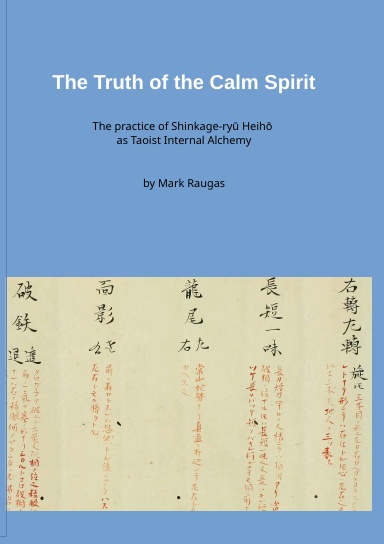
The Truth of the Calm Spirit (opens in a new tab), Inner Dharma, 2025. 368 pages. An examination of the practice of Jikishinkage-ryū kenjutsu through the lens of internal martial arts.
I began training in Kashima-shinden Jikishinkage-ryū (opens in a new tab) kenjutsu in 2008. In 2025, my kenjutsu instructor passed away suddenly. Later that year, I started collating and expanding my writing on the art, which resulted into a small book I dedicated to his memory.
This work contains my research and notes on Jikishinkage-ryū through the end of 2025, including a summary of its early history, including the travels of Ogasawara Genshinsai to Ming China, its kata, and descriptions of its philosophical content drawn from available Japanese language scholarship and library holdings.
Contents Includes: Introduction (Origin Myths, Broader Context of Transitional Arts, Free Practice), Lineage, Philosophical Context (A-Un Kokyū, Shunkashūtō, Unpō, Kiai, Kuraidori), Kata (Hōjō, Tō no Kata, Kodachi, Habiki, Older Kata), Advanced Matters (Koto, Gokui), and the Ryū no Maki.
NOTE: Additional research into Kashima-shinden Jikishinkage-ryū (opens in a new tab) heihō kenjutsu from 2026 onwards can be found at jikishinkageryu.org.
From the Kōbusho to the Butokukai
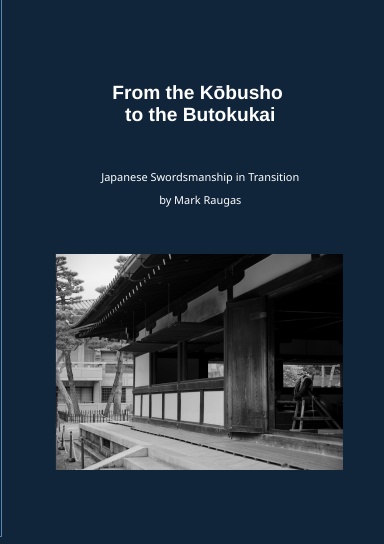
From the Kōbusho to the Butokukai: Swordsmanship in Transition (opens in a new tab), Inner Dharma, 2026. 360 pages. The late Edo period Kōbusho, the martial academy of the Tokugawa, its swordsmen and their styles, and the institutions that followed it into the modern era.1
During my research on Jikishinkage-ryū (opens in a new tab), I became interested in the late Edo period Kōbusho that many famous Jikishinkage-ryū swordsmen were attached to. That exploration grew into its own work covering over 20 traditions and 45 practitioners from this time period and serving as a companion to my first book.
Contents Includes: Overview of the Kōbusho Organization, Major Teachers and its roster, the 1839 Kenpō Ryakki of Kubota Sugane, Bakumatsu Units (Yūgekitai, Seieitai, Shōgitai), Gekken-kōgyō, Battōtai, Keihōkan, Keishichō, Dai Nippon Butokukai, Budō Senmon Gakkō, Nativist Shintō from Kokugaku to the Ketsumeidan, and Kobudō Preservation.
Mountain, Sword, and Mind: Vol I and II
Inner Dharma began because of my interest in the Japanese mountain religion called Shugendō. Mountain, Sword, and Mind is a project on the influence of mountain religion on medieval Japanese martial arts that began on Inner Dharma and grew into two volumes that span almost nine hundred pages.2
Volume I: Shugendō and Heihō
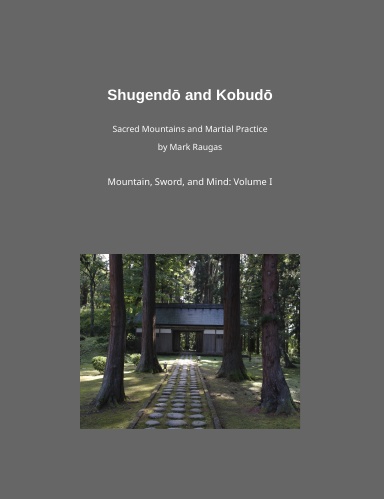
Shugendō and Heihō: Sacred Space and Martial Practice (opens in a new tab), Mountain, Sword, and Mind, Volume I. Inner Dharma, 2026. 409 pages.
In this work we begin by examining the practice of peak entry, discuss the Buddhist ten realms, the concept of tengu and their relationship to gongen, and provide a brief overview of two important early Shugendō figures: En no Gyōja and Rigen Daishi (Shōbō).
We provide an inventory of the tengu and yamabushi-related material in the Bujutsu Sōsho and then discuss historical sacred sites in Japan and the martial traditions attached to them, drawing from the Honchō Bugei Shōden (本朝武藝小傳) and Bujutsu Ryūso-roku (武術流祖錄) and other sources. This includes Kuramadera, Atago, Kashima, Katori, Dewa Sanzan, Kumano Sanzan, Udo, and Hikosan.
We translate Kūkai’s Secret Key to the Heart Sūtra commentary. We then examine the Shugendō canon’s pantheon, including Manjushri (Monju), Fudō Myōō, the Five Wisdom Kings, Zaō Gongen, Sanbō Kōjin, Māra, Marishiten, Mahakala (Daikoku) and Bishamonten. We close with a discussion on military Shugendō including the kuji (nine syllables), goshinhō (protective rites), and the concept of the diamond (vajra) body.
Volume II: Mikkyō, Zen, and Daoist Sources in Shinkage-ryū
forthcoming
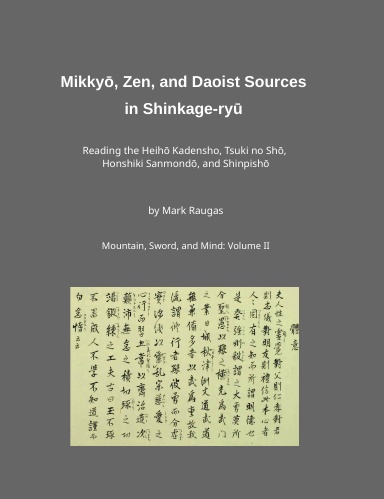
Mikkyō, Zen, and Daoist Sources in Shinkage-ryū: Reading the Heihō Kadensho, Tsuki no Shō, Honshiki Sanmondō, and Shinpishō, Mountain, Sword, and Mind, Volume II. Inner Dharma, 2026.
In Volume II we examine core Yagyū writings from the 17th century, including the Heihō Kadensho of Yagyū Munenori and the Tsuki no Shō of Yagyū Mitsuyoshi, which records oral teachings (kuden) of Munenori and writings of Sekishūsai. For completeness, we provide new translations of several works by Takuan, including the Taiaki and Fudōchi Shinmyōroku. The gokui of Yagyū Shinkage-ryū at the time are examined in relation to Zen and Mikkyō concepts.1
We provide an overview of early Owari Shinkage Yagyū-ryū and the changes introduced into its curriculum, examine the gokui concept of seikōsui in the Honshiki Sanmondō of Kimura Kyūho (senior student of Yagyū Munenori who was given the name Unchū-ryū). Then we read the Edo Yagyū-ryū Shinpishō of Sano Yojizaemon and examine Kyushu area Shinkage-ryū densho.
We close with a translation of the Shinkage-ryū Sotomono of Nabeshima Naotomo (1705) that decribes military matters, provide a historical discussion of famous tales of early Shinkage-ryū from the Gekiken Sōdan of Mikami Genryū (1790), and provide notes on related topics in Kashima-shinden Jikishinkage-ryū, Seigo-ryū jūjutsu, and Ōshima-ryū spear.
End Notes
-
These volumes attempt to be precise but are not academic histories. Instead they are close readings of historical sources. In doing so, we relate the statements made about many older martial traditions by their witnesses and practitioners, but each surviving faction or group will have their own in-tradition orthodoxy. ↩ ↩2
-
A work of this scale would not have been possible for me to accomplish without the use of AI – some information on research methods and conventions is available, including the use of automated tools for optical character recognition, translation, search, and proofreading. ↩