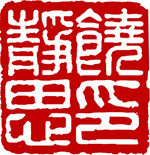
Ueda Umanosuke (上田馬之助, 1831–1890; imina Yoshitada 美忠) was one of the first three swordsmen hired into the Keishichō gekken sewakari (撃剣世話掛) in 1879 and, before that, the foremost figure of the Kyōshin Meichi-ryū (鏡新明智流) Shigakukan. He should not be confused with the identically named Shinsengumi member, a different man.1
Born into the Hosokawa vassalage of the Higo Shinden domain — his birthplace given as Edo, the domain being resident there — he entered the Shigakukan (士学館) of the fourth Momonoi Shunzō and rose to become its leading swordsman, ranked with Sakabe Daisaku, Kubota Shinzō, and Kanematsu Naokado as one of Momonoi’s “four heavenly kings” (桃井の四天王). In 1855 he accompanied Momonoi to a match against the Kurume swordsman Matsuzaki Namishirō, drawing his own bout while his teacher lost — an outcome Matsuzaki noted with respect (Japanese Wikipedia, n.d.).
After the abolition of the domains he was making alcohol in Nihonbashi Kakigara-chō when, in 1879, the Keishichō established the gekken sewakari; he was among the first three recruited, with Kajikawa Yoshimasa and Henmi Sōsuke, and — a vendetta-holder who reasoned he must always carry a sword — took the police post at a time when officers were still permitted to be armed. With Henmi and the others he took charge of Keishichō swordsmanship and helped compile the Keishi-ryū gekken and iai forms (Japanese Wikipedia, n.d.; Japanese Wikipedia, n.d.). In September 1883 he was additionally engaged at the Imperial Household Ministry’s Saineikan (済寧館), and that November he beat Henmi at the Yayoi tournament. In November 1887 he was one of three men — with Henmi and Sakakibara Kenkichi — chosen for the imperial-review helmet-cutting trial (兜割り); Ueda and Henmi failed, and only Sakakibara, using the blade Dōtanuki, succeeded. He died on 1 April 1890.2
Open Questions
- His imina is read Yoshitada (美忠) here; confirm against a furigana source.
- The date and circumstances of the vendetta that reportedly shaped his decision to enter the police are undocumented in the sources used and would repay a firmer account.
End Notes
-
The Shinsengumi member Ueda Umanosuke (of Hamamatsu-domain origin, also written 上田馬之丞 / 上原馬之介 / 植原右馬之助) is a wholly separate person; the two are regularly conflated in popular sources and must be kept apart in the register. (Japanese Wikipedia, n.d.) ↩
-
The 1887 helmet-cutting trial at the Fushimi-no-miya residence is the episode most often attached to Ueda; the register carries it also under Sakakibara, whose success with the Dōtanuki blade is the point usually foregrounded, and the roster context of the 1879 first-hire trio (Ueda, Kajikawa, Henmi) is set out in the Keishichō section. (Japanese Wikipedia, n.d.) ↩