Kawaji Toshiyoshi (川路利良;1834–1879), tsūshō Shōnoshin (正之進), gō Ryūsen (竜泉), was the first Dai-keishi (大警視; Grand Superintendent, the office now called keishi-sōkan 警視総監) and the effective founder of the modern Japanese police — the “father of the Japanese police” — and thus the institutional architect behind the police adoption of kenjutsu (Japanese Wikipedia, n.d.; Kotobank, n.d.).
Born to a low-ranking yoriki (与力; a quasi-samurai rank below the castle-town gōshi) family of the Satsuma domain at Hishijima near Kagoshima, he studied Shin’ei-ryū (真影流) kenjutsu under Sakaguchi Genshichibei and Chinese letters under Shigeno Yasutsugu (Japanese Wikipedia, n.d.). He came to notice in 1864 at the Kinmon no Hen for shooting down the Chōshū commander Kurushima Matabei, served as a Satsuma battalion commander through the Boshin War, and in 1872 was sent to Europe — nominally with the Etō mission — to study Western police systems. On his return he argued for separating judicial from administrative police and, in 1874 (Meiji 7), founded the Keishichō, becoming its first Dai-keishi at forty, still the youngest ever to hold the office (Japanese Wikipedia, n.d.; Kotobank, n.d.).
In the 1877 Satsuma Rebellion he commanded the Detached Third Brigade (別働第三旅団) formed from the Keishitai and directed the battōtai against the army of Saigō Takamori — the patron who had raised him — a duty he framed as public over private (Japanese Wikipedia, n.d.).[^cci-kawaji]
And in the aftermath, persuaded by the battōtai’s demonstration of the sword’s continued value, he set the case for police swordsmanship down in the Gekken saikō-ron (撃剣再興論), the advocacy that produced the 1879 gekken sewakari system (Japanese Wikipedia, n.d.).
On the Revival of Sword Fighting
A Japanese language article on this work is hosted online at kendo.or.jp (opens in a new tab). This missive contains three points:
Even if one carries a staff for self-defense, if one has no means of defeating the enemy, one will not be able to protect oneself.
When dealing with violent and wicked people, if one does not possess well-trained martial arts skills, one will not be able to engage in self-defense combat. This is the reason why all those who could not apprehend the most vicious bandits in the old Edo period were unable to do so.
Since police officers are those who normally put their whole body into dealing with matters on the scene, they should be people who constantly train their bodies like swordsmen.
More informaiton can be found at The Reiwa List of One Hundred Proverbs (opens in a new tab):
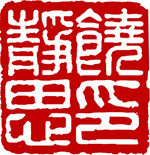
The statue of Kawaji at the Tokyo Metropolitan Police Academy bears the inscription, “Hear without voice, see without form.” The Kendo.org article relates that Kawaji studied Hokushin Itto-ryu under Chiba Shusaku, gaining this secret from his swordsmanship training.
A line from a poem by one of the “Three Ships of the Late Edo Period” reads, “The greedy heart of man and falling snow, as they accumulate, lose their way.” He considered this his personal motto.
He fell ill on a second European police-inspection tour in 1879 and died that October at forty-six; he was later enshrined at the Yayoi Jinja that became the police swordsmen’s gathering-point (Japanese Wikipedia, n.d.).
His early kenjutsu was Shin’ei-ryū (真影流) — read Shinkage-ryū, and distinct from the homophonous Yagyū 新陰流 — which was the Satsuma house-name for Jikishinkage-ryū (直心影流); so his line was not the Jigen-ryū one might assume of a Satsuma man but the Naganuma-ha of Jikishinkage-ryū, which had reached the domain a century before him (Japanese Wikipedia, n.d.; Japanese Wikipedia, n.d.). That the school reached Satsuma is well grounded: it was carried there by Suzuki Yatōji Fujikata (鈴木弥藤次藤賢), a disciple of the eighth-generation Naganuma Kunisato who moved to Kagoshima and entered Shimazu service.1 Kawaji’s own place in that line is thinner-sourced: his teacher is named as Sakaguchi Genshichibei (坂口源七兵衛), and the school literature lists him among Satsuma’s practitioners alongside Arima Shinshichi and Makino Nobuaki.
Karukome’s study — the standard academic treatment of the school — mentions neither Kawaji nor Sakaguchi, so the personal attribution is plausible rather than confirmed.2 What matters here is less the school than what he built from it: because he made a ladder of police posts and a state kata rather than a transmission, he is the intellectual author of the “office, not license” logic that runs through this whole node.
End Notes
-
The transmission node is primary-attested. 『三州遺芳 巻四』(渡辺一郎編『武道伝書聚英 第十二集』所収, 宇都宮大学教育学部, 1990, pp. 60–62), as quoted in Karukome’s dissertation, has Suzuki Yatōji Fujikata (rendered 鈴木弥藤次藤賢) as a Karasuyama man who studied Jikishinkage-ryū under Naganuma Kunisato in Musashi, then entered Shimazu service under Shimazu Shigehide (a 供目附役 post from An’ei 2, 1773). The school literature instead ties his Satsuma entry to accompanying Takehime’s marriage into the Shimazu (c. 1729) — roughly forty years earlier; the primary source governs the point. ↩
-
Kawaji’s own link to the line is tertiary — the school-side 直心影流 literature and his own biographical article — and Karukome’s 2013 dissertation, which does treat Suzuki as a match-opponent of Fujikawa Chikayoshi, names neither Kawaji nor his teacher. The teacher-name also varies: the Kawaji article gives 坂口源七兵衛 (Genshichibei), while the school literature names the Satsuma Jikishinkage master 坂口兼儔・作市 (Kanetomo/Sakuichi) — the same Sakaguchi house, but one man or kin is unresolved. Karukome’s 2020 monograph synopsis, unlike the dissertation, name-checks the Satsuma figures including Kawaji, so the downstream confirmation may lie there. ↩