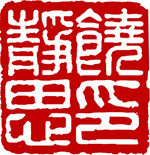
Details from Claude AI search of full text corpora of Chang Buddhist texts for the phrase 一口吸盡西江水 that is written in the 1768 and 1800 Jikishinkage-ryū mokuroku.
Phrase: 一口吸盡西江水 (ikkō ni sekkō no mizu o kyūjin su; yī kǒu xī jìn xī jiāng shuǐ; “in one gulp, swallow all the water of the West River”). Carried as a gokui (極意; inner teaching) in Jikishinkage-ryū densho. Unlike 心遍萬境, this phrase has a firm, attested Chan locus.
Object: The canonical noun is 西江水 (West River water); “the sea” is a loose gloss. The distinct phrase 吸盡滄溟 (“drink up the ocean”) is rare (7 corpus hits) and unrelated. The toponym 西江 is generally taken as “the great western river” — an image of vastness, not a gazetteer identification (Mazu taught in Jiangxi, 江西).
Corpus findings
Full-text search of the CBETA P5 corpus (tags stripped, CJK-only stream):
- 一口吸盡西江水 (full form): 463 occurrences; 吸盡西江水: 509; 吸盡西江 (broad): 653; the paired question 不與萬法為侶 (“not a companion to the myriad dharmas”): 632. Present in 247 works — one of the most-diffused kōan tags in the canon.
- Earliest extant occurrence: Zutang ji (祖堂集; Sodōshū, 952; CBETA B25n0144), in the Layman Pang entry.
- Source-specific records: Mazu Daoyi chanshi guanglu (馬祖道一禪師廣錄, X69n1321, in the Sike yulu 四家語錄) and Pang jushi yulu (龐居士語錄, X69n1336).
- Canonical transmission: Jingde chuandeng lu (景德傳燈錄, 1004; T2076).
- Most influential later vehicle: Biyan lu (碧巖錄, 1128; T2003), Case 42.
Original context — Layman Pang and Mazu
The exchange is between Layman Pang (龐蘊, Páng Yùn; also 龐居士, J. Hōkoji; c. 740–808), the paradigmatic lay Chan adept, and Mazu Daoyi (馬祖道一; J. Baso Dōitsu; 709–788), founder of the Hongzhou school.
Zutang ji (952), earliest form:
龐居士…因問馬大師:「不與萬法為侶者,是什摩人?」馬師云:「待居士一口吸盡西江水,我則為你說。」居士便大悟。
“Layman Pang asked Master Ma, ‘What sort of person is the one who is not a companion to the ten thousand dharmas (不與萬法為侶)?’ Ma said, ‘Wait until you have swallowed all the water of the West River in one gulp — then I will tell you.’ At this the Layman had a great awakening.”
Jingde chuandeng lu (1004) gives 待汝一口吸盡西江水即向汝道 and adds 居士言下頓領玄要 (“at these words he suddenly grasped the essential mystery”).
Shitou precursor. Per the Biyan lu commentary, Pang first put the identical question to Shitou Xiqian (石頭希遷; J. Sekitō Kisen), who covered his mouth (掩却口) — occasioning Pang’s first verse, 日用事無別…神通并妙用,運水及搬柴 (“my daily affairs are nothing special… supernatural power and wondrous function: hauling water and carrying firewood”). Only then did he ask Mazu.
Pang’s awakening verse (after the West River reply):
十方同聚會,箇箇學無為。此是選佛場,心空及第歸。
“From the ten directions we gather in one assembly; each studies non-doing (mui 無為; wúwéi). This is the hall where Buddhas are selected; mind emptied, one passes the exam and returns home.” (senbutsujō 選佛場 casts the training hall as the imperial-examination hall — one “passes” by emptying the mind.) Zutang ji variants: 同一會 / 各各 / 選佛處.
Commentary
The question 不與萬法為侶 asks after the absolute subject — the “one” that keeps company with nothing, unconditioned by any of the myriad dharmas; it is itself a stock huatou. Mazu declines to answer it as a proposition: such a “one” cannot be pointed at as an object among objects without contradicting the question. He substitutes an impossible physical demand. Swallowing an entire great river in one mouthful cannot be parsed into a subject performing an act on an object — the image forces a totality taken whole, non-dually; one does not drink the river cup by cup. The impossibility is the teaching: it jams conceptual grasping (a “live word,” katsugo 活句), and in the collapse of the subject/object frame Pang awakens. Read positively, to “swallow the West River” is to be non-separate from the whole, so there is no longer a “one” standing over against “the ten thousand” — which is exactly what “not companioned by the myriad dharmas” names.
Biyan lu Case 42 — 碧巖錄・第四十二則「龐居士好雪片片」
Yuanwu Keqin (圜悟克勤; J. Engo Kokugon; 1063–1135), with verse by Xuedou Chongxian (雪竇重顯; J. Setchō Jūken; 980–1052). Text: Taishō vol. 48, no. 2003. Translations below are working translations.
垂示 (Pointer)
垂示云。單提獨弄,帶水拕泥,敲唱俱行。銀山鐵壁。擬議則髑髏前見鬼,尋思則黑山下打坐。明明杲日麗天,颯颯清風匝地。且道古人還有誵訛處麼。試舉看。
“Holding it up alone, playing it solo; or else trailing through water, dragging through mud, striking and singing at once. A silver mountain, an iron wall. Hesitate and deliberate — you see ghosts before the skull; ponder and reflect — you sit under the black mountain. Bright, bright, the blazing sun rides the sky; rushing, rushing, the pure wind circles the earth. But say: did the ancients have any slippery point (誵訛)? Try looking at the case raised here.”
本則 (Main case)
舉。龐居士辭藥山,山命十人禪客相送至門首。居士指空中雪云:「好雪片片,不落別處。」時有全禪客云:「落在什麼處?」士打一掌。全云:「居士也不得草草。」士云:「汝恁麼稱禪客,閻老子未放汝在。」全云:「居士作麼生?」士又打一掌,云:「眼見如盲,口說如啞。」
“Raised: Layman Pang, taking leave of Yaoshan (藥山; J. Yakusan [Weiyan 惟儼]), was seen off to the gate by ten Chan monks Yaoshan had ordered to escort him. Pointing at the snow in the air, the Layman said, ‘Good snow — flake after flake, it falls in no other place.’ A monk named Quan (全禪客) said, ‘Where does it fall, then?’ The Layman gave him a slap. Quan said, ‘Layman, don’t be so careless.’ The Layman said, ‘Calling yourself a Chan monk like that — Old Yama (閻老子; King of Death) won’t let you off.’ Quan said, ‘And what about you, Layman?’ The Layman slapped him again and said, ‘Your eyes see as if blind, your mouth speaks as if mute.’”
Xuedou’s alternate word (別語): 初問處,但握雪團便打。 — “At the first question, I’d just have grabbed a snowball and hit him.” (In the Taishō text, Yuanwu’s capping phrases, jakugo 著語, are interlined throughout the case; they are omitted from the clean transcription above.)
評唱 (Yuanwu’s commentary) — the West River passage
龐居士參馬祖、石頭,兩處有頌。初見石頭,便問:「不與萬法為侶,是什麼人?」聲未斷,被石頭掩却口,有箇省處,作頌道:「日用事無別,唯吾自偶諧。頭頭非取捨,處處沒張乖。朱紫誰為號,青山絕點埃。神通并妙用,運水及搬柴。」後參馬祖,又問:「不與萬法為侶,是什麼人?」祖云:「待爾一口吸盡西江水,即向汝道。」士豁然大悟,作頌云:「十方同聚會,箇箇學無為。此是選佛場,心空及第歸。」…到藥山盤桓既久,遂辭藥山。山至重他,命十人禪客相送。是時值雪下,居士指雪云:「好雪片片不落別處。」
“Layman Pang studied under both Mazu and Shitou, and has verses from both. First, meeting Shitou, he asked, ‘What sort of person is the one not a companion to the myriad dharmas?’ Before the words were out, Shitou covered his mouth — and he had an insight, making the verse, ‘My daily affairs are nothing special… supernatural power and wondrous function: hauling water and carrying firewood.’ Later, with Mazu, he asked again, ‘What sort of person is the one not a companion to the myriad dharmas?’ Mazu said, ‘Wait until you swallow all the water of the West River in one gulp — then I’ll tell you.’ The Layman was thoroughly, greatly awakened (豁然大悟), and made the verse, ‘From the ten directions we gather in one assembly… mind emptied, one passes the exam and returns home.’… Having lingered long at Yaoshan’s, he took his leave; Yaoshan, esteeming him greatly, ordered ten monks to see him off. Snow was then falling, and the Layman, pointing at it, said, ‘Good snow — flake after flake, it falls in no other place.’”
The remainder of the pingchang (評唱) glosses the snow exchange: Quan’s “Where does it fall?” takes the bait; Pang’s two slaps enact what cannot be said; Xuedou’s “just grab a snowball and hit him” is judged apt but a half-beat slow (機遲) — the reply should meet the sound as it sounds (和聲便應、和聲便打). Yuanwu then reads the whole as “one-color” (一色) ground — the Samantabhadra (普賢) realm, “made into one seamless piece” (打成一片) — cautioning that resting in uniform whiteness is only “half-raising” (半提); full-raising (全提) requires the upward road (向上一路), where great function appears and no needle enters. He closes: even Bodhidharma could scarcely tell it apart.
Iro (one color) is found in Jikishinkage-ryū mokuroku commentary as well, for Metsuke no Koto (目付之事; “Matter of the Gaze”) in the phrase Gan nari. Metsuke no Shiyō, Iro o Miru Koto Kokoro no kagami (眼ナリ 目付ノ仕用 色ヲ見ル 心ノ鏡).
頌 (Xuedou’s verse)
雪團打,雪團打,龐老機關沒可把。天上人間不自知,眼裏耳裏絕瀟灑。瀟灑絕,碧眼胡僧難辨別。
“Snowball smack! Snowball smack! — Old Pang’s device, there’s no grabbing hold of it. Gods above and humans below don’t know it themselves; in the eye, in the ear, utterly unfettered (瀟灑). Utterly unfettered! — even the blue-eyed foreign monk (碧眼胡僧; Bodhidharma, 達磨) could hardly tell it apart.”
Primary witnesses
Corpus access (downloads)
- CBETA XML P5 (full canon, the corpus searched here): https://github.com/cbeta-org/xml-p5 · tarball ~530 MB: https://codeload.github.com/cbeta-org/xml-p5/tar.gz/refs/heads/master
- DILA CBETA-txt (Taishō, plain text): https://github.com/DILA-edu/CBETA-txt
- CBETA download hub / offline reader: https://cbdata.dila.edu.tw/static_pages/download_fulltext · https://www.cbeta.org
References
primary