Introduction
The Inner Dharma writing project started not because of my practice of martial arts but because of my interest in Shugendō, a blend of Buddhism, Taoism, and mountain asceticism practiced in Japan.
Visiting sacred places has been an important component of my martial arts training over the years. It was while visiting the Dewa Sanzan area, including Gassan Dai Jinja (月山大神社) on Mt. Haguro and the Haguro-san Kōtakuji Shōzenin (羽黒山荒沢寺正 善院) Kogane-dō in Haguro-machi associated to Haguro Shugendō, that I decided to focus my efforts on a practice of classical and traditional arts.
2026 Update
Much more information is now available about practices like Shugendō. I recommend those interested in Shugendō to first read Ishizuchi-san on Western Mikkyō. Those interested in practice in the west would do well to visit karunamitra.org for an attempt to correct misconceptions about the tradition.
NYC Aiki-jūjutsu
There were a number of NYC area aiki-jūjutsu schools inspired by the teaching of Daitō-ryū Kodokai, especially Yonezawa Katsumi. I trained at one self-defense oriented Aikidō dōjō in Jackson Heights that augmented its practice with older Daitō-ryū techniques and striking methods (atemi) from Nippon Shorinji Kempō. I believe our school ultimately was a mixed martial art containing some Daitō-ryū techniques likely learned from seminars Yonezawa held in the 1970s along with locking and throwing methods drawn from 1950s era Aikidō, especially as practiced by Tohei Koichi, combined with striking methods drawn from karate and Shorinji Kempō that were both grafted onto a set of self-defense oriented body movements called tai-sabaki developed by Dennis Fink in the 1970s, which influenced many NYC area jūjutsu styles. What I learned over time, especially after attending seminars in Daitō-ryū Takumakai in 1999, was that absent from the curriculum I had learned was any aiki-no-jutsu practice.
In November 2007, I reconnected with an old training buddy, Louis Bravo. Louis is a Hakko-ryū black belt who trained in karate and Aikidō before visiting our Jackson Heights aiki-jūjutsu dōjō on the recommendation of his father. His father is a Hakko-ryū practitioner who had heard of the school as teaching an art that was a variation on Miyama-ryū and effective for street fighting and self-defense.
I asked Louis to check what his father exactly knew about our school's history. Louis himself felt it was similar in some ways to the techniques he saw in Hakko-ryū and old Aikidō that were both derived from Daitō-ryū, but mixed with Karatedō and Judō:
I got a call from my old man and he gave me the missing link. Here is the breakdown... Sensei Claudio was the founder of Hoteikan-ryū. He worked with Sensei Perreira before he created Miyama-ryū. He was a Karate and Judo guy. Sensei Claudio worked out of several dojos including the basement in the Bronx [which had split off from Miyama-ryū] I told you about during this period.
Sensei Claudio met Sensei Robert Hasman and ran study groups around NYC in the 70s and 80s. Sensei Claudio was also a contemporary of Sensei William C. Morris, a sensei of Sosuishi-ryū and Danzan-ryū jūjutsu. They had a Black belt named David Samuel [the man our teacher initially claimed was his instructor]; he was a former Marine.
The art we studied was goshin-jutsu invented by Dennis Fink of Sosuishi-ryū Jūjutsu, Isshin-ryū karate, and Tomiki Aikidō that was mixed with Sensei Claudio's Karate and Judo and Sensei William C. Morris' old Danzan-ryū jūjutsu. The Basement dōjō and the first Hoteikan school was in a bank in the Bronx that is how our teacher came into the picture. The reason our teacher was not a Miyama-ryū guy is because he was part of the study group Sensei Claudio had in the Bronx.
Then in 2011, Lou was training in Chile and encountered someone who practiced Jūjutsu in NYC in the 1970s, and had some additional details:
I had a chance to meet with someone who was with our teacher in the early pre Jackson Heights days in New York. He told me the base for his art was Shorinji Kempō before Aikidō was added. He told me that the Aikidō was pre-war Aikidō, giving it more variations of throws, locks, etc. The weapons he was not sure on but said that the original goal was to be goshin-jutsu (self-defense).
He told me that even the story of Nishiyama passing away and his only daughter taking over the system was the true story of Shorinji Kempō whose head master is the daughter of the founder who died sometime in 1981 and the founder was in his own words a Warrior Monk. So both the Kempō and Aiki can be traced back to older systems of Japan and China. This is why the Atemi and Aiki work well for goshin-jutsu.
The guy told me that also at this time our teacher used the records of the Asahi Newspaper office in Osaka where many Daitō-ryū techniques were preserved on film as originally taught by both Ueshiba and Takeda Sokaku to make his art more solid and traditional. He told me that at this time the adding of arts or creating of a system was a big thing in NYC since it was the only way to stand apart from the big names schools in NYC like Oyama, Yamada, and Oishi.
I think the Aikidō and Sosuishi-ryū came first when he wanted to teach a goshin-jutsu art then the Shorinji Kempō completed the system we know today. The Hoteikan dojo from what I see looks like the lab / testing place for it and a few other NYC arts. I wanted you to know that what you spent so many years on was not a waste of time since we had variations of techniques that many of Aikidōka today have never seen. In closing, I now understand that it does have a real base but it's just that our teacher for some reason had to create a story for it and that is when I think the weapons part came into play.
Later, a former colleague began training under Dennis Fink of Sosuishi-ryū, whose self-defense teachings helped inspire many NYC area jūjutsu schools, including Miyama-ryū and its offshoots. Doing so, he discovered that many of the original stories or descriptions told in our dōjō were also taken in part from lives of teachers of Sosuishi-ryū. So, Shorinji Kempō was not the only art our teacher stole history from.
In NYC, I attended workshops from more direct lines of Daitō-ryū, including Daitō-ryū Takumakai, and came to realize what I had first learned in Jackson Heights, while effective for urban combatives, was an amalgamation instead of a traditional line of practice.
Aiki Retrospective
What about the goshin-jutsu techniques?
Much later, I learned of a statement made by one of my first instructor's colleagues — someone who attended the Daitō-ryū Kodokai seminars taught by Yonezawa in the 1970s and eventually went on to learn Daitō-ryū Kodokai to an advanced level. He once told a prospective student who was contemplating the school I trained at in NYC and later trained with us on a private basis:
It's okay stuff. Good strong jūjutsu. Go do that first and get your black belt. Once you've learned the basics, then come to me if you want to learn real aiki. But, if I were you, I would not waste your time with their weapons practice. It is all made up.
I think that is a good enough summary as any.
The sin was not in teaching goshin-jutsu. Instead, by inflating the history to suggest it was a historical form of aiki-jūjutsu, advanced students who otherwise might have sought out traditional instruction instead wasted a lot of time and effort at the school's upper-level curriculum, which was largely invented and in retrospect, not of as high quality as traditional kenjutsu or aiki-jūjutsu as practiced in Japan or by people who studied in Japan.
Some pointers to alternative schools in NYC can be found in the end notes to this article.
Haguro Shugendō
The school we trained at also maintained a set of spiritual practices that it claimed were drawn from Shugendō associated to Mount Haguro in Japaan.
Some sources state that Takeda Sokaku's grandfather Takeda Soemon had been trained in Haguro Shugendō — Takeda Sokaku himself was known to have gone on refuge in the sacred mountains of Dewa. This has intrigued many people over the years, especially Aikidōka interested in Daitō-ryū.
Shugendō had a strong philosophical influence on many classical Japanese martial arts. However, there are very few yamabushi related martial traditions surviving in Japan. Today, people will sometimes attempt to use mountain religion as a backstop for their practice because of its poetic allure (taking refuge in the mountains) and also because there is not as much public information available in English compared to other Japanese religions such as well-known Shintō shrines or Buddhist complexes.
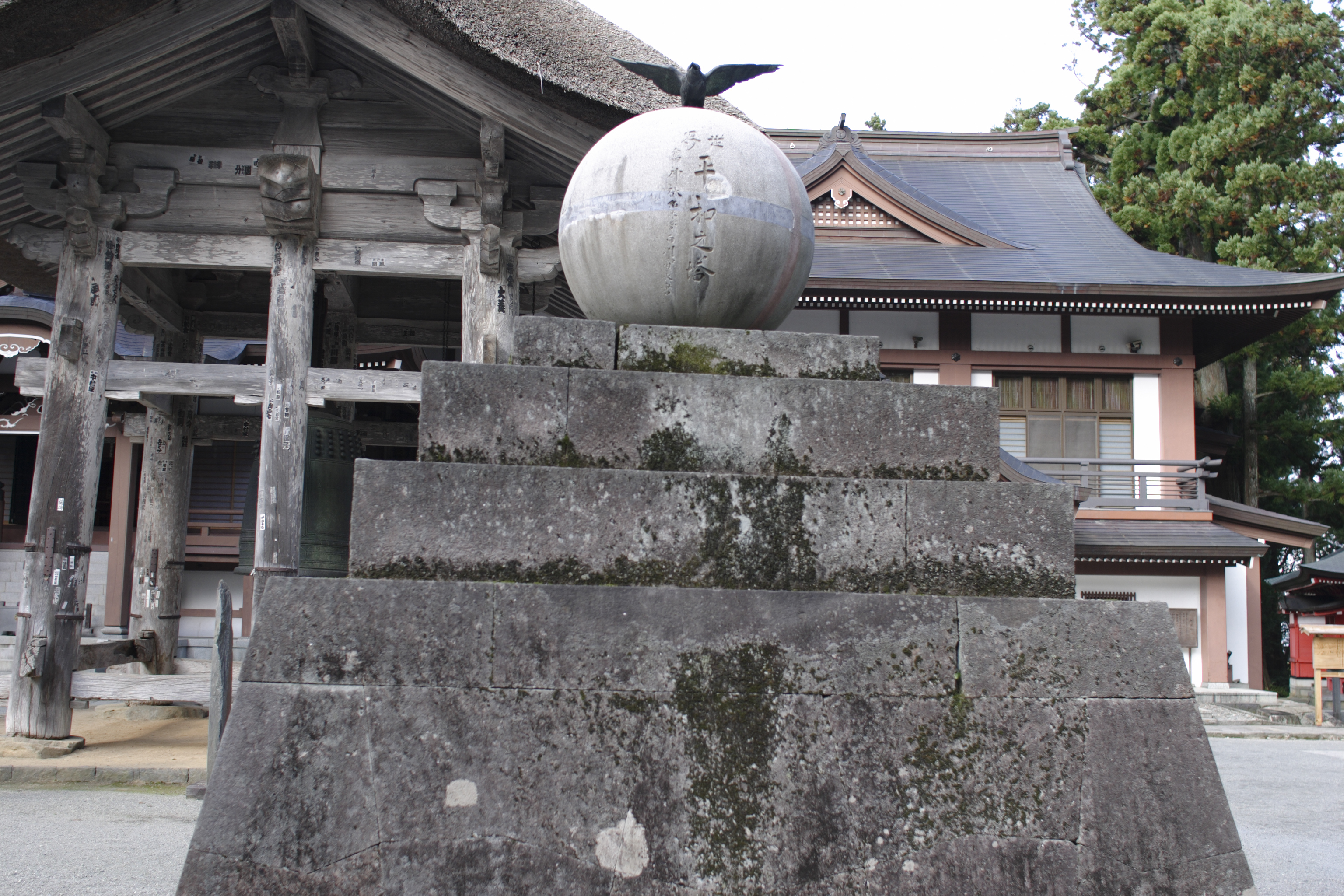 Gassan Dai-jinja on Mt. Haguro
In the case of Haguro Shugendō, Hagurosan Shugen Honshū (羽黒山修験本宗) is the postwar institutional continuation of Haguro Shugendō, based at Arasawa-ji Shōzenin (荒澤寺正善院) in Tsuruoka, Yamagata Prefecture. It was reconstituted after WWII under Japan's 1947 constitutional guarantee of religious freedom, inheriting the tradition maintained at Shōzenin through the Meiji disruption. According to the Shōzenin temple's website, the head temple of Haguro Shugendō was Jakkōji (寂光寺, now Dewa Sanzan Jinja) until the end of the Edo period. After the Meiji shinbutsu bunri, the functions of the head temple were transferred to the Tendai temple Arasawa-ji (荒澤寺) and its administrative office Shōzenin (正善院).
I visited Arasawa-ji Shōzenin in 2005. The attendant there were quite there pleasant and happy for visitors, but with limited time and halting university-level Japanese language skills it was not possible to learn anything about Shugendō in detail, despite my interest. I managed to connect later with members of the expatriate budō community in Japan who practiced Haguro Shugendō — it turns out our NYC Aikidō and Kempō instructor had no connection with Haguro Shugen Honshū.
Haguro Shugendō is an important cultural and philosophical aspect of Japanese culture in the Dewa area, which is near Aizu, and Mt. Haguro has been a pilgrimage destination for Aiki-jūjutsu practitioners since the time of Takeda Sokaku, who spent time there. Takeda's grandfather may have been a shugenja, and mikkyō chanting and breathing methods are important in some lines of Daitō-ryū. Early Daitō-ryū students such as Okuyama Yoshiji of Hakko-ryū and his student Sō Doshin, who founded Nippon Shorinji Kempō, also both spent time on Haguro. There are pictures years later of important Aikidōka such as Shirata Rinjirō and Saitō Morihiro performing enbu in front of Hachiko's shrine.
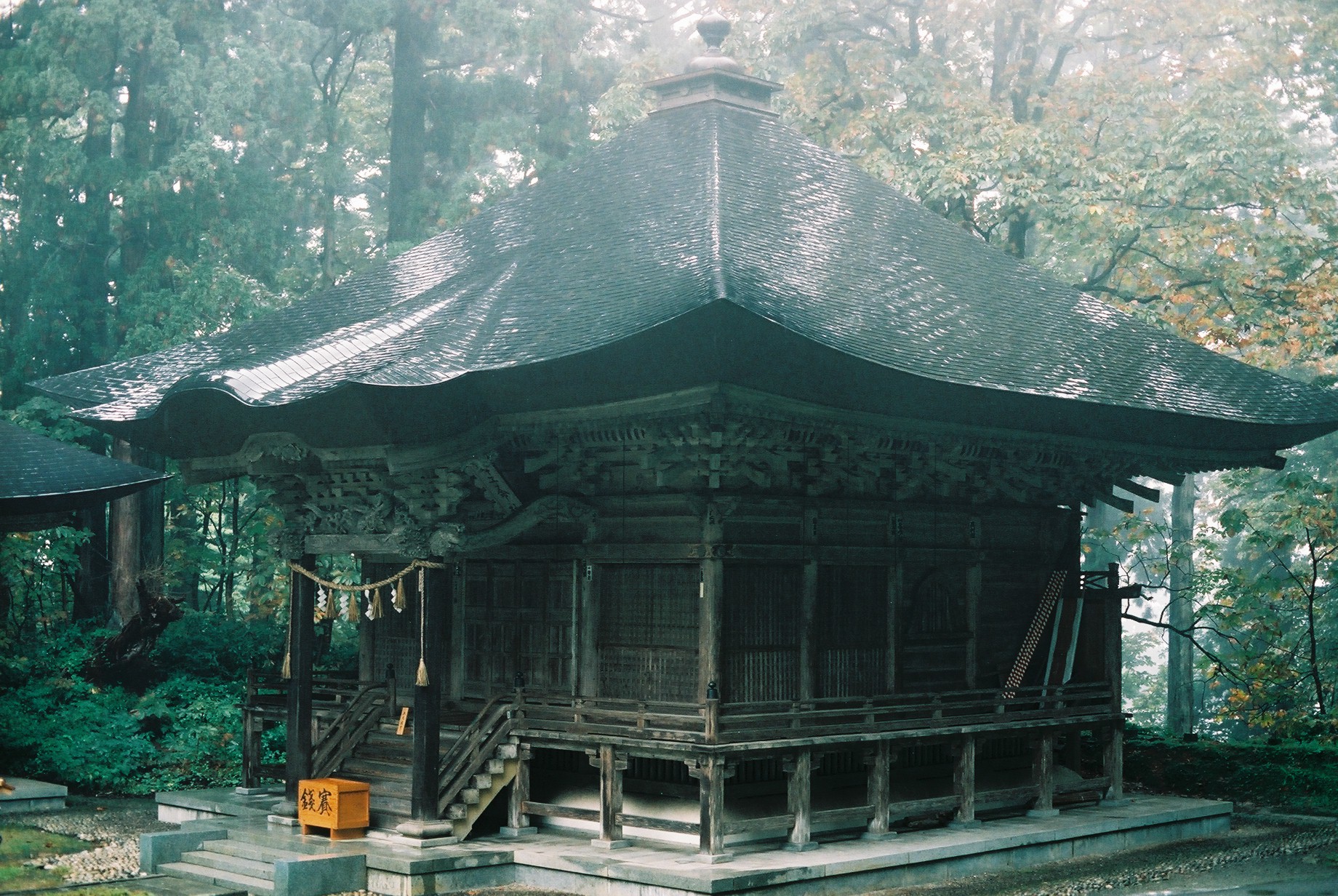 Hachiko-jinja [蜂子神社] at Dewa Sanzan
It is reasonable then to think that other Aikidōka, like our instructor and his Japanese friend in NYC, would find inspiration there. I myself have found Dewa Sanzan to be a wonderful, mysterious, place. That does not mean that every martial artist who visits Haguro, or even goes on a brief retreat there, has formal standing in Haguro Shugendō or is a shugenja or yamabushi.
Over the years, I have collected a small set of notes related to Haguro Shugendō history and provide some information below in the hopes it is useful to others:
- The bettō of Haguro during the transition was named 官田 (Kanda), who became the shrine priest (shashi) and took the name Haguro Uzen (羽黒羽前).
- The gūji (head priest) installed at Dewa when Buddhism and Shintō were split and Shugendō banned, was a Hirata-school nativist scholar named Nishikawa Sugao.
- Haguro Shugendō traces its founding to Nōjō Shōja (能除聖者), identified with Prince Hachiko (蜂子皇子, c. 542–641), son of Emperor Sushun. After his father's assassination by Soga no Umako in 592, the prince is said to have fled north and opened Mt. Haguro, Mt. Gassan, and Mt. Yudono as sacred sites for mountain practice. Hachiko is figured prominently in the entrance hall to the Gassan Dai Jinja.
- Akinomine (秋の峰, autumn peak entry) is a well-documented and important practice in Haguro Shugendō, and there are multiple retreats conducted by Buddhist-afilliated, Shintō-afilliated, and independent revival groups today.
- Other important founding figures in Shugendō, like En no Gyoja and Shōbō (聖宝) – Rigen Daishi (理源大師) – lived near Nara and Kyōto and are not associated to Dewa Sanzan or Haguro Shugendō.
- For example, Ono-ryū (小野流) is the line of Shingon practice said to founded by Shōbō at Daigo-ji on Mt. Kasatori — not the family name of a line of Shugendō practice in Dewa.
- Saigō Tanomo (1830–1903) was the chief retainer (karō) of the Aizu domain and a Shintō priest at Nikkō Tōshōgū after the domain's defeat in the Boshin War. No mainstream source describes him as being a Shugendō practitioner.
I provide the above as I was once provided incorrect information, when I was studying Aikidō and interested in Shugendō.
End Notes
- Pranin, Stanley, ed. Daitō-ryū Aikijūjutsu: Conversations with Daitō-ryū Masters. Tokyo: Aiki News, 1996. [Background on the Daitō-ryū lineages including the Kodokai branch under Yonezawa Katsumi that influenced NYC-area schools.]
- Pranin, Stanley. "Saigō Tanomo and Takeda Sokaku." Aiki News / Aikido Journal, various issues. [Documents the Saigō Tanomo connection to Takeda Sokaku and the claim that Saigō was connected to Shugendō, although Saigō Tanomo is now believed to not have practiced budō.]
- Saigō Shirō and the yama arashi technique: Saigō Shirō (1866–1922), adopted son of Saigō Tanomo, was a legendary early Kodokan Jūdō practitioner famous for his yama arashi (
山嵐 , "mountain storm") throw. His story was fictionalized in the popular novel Sanshirō Sugata (1942) by Tomita Tsuneo, later adapted as a film by Kurosawa Akira (1943). That the name of the art in the family letter — Yama Arashi-ryū — matches the signature technique of Saigō Tanomo's adopted son is unlikely to be coincidental, and further links the fabricated lineage to the periphery of Daitō-ryū history. - On Sosuishi-ryū and the NYC goshin-jutsu scene: Sosuishi-ryū (
双水執流 ) is a legitimate classical Japanese martial art (koryū) with documented lineage. Dennis Fink's self-defense teachings in NYC in the 1970s drew from Sosuishi-ryū, Isshin-ryū karate, and Tomiki Aikidō, and influenced multiple NYC-area jūjutsu schools including Miyama-ryū and its offshoots. This is consistent with Louis Bravo's account of the NYC martial arts scene described in this essay. - Sō Dōshin (founder). The founder of Nippon Shorinji Kempō, Sō Dōshin (Nakano Michiomi), died in 1980. His daughter Sō Yūki succeeded him as head of the organization — the same succession narrative Louis's contact identified as having been appropriated by the NYC school.
- In NYC, I recommend those interested in the Japanese martial art of aiki-jūjutsu train at The Yushinkan NYC located in Brooklyn led by Rodrigo Kong. Several friends I knew from New York changed to training there from our dōjō in Queens and were quite happy with their decision.
References
Some references can be found below.
- Miyake Hitoshi (宮家準). "近現代の山岳宗教と修験道 ― 神仏分離令と神道指令への対応を中心に" [Mountain Religion and Shugendō in the Modern Era: Responses to the Shinbutsu Bunri Edicts and the Shintō Directive]. Meiji Seitoku Kinen Gakkai Kiyō (明治聖徳記念学会紀要), restored issue no. 43, November 2006, pp. 42–61.
- Sekimori, Gaynor. "Paper Fowl and Wooden Fish: The Separation of Kami and Buddha Worship in Haguro Shugendō, 1869–1875." Japanese Journal of Religious Studies 32, no. 2 (2005): 197–234.
- Sekimori, Gaynor. "Haguro Shugendō and the Separation of Buddha and Kami Worship (shinbutsu bunri), 1868–1890." PhD diss., University of Cambridge, 2000.
- Earhart, H. Byron. A Religious Study of the Mount Haguro Sect of Shugendō. Tokyo: Sophia University, 1970
- Blacker, Carmen. The Catalpa Bow: A Study of Shamanistic Practices in Japan. London: George Allen & Unwin, 1975.
- Miyake Hitoshi. Shugendō: Essays on the Structure of Japanese Folk Religion. Edited by H. Byron Earhart. Ann Arbor: University of Michigan Center for Japanese Studies, 2001.
- Keene, Donald. Emperor of Japan: Meiji and His World, 1852–1912. New York: Columbia University Press, 2002.
- Shugendō: Essays on the Structure of Japanese Folk Religion, ed. H. Byron Earhart (Ann Arbor: University of Michigan Center for Japanese Studies, 2001)