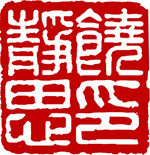
From 2004 to 2008 I
continued to work on refining the modern goshin-jutsu (
I had begun learning Bagua Zhang after I moved to Baltimore and shifted my practice towards training in internal martial arts after leaving this school. Shortly thereafter I began training in more traditional approaches to Japanese weapons as well.
Before I completely shifted to Chinese methods and approaches, I received permission from my Gao bagua instructor to teach Ben what I had learned. I introduced Ben to the more sophisticated tactics and body mechanics of Baguazhang, even while we continued to drill our core set of aiki-jūjutsu techniques. Over time, we pared down the curriculum we had first practiced and revised its body mechanics to draw largely from Bagua instead of Shorinji Kempo. He was a rigorous training partner who had a strong distaste for what a friend calls "aiki accomodation syndrome" — training outdoors on a variety of surfaces, including Pennsylvania bluestone, did not lead us to simply take ukemi as we might have done on smooth tatami.
The result we called Gassankan (
Attention is first paid to posture, balance, and alignment of forces inside the body. Whether striking, deflecting, locking or throwing, we always retain the ability to feel, move, and change. Once the body is developed, we begin addressing proper mechanics of movement, attempting to maintain the integration that was previously practiced statically while moving through progressive drills that explore three different ranges and contexts.