Introduction
The term gekiken (撃剣) dates at least from the Gekiken Sōdan (撃剣叢 談) from Kansei 2 (1790), which inventoried in its five volumes, the kenjutsu schools and master-houses Mikami Genryū (三上元龍) saw and heard about while moving between Okayama and Edo across the 1760s–1790s.
It records on the order of 114 ryūha, organized by lineage-system across the five volumes — volume one opening with Kage-ryū and the Shinkage-ryū schools, volume two with Shintō-ryū and the Kashima/Katori schools, volume three with Chūjō-ryū and the Ittō-ryū schools, volume four with Musashi/Enmei-ryū and other distinctive famous schools, and volume five with local, regional lines.
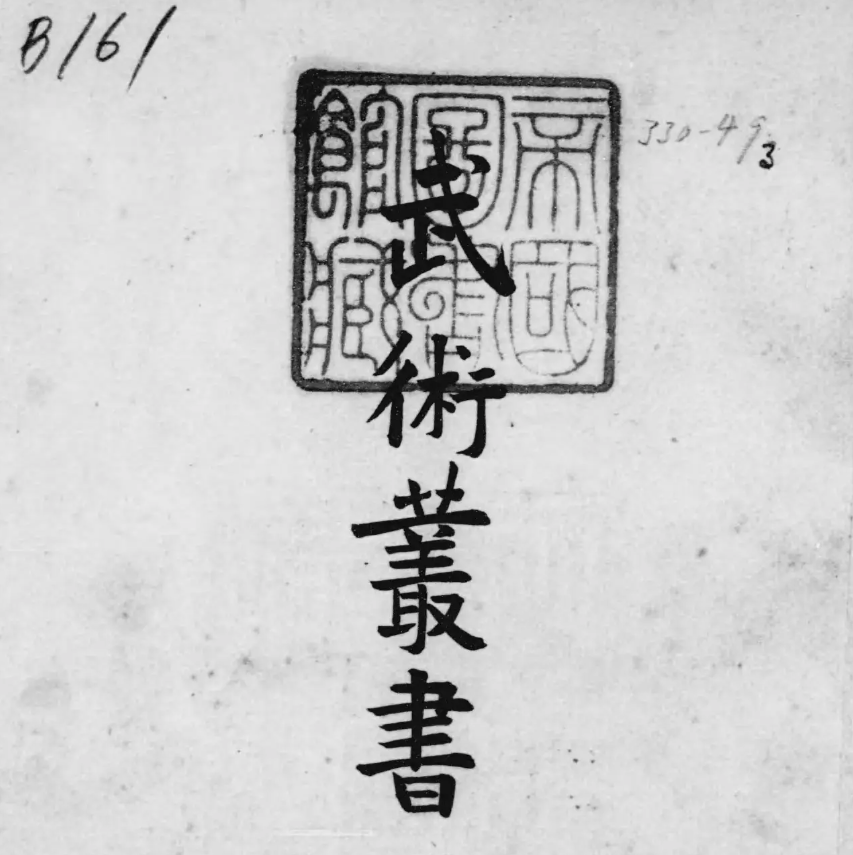
The Bujutsu Sōsho 『武術叢書』 1915 (Taishō 4) is a Kokusho Kankōkai collectanea of classic swordsmanship texts, edited by Hayakawa Junzaburō, 548 pages, NDL PID 1764781, and public-domain. It’s a landmark anthology, gathering some twenty Edo-period bujutsu treatises in one volume: Honchō Bugei Shōden, Gekiken Sōdan, the Gorin no Sho, Fudōchi, Taia-ki, Tengu Geijutsu-ron, Jōseishi Kendan.
國書刊行會 (年). 武術叢書. 国書刊行会, 1915年. https://doi.org/10.11501/1764781.
The Bujutsu Sōsho (and, notably, Yamada Jirōkichi’s own Kendō Shūgi expansion of his student’s earlier work) credits Gekiken Sōdan to a different man — Minamoto Tokushū (源徳修, gō Kakusai 確斎), described as a Tenpō-era Okayama kenjutsu instructor — and dates it to Tenpō 14 (1843). That attribution is now known to be wrong.
Manuscript research, principally Nagao Susumu’s 1999 study in the Meiji University humanities bulletin, established that the author was Mikami Genryū (三上元龍), a samurai of Bizen Okayama domain (common name Sadayū, 左大夫) and puts its date at 1790 (Susumu 1999).
The corrected attribution and analysis are in 18世紀における剣術の変質過程に関する研究-『撃剣叢談』の分析を中心に- 明大人文研紀要, Nagao Susumu, “A Study on the Process of Change in Quality of the Japanese-Swordplay in the Eighteenth Century : Mainly in the Analysis of Gekken-Sodan”, Meiji Daigaku Jinbun Kagaku Kenkyūjo Kiyō 45 (1999), 121–133
Of the five witnesses Nagao collates, three carry the original preface and two carry the altered one:
- Okayama City Central Library, the late Shimada Teiichi ms., and Osaka Nakanoshima Library — all three: 「寛政二年庚戌十二月 三上元龍 花押」 (Kansei 2 = 1790, 12th month, Mikami Motoryū).
- NDL and Tokyo University Historiographical Institute — both: 「天保十四癸卯年初冬 源徳修」 (Tenpō 14 = 1843, Minamoto Tokushū), the latter with a 「源徳修印」 seal.
Since all five are nearly identical in the body (全5巻ほぼ同文), Nagao’s conclusion is that the work is Mikami’s 1790 composition, and that 源徳修 (Kakusai 確斎) took it, rewrote part of the preface, and passed it off as his own compilation. So 1843/源徳修 is not a co-author or a revision — it’s a re-attribution grafted onto Mikami’s text.
Nagao’s footnote 7 gives the exact alteration: in the three 1790 manuscripts the preface reads 「ことし寛政庚戌の年を以て逆に干支を数ふれば、已に二十年に餘れり」; in the two 源徳修 manuscripts it was changed to 「ことし天保癸卯の年を以て逆に干支を数ふるに、已に十有余年」. Your OCR from the Bujutsu Sōsho gave 「ことし天保癸卯の年を以て」 and 「已に十有餘年」 — i.e. the Bujutsu Sōsho prints the NDL/源徳修 recension.
Author
Mikami Sadayū Motoryū (三上左大夫元龍), a zaikan (材官/財官, military-official) family of Okayama domain; the preface’s 「僕材官の 家に生れ」 and the Yoshitsune-ryū entry (accompanying his father to Edo) explain his unusually good access to both Edo and Bizen schools. The Bisaku Jinmei Daijiten (備作人名大辞典) records him as notably learned, “known as an eccentric” (奇人), author of the Hakuhōroku (泊放録) and the Gekiken Sōdan, died Kansei 6 (1794), 2nd month, 10th day. (Nagao dismisses Morita Sakae’s earlier guess that 源 徳修 = “edited by Gentoku” = a descendant 三上徳: unprovable, and the 「源徳修印」 seal argues against it.)
The work is useful to fill in the existing records of lineages of major arts this site is interested in. For example: 長沼正兵衛(綱郷, 1772没). Nagao identifies the 直心影流 entry’s Naganuma Shōbee — the one 「今芝金杉に住して上手なる由」 — as Naganuma Tsunasato (綱郷), died 1772.
The Gekiken Sōdan is found on NDL images 90 to 114 of Hayakawa Junzaburō. It is printed in five kan (卷一–卷五) or volumes with variant kanji (擊劔叢談 / 擊劍叢談) used in the marginal headers. It records many schools not found in the Honchō Bugei Shōden (1716) or the Nihon Chūkō Bujutsu Keifu Ryaku (1767), suggesting the profusion of new schools in the later 18th century.
The preface states the author collected the “general ideas and combat body-methods” (大意・身法) of the various schools over “十有餘年” (somewhat over ten years), amounting to roughly a hundred, recorded as recalled; he concedes transmission errors are likely, disclaims any intent to propagate the work widely, and asks fellow enthusiasts to correct and supplement it.
The root: 武藝原始 and Kage-ryū (影流)
The volume opens not with a school but with an origins essay, and it maintains the thesis that is that the Kage-ryū is the genuinely old lineage of bujutsu while the Kurama/Yoshitsune schools are late arrivals:
一、我國劔術の原始を考ふるに、桓武帝の御時より武藝の名は聞えたれども、一々名を分たざれば…されど其態如何なりし哉、はかり知るべからず。保元の比より後は、八郞御曹司・九郞御曹司等、打物取りて人にすぐれ給ひし事も聞えしかど…定まれる師は聞えず。鬼一法眼と云ふ者此道の師なりといへども定かならず。是等の事よりして、判官流・鞍馬流・鬼一法眼京流などいふ流、世上に行はるれども、皆近き世の人、名を借りて流派を立てし事、疑ふべからず。如今、文華盛なる代となりて、事の眞僞を辨ふる人多ければ、却て流の名の宜しきに叶はぬを以て、其の師たる人も輕々しく聞ゆれども、其實は然るにも有べからず。唯、流の名の古く聞えたるは、影の流に及ぶべからず。影の流は異國にも傳はりし事、松下見林が『異稱日本傳』にも見えて、其うち猿飛・猿廻等の圖も出たるなり。其れ、劔術諸流の原始は、影の流として誤らざるべき歟。今、江戸芝に福井安左衞門といふ影流の師有り。思ふに古傳にはあらじ。古く愛洲影流と呼ぶ有り、詳に下に見えたり。〇 〔標目:新影流/新陰・神影・疋田陰流/直心影流〕 一、新影流の祖、上泉伊勢守信繩〔繩、遍く綱に書く。今、其家に傳ふる處を以てしるす〕。先祖、遠州俵藤太秀郷より出で、代々上野大胡の城主也。信繩が父憲繩が代に至りて城を落されしと云ふ。信繩、劔術を好み、飯篠長威入道、又愛洲移香〔移香、世に多く惟孝と書けり。今、新陰流の古き免許狀の記せる所を以て字を改む。其狀に記せる處は、鵜戸大權現より系を引きて、愛洲移香・愛洲小七郎・上泉武藏守・疋田〔・柳生…〕〕…
On the origins of our country’s swordsmanship: martial arts are heard of from Emperor Kanmu’s day, but names weren’t distinguished, so [that] can’t be cited as proof of a codified early swordsmanship, and its actual form is unknowable. From the Hōgen era (1156) on, the Eighth Young Lord (Tametomo) and Ninth Young Lord (Yoshitsune) are heard to have excelled with weapons, but no fixed teacher is recorded; Kiichi Hōgen (鬼一法眼) is called a master of this Way, but not with certainty. On such grounds, schools like Hōgan-ryū, Kurama-ryū, and Kiichi-Hōgen Kyō-ryū circulate, but there is no doubt these are all founded by recent men borrowing old names. Only in antiquity of name none can rival the Kage lineage (影の流). That it passed even to foreign lands appears in Matsushita Kenrin’s (松下見林) Ishō Nihon Den (異稱日本傳), where illustrations of Enpi (猿飛) and Sarumawashi (猿廻) are given. As for the origin of all sword schools, one would not err in taking it to be the Kage lineage.
He then notes a living 影流 teacher, Fukui Yasuzaemon (福井安左衛門) in Edo-Shiba, judges it not old transmission, and points ahead to 愛洲影流 (Aisu Kage-ryū), “treated in detail below.” The phrase 上泉信繩 is deliberate. The interlinear note reads 「繩、遍く綱に書く。今、其家に傳ふる處を以てしるす」 — “the graph 繩 is generally written 綱; here I record it as transmitted in his house.”
The author knowingly writes 信繩 on the authority of Kamiizumi house transmission while acknowledging 信綱 (Nobutsuna) is the common form. This is a documented graphic variant the author is flagging, and it is a citable instance of him privileging house-transmission orthography over the vulgate (common usage).
The phrase 愛洲移香 is corrected by the author from a menkyo, not garbled. The note reads 「移香、世に多く惟孝と書けり。今、新陰流の古き免許狀の記せる所を以て字を改む」 — “Ikō is commonly written 惟孝 in the world; here I have emended the characters according to what an old Shinkage-ryū menkyo document records.” The author overrides the popular graph with a primary-document reading, his source is an old menkyo.
Udo Daigongen menkyo lineage
The lineage the author quotes from that old Shinkage menkyo:
其狀に記せる處は、鵜戸大權現より系を引きて、愛洲移香 → 愛洲小七郎 → 上泉武藏守 → 疋田〔・柳生…〕
The document traces the line from Udo Daigongen (鵜戸大権現) — i.e. anchors the transmission in the divine origin at the Udo Shugendō shrine to Aisu Ikōsai Hisatada (愛洲移香斎久忠).
From there, the art passses to Aisu Koshichirō (愛洲小七郎) → Kamiizumi Musashi-no-kami → Hikita [and Yagyū…]. Three things here matter:
The 猿飛・猿廻 (Enpi / Sarumawashi) illustrations in Matsushita Kenrin’s Ishō Nihon Den and the 鵜戸大権現 anchor are the same Aisu origin complex — the monkey-vision transmission at the Udo cave — surfacing in two independent places in this one entry (a printed scholarly source and a quoted menkyo). The Ishō Nihon Den attestation is external to the ryū’s own documents.
The menkyo’s chain is the pre-split trunk: Aisu Ikō → Koshichirō → Kamiizumi → (Hikita / Yagyū). It stops the author’s quotation right at the point where the Yagyū and Hikita branches fork off Kamiizumi — the same node upstream of the Yagyū/Okuyama divergence central to Jikishinkage-ryū descent.
The author also dates his authority, not just the lineage: he’s reading “an old Shinkage-ryū menkyo” (新陰流の古き免許狀), which is why he can correct 惟孝 → 移香. The Sōdan’s warrant is a (now-unspecified) old menkyo, i.e. single-document and unnamed — strong as a period reading, but not independently corroborated.
Shinkage-ryū (新影流) — Kamiizumi
一、新影流の祖、上泉伊勢守信繩〔繩、遍く綱に書く。今、其家に傳ふる處を以てしるす〕。先祖、遠州俵藤太秀郷より出で、代々上野大胡の城主也。信繩が父憲繩が代に至りて城を落されしと云ふ。信繩、劔術を好み、飯篠長威入道、又愛洲移香〔移香、世に多く惟孝と書けり。今、新陰流の古き免許狀の記せる所を以て字を改む。其狀に記せる處は、鵜戸大權現より系を引きて、愛洲移香・愛洲小七郎・上泉武藏守・疋田…〕…に從ひて、終に其妙を極めしとぞ。此移香は卽ち影流の師にて、世に愛洲影流と呼ぶもの也。
信繩は同國箕輪城主長野信濃守が旗下に成り、度々の戰鬪に殊功有りて、此家にて「十六人の槍」と稱せらる。中にも信濃守、同國安中の城主〔姓名未詳〕と合戰の時、槍を合せ、「上野國一本槍」と云ふ感狀を信濃守より出せし…。其後、甲州武田信玄に仕へ、此時より伊勢守と改稱しける。無程、此家を辭して上洛し、光源院將軍本國寺に御楯籠り有りし時、拜謁して天下の軍監を賜り、御勝利の後、天下武者修行し、「兵法新陰・軍法軍配、天下第一」の高札を諸國に打納め、其後、禁裏へ父子とも參內し、伊勢守は從四位下武藏守に任じ、子は從五位下常陸介に任じて、天下に名を顯したり。此信繩、天下一の名人と稱す。流を新影と稱す。
其態を傳ふる次第は、表、猿廻・山影・月影・浮舟・三學・覽行・松風・花位詰・高原・遊風・碎等の名有り、車〔…〕等の名有り、軍觀・倉紅葉の傳、極意の太刀、三光の利劔等の名有る也。是を「唯授一人千金の太刀」とも稱する…
The founder of Shinkage-ryū, Kamiizumi Ise-no-kami (historically Nobutsuna 信綱 / Hidetsuna 秀綱), descended from Tawara Tōda Hidesato of Enshū and was for generations lord of Ōgo castle in Kōzuke; his father Norinawa (憲繩) lost the castle. Loving swordsmanship, he studied under Iizasa Chōisai (飯篠長威, the Katori founder) and Aisu Ikō (愛洲移香) — this Ikō being the master of the Kage lineage, what the world calls Aisu Kage-ryū — and mastered it fully.
He became a vassal of Nagano Shinano-no-kami of Minowa castle, distinguished himself repeatedly, was called one of the “sixteen spears” of that house, received a commendation as “the single spear of Kōzuke,” then served Takeda Shingen and took the title Ise-no-kami. Soon leaving that house he went up to the capital; when the Kōgen’in shōgun (Ashikaga Yoshiteru) was besieged at Honkoku-ji he had audience and was granted [the office of] inspector-of-arms of the realm; he posted placards nationwide reading “Hyōhō Shinkage, gunpō gunbai, first under heaven,” and father and son entered court — Ise-no-kami appointed Musashi-no-kami of Junior Fourth Rank, his son Hitachi-no-suke of Junior Fifth. Called the foremost master in the realm, he named his school “Shinkage” (新影).
The curriculum list includes:
- 猿廻 (Sarumawashi) · 山影 (Yamakage) · 月影 (Tsukikage) · 浮舟 (Ukifune) · 三學 (Sangaku) · 覽行 (Rankō?) · 松風 (Matsukaze) · 花位詰 (Kai-zume?) · 高原 (Takahara/Kōgen?) · 遊風 (Gyakufū) · 碎 (Kudaki) … 車 (Marobashi) 等の名有り
Then a second grouping all styled the yuiju ichinin senkin no tachi (唯授一人千金の太刀, one-to-one secret transmission) or gokui no tachi 極意の太刀:
- Gunkan (軍觀 ; reading uncertain)
- Kuramomiji no den (倉/庫紅葉の傳)
- Sankō no riken (三光の利劔)
Note that Mikami’s 三光の利劔・倉紅葉の傳・(軍觀)・極意の太刀 are a Bizen compiler’s 1790 description of the Shinkage secret tier from outside, not the Yagyū house’s okugi nomenclature — which, as Yagyū Sekishūsai’s Emokuroku shows, names its Ōgi no Tachi 添截乱截・無二剣・活人剣・向上・極意・神妙剣 .
Also, this text is difficult to read in the NDL scan copy, so some of the kanji may be garbled.
The main line runs 「飯篠長威入道、又愛洲移香〔…〕雲…と云ふ者に從ひて、終に其妙を極めしとぞ。此移香は卽ち影流の師にて…」 — the “終に其妙を極めし” and the immediate gloss “此移香は卽ち影流の師” attach the decisive mastery to Aisu Ikō, with Iizasa Chōisai named as a prior/secondary teacher. So it’s sequential-with-emphasis, not co-equal: Kamiizumi’s Kage mastery is credited to the Aisu line, Iizasa is mentioned but not the source of the 妙. A question that remains is whether Kamiizumi trained with Iizasa as suggested here or under Matsumoto Bizen no Kami as held in Jikishinkage-ryū.
Shintō-ryū Connections
Only one Iizasa is actually named in the book — the founder — the Shintō-ryū opening (kan 2, img 097, p. 173):
一、神道流の祖は、飯篠山城守家直、入道して長威齋と〔いふ〕。〔傳〕神道流と稱す。下總香取郡飯篠村の人也。家直の弟子に諸岡一羽と云ふ上手有り…〔委〕しくはしるさず。塚原土佐守・松本備前守等、共に長威齋家直の門人也。今、江戸小川町に本間節齋と云ふ神道〔流の師有り〕、〔是〕の神道流の末流にや、其傳を詳にせず。
Item. The founder of Shintō-ryū is Iizasa Yamashiro-no-kami Ienao (飯篠山城守家直), who on taking the tonsure called himself Chōisai (長威斎); [the school] is styled [Tenshinshō-]den Shintō-ryū (〔傳〕神道流). He was a man of Iizasa village, Katori district, Shimōsa (下總香取郡飯篠村). Among Ienao’s pupils was a skilled man called Morooka Ippa (諸岡一羽)… [details] not recorded fully. Tsukahara Tosa-no-kami (塚原土佐守) and Matsumoto Bizen-no-kami (松本備前守) were likewise pupils of Chōisai Ienao. There is now one Honma Sessai (本間節斎) teaching Shintō[-ryū] at Ogawamachi in Edo — perhaps a downstream branch, its transmission not clear.
Notice Matsumoto Bizen-no-kami Masanobu) is a disciple of Iizasa. Jikishinkage-ryū lineages after the time of Yamada Ippūsai place him as the (we assume Shintō-ryū) teacher of Kamiizumi. The adjacent Bokuden-ryū (卜傳流) and Arima-ryū (有馬流) entries both hang off the same root — 「右にいふ飯篠山城守入道家直の…」 and 「有馬流は飯篠家直の門人松本〔OCR 松平〕備前守政信…」 through Ienao.
The earlier leaf had Kamiizumi studying under 「飯篠長威入道、又愛洲移香」. If 長威斎 = the founder Ienao (traditionally d. 1488, and the ~1387–1488 dates are themselves suspect for length), then Kamiizumi (b. c. 1508) training under that Chōisai is chronologically impossible by a good two decades. So on the face of it, one of three things is true:
- the Sōdan is using 「飯篠長威」 loosely to mean “the Iizasa/Shintō-ryū line” (hence, in effect, a successor bearing the family art — your reading)
- the founder-name is collapsing generations, standing in for whichever later Iizasa a claimant actually trained under
- the Kamiizumi–Iizasa tie is a traditional garnish
The 1790 work credits Kamiizumi’s decisive mastery (其妙を極めし) to Aisu, not Iizasa and moreover does not list the nanatachi set that encodes the gokui of Shintō-ryū, which is mentioned in the Tsuki-no-sho of Yagyū Mitsuyoshi.
We can infer that potentially the Iizasa name got attached to Kamiizumi for prestige.
Kamiizumi is conventionally placed at b. c. 1508. Matsumoto Bizen-no-kami (松本備前守政信/紀政元) is traditionally late-15th to early-16th century, with his death most often given around 1524 (a battlefield death, in the usual telling). If those numbers are even roughly right, a Matsumoto→Kamiizumi transmission is possible — Kamiizumi would have been an adolescent when Matsumoto died — where a Chōisai→Kamiizumi transmission is flatly impossible (Chōisai’s traditional death is 1488, twenty years before Kamiizumi is born).
The Sōdan does not connect Matsumoto to Kamiizumi at all. It does two separate things: it names Matsumoto as a pupil of Chōisai (「松本備前守…長威齋家直の門人也」), and, on the earlier leaf, it makes Kamiizumi a pupil of Chōisai too (「飯篠長威入道、又愛洲移香に從ひて」). So in the Sōdan’s arrangement Matsumoto and Kamiizumi are co-disciples of Chōisai, side by side
That makes the Jikishinkage-ryū version a repairing of a lineage, not an invention. The two routings carry different shrine pedigrees:
- Sōdan: Kamiizumi ← Iizasa Chōisai (Katori Shintō-ryū) + Aisu (Kage-ryū). A Katori-plus-Aisu genealogy, with no Kashima content.
- Yamada Ippūsai: Kamiizumi ← Matsumoto Bizen-no-kami. Matsumoto is the Kashima figure (Kashima-no-tachi, the Bokuden Kashima line), so this is the 鹿島神傳 (Kashima-shinden) claim — it grounds the school’s very name in Kamiizumi’s descent.
Matsumoto sits in both orbits precisely because Katori and Kashima are entangled at this period.
16 Spears Honor
The “16 spears” honor is concretized: the 上野一本槍 (single spear of Kōzuke) commendation was issued by Nagano Shinano-no-kami after a battle in which Kamiizumi crossed spears with the lord of Annaka castle (姓名未詳 — the author flags the man’s name as unknown, a nice null-marker in his own hand).
新影 vs 神影 — one more datum. The main text here has him naming the school 新影 (with 新, “new”), consistent with the placard 「兵法新陰」. So within this single entry the graph appears as both 新影 (school name) and 新陰 (on the placard) for the same referent — the author’s later note that people “write it variously and not uniformly” is thus demonstrated inside his own Kamiizumi entry, not just asserted.
The 新影/新陰 instability is visible in the primary narrative itself.
Students named: Yagyū Tajima-no-kami Munetoshi (柳生但馬守宗厳), Tsukahara Bokuden (塚原卜傳), Hikita Bungorō Kagekane (疋田文五郎景兼 〔also 景忠, gō 相愛〕) — “said to be Ise-no-kami’s younger brother, or else his disciple” — plus Nagawa Yazaemon (那河彌左衛門), Jingo Izu-no-kami (神後伊豆守), and Marume Kurando (丸目蔵人). The Bizen Shinkage-ryū line is then traced: Hikita → Katori Hyōzaemon Tadamune (香取兵左衛門忠宗), who became Izumi-no-kami, retired as the lay-monk Jizōin Sōki (地藏院宗歸).
So, from one 1790 source we see: the Udo-Daigongen-anchored menkyo chain Aisu to Koshichirō to Kamiizumi to Hikita and Yagyū, an external Ishō Nihon Den attestation of the 猿飛/猿廻 Aisu motif and Kamiizumi’s omote list with 猿廻・三學・月影・浮舟 at its core. The claim in this work that Bokuden studied under Kamiizumi is chronologically backwards (Bokuden b. 1489, Kamiizumi b. c. 1508).
The 新陰 / 神影 naming note
一、此流、新陰・神影など書きて一樣ならず。此字に依る說等を聞きしかども然るべしとも思はれず。或いは音訓の同きを以て混じて書し、又は自意を加へ一派を立つる者など、字を改めしも有べし。…又、九州に此流多し、但し神影と云ふ也。
Item. This school is written variously — 新陰, 神影, and so on, not uniformly. I have heard theories keyed to the characters but find none convincing; likely, since the readings coincide, people wrote them interchangeably, or founders of sub-lines altered the graph by their own lights. In Kyushu the school is common, but there it is written 神影.
He then lists current 新陰流 teachers by locale — Kimura Sazen (木村左膳) at Akasaka-Kuichigai in Edo, Nozawa Sōzaemon (野澤惣左衛門) at Yotsuya, Matsumoto Gōzaemon (松本剛左衛門, a retainer of Lord Yamaga); and in Kyushu, Ōyano Jūnoshin (大矢野十之進, Higo-Kumamoto), Momotake Zenzaemon (百竹善左衛門, Hizen-Saga), Tominaga Ichinoshin (富永市之進, Hasunoike), Kōjiro Tarōzaemon (神代太郎左衛門, Ogi), Katsura Banzō (桂伴藏, Chōshū-Hagi), Yoshida Katōji (吉田嘉藤次, Shimonoseki).
Hikita Kage-ryū (疋田陰流)
一、疋田陰流と稱するは、栖雲齋景兼が門人、山田浮月齋が傳ふる所也。是、一派を立てたる也。
Item. What is called Hikita Kage-ryū is what Yamada Fugetsusai (山田浮月斎), a disciple of Seiunsai Kagekane (栖雲斎景兼, i.e. Hikita Bungorō), transmits; he established it as a sub-line. The Sōdan treats 疋田陰流 not as Hikita Bungorō’s own school-name but as the branch his pupil Yamada Fugetsusai founded — a distinction worth noting, since it separates the man from the eponymous ryū.
The naming logic across the 影 family
Read together, the four entries lay out the author’s whole account of how the graph 影/陰 propagates and mutates, which relates directly to lineage-naming analyis:
- 影流 (Aisu Kage-ryū) — the root, oldest, foreign-transmitted, Enpi/Sarumawashi.
- 新影流 — Kamiizumi adds 新 (“new”) to mark his reform of the Aisu Kage.
- 神影 — used interchangeably by homophony, and specifically the Kyushu orthography; and (from the Yagyū entry) 柳生宗厳 deliberately changed 新→神 because he “combined other schools and added his own invention.”
- 直心影流 — 直心 was later prefixed to 新影流.
The Sōdan’s own model is a single Aisu-Kamiizumi trunk whose sub-lines differentiate largely by re-graphing the same syllable (shin-kage: 新影 / 神影 / 直心影), sometimes by homophony, sometimes as a deliberate claim of divergence.
The author is explicitly skeptical of character-based etymological “theories” (此字に依る説…然るべしとも思はれず), preferring the mundane explanations of homophony and self-assertion.
On Yagyu Munenori
The Munenori material is the largest single entry in kan 1’s Kage section. It begins on img 092 (the 神影柳生流 head and the 二代目宗矩 entry) and runs onto img 093. Let me reconstruct 093 and stitch the narrative, which is set in two tiers with interlinear notes.
Munenori heads the 神影柳生流 (Shin’ei Yagyū-ryū) entry as the second-generation Tajima-no-kami, and the author gives him a short biographical note plus two set-piece anecdotes that run across img 092 (lower tier) and img 093 (printed pp. 164–166). Same caveat as before: these are two-tier pages salted with half-size interlinear notes (割注), so the transcription below is stitched by sense and the small-note specifics (stipend figures, ranks) are exactly the places to check against the leaf.
Biographical note:
一、二代目但馬守宗矩、又右衞門は、猷廟の御師範にて、關ケ原陣の後本領の地を賜ひ〔遇最も厚し、度々の加恩を蒙りて後一萬五千石に至る〕。宗矩は武藝のみならず才智人に勝れて〔達見金言ともに多く聞へし〕。猷廟も「此〔宗矩〕に學びてこそ大體を得つれ」と每に仰せられし由。此故に卒後に四品の贈位有り、例なき事也。
Item. The second-generation Tajima-no-kami, Munenori (柳生宗矩) — common name Matauemon (又右衛門) — was fencing instructor to Daiyūin (猷廟, i.e. Tokugawa Iemitsu 徳川家光). After the Sekigahara campaign he was granted his hereditary domain; 〔treated with the highest favor, and through repeated increases eventually reached 15,000 koku〕. Munenori excelled not only in the martial arts but in intelligence 〔his perceptive judgments and wise sayings were widely renowned〕. Iemitsu himself is said to have often remarked, “It was by learning from him that I grasped the essentials.” For this reason he received a posthumous grant of fourth court rank (四品) after his death — an unprecedented honor.1
The 四品 posthumous rank “without precedent” is the author’s assertion.
Anecdote 1 — the cherry blossoms and the page-boy (殺気 perceived)
此宗矩、或時兒小姓に刀持せて、庭の櫻の盛に開きたるを賞して餘念なく見入て居られしを、此兒小姓心中に「いかに天下の名人にておはすとも、今此刀にて後より切ならば、いかでか取合せ玉はんや」とおもふ念浮びたり。宗矩其時屹と四方を見廻して座敷に歸られ、甚だ不審なる體にて床の柱にもたれ、物を云はず一時ばかり居られしを、近習の面々皆恐れ怪み、或は狂氣などにやとつぶやきける。用人某進み出で「先刻より氣色何とやらん常ならず見えさせ玉ふ、思召旨も候や」と云ひければ、宗矩「さればとよ、不審の晴れざる事あるまゝ案じ居る也。我多年修鍊の功を以て、敵對する者の思ふ處、先づ此方の心に徹する也。然るに先に庭の櫻を詠め居る內、ふと殺害の氣徹したり。側を見れども犬一疋なし、唯此兒小姓計り也。此故にいぶかしさに心も快からず思案して此體也」と申さる。其時兒小姓進み出で「今はなど隱し候べき、恐れ入りて候へども、先刻かくこそ妄念浮び候へ」と申しければ、宗矩氣色和らぎ「夫にこそ不審晴しなれ」とて、立ちて内へ入られ、何の答へもなかりしといふ。
Once, while a page-boy (兒小姓, kojōsō) carried his sword, Munenori was absorbed in admiring the cherry blossoms at their peak in the garden. The boy conceived the thought: “However great a master of the realm he is, if I cut him now from behind with this sword, how could he possibly counter it?”
At that instant Munenori looked sharply all about, went back inside, leaned against the alcove pillar in visible unease, and sat wordless for about an hour. His attendants grew fearful, some muttering he might have gone mad. A steward asked what was troubling him.
Munenori answered:
“There is a doubt I cannot dispel. Through long years of training, an adversary’s intent penetrates to my mind first. Yet just now, as I gazed at the cherry, a killing intent suddenly reached me — and looking about there was not even a dog, only this page-boy. That strangeness is what unsettles me.”
The boy then came forward and confessed that just such an errant thought (妄念) had risen in him. Munenori’s face relaxed — “So that is what cleared my doubt” — rose, and went in without another word.
Anecdote 2 — the two trained monkeys and the boastful spearman
又此宗矩、猿を二疋飼はれしに、日々の稽古を見習ひ、其早業人にまさりたり。其比、槍術を以て奉公を望む浪人有り、心易く出入しける。或時宗矩の機嫌を見合せ「憚りながら、何卒御立合下され、某が藝の程を御覽候へかし」と望む。宗矩「易き事也、先づ此猿と仕合れよ、此猿負けたらば立合はん」と申さる。浪人心中に怒り「いかに我等を輕ぜらるゝとも、此小畜生と立合とは遺恨也、いで突殺してくれんず」と、追槍取りて庭に下り立ければ、猿は頰に合たる小き面を取りて打かぶり、短きしなへおつ取りて立合たり。浪人「此畜生何をかせん」と突きかゝるを、かひくゞりて手元に入り、丁と重ね打たり。浪人彌々怒りて、此度は入られじと構へ居る所へ、猿は速かに來り飛掛り槍に取附たり。浪人せんかたなく赤面して座に戾りければ、宗矩打笑ひ「それ見られよ、其方の槍、察する所に違はず」と嘲らる。浪人恥入りて退出し、久しく來らざりしが、半年餘り過ぎて又來り「今一度、猿と立合を賜らん」と望む。宗矩「いや〳〵今日は出し申まじ、其方の工夫一段上りたると思はる、最早無用也」と申さる。浪人是非々々と望む。さらばとて猿を出されしに、立向ふと其儘、しなへを捨て啼き號びて逃走りたり。宗矩「さればこそ申候へ」とて、後其浪人を或る家へ肝煎して出されしとなり。
Munenori kept two monkeys that had learned by watching daily practice, and their speed surpassed men’s. A rōnin seeking service on the strength of his spearmanship, familiar in the household, once caught Munenori in good humor and begged a bout to show his skill. Munenori replied, “Easy enough — first fight this monkey; if it loses, I’ll cross weapons with you.” Offended — “insult me as you like, but dueling this little beast is an outrage; I’ll run it through” — the rōnin took up a spear and stepped into the garden. The monkey donned a small cheek-guard, snatched a short shinai, and squared off. As the rōnin thrust, it ducked under, slipped inside his reach, and struck a crisp double-blow. The angrier rōnin set himself to keep it out, but the monkey darted in, sprang, and seized the spear. Red-faced and helpless, he returned to his seat; Munenori laughed, “There — your spear is exactly as I judged it.” Shamed, the rōnin stayed away, but after half a year returned asking for another bout. Munenori said, “No — I won’t bring it out; your skill has plainly risen a level. There’s no need.” The man insisted, so the monkey was brought — and the moment it faced him it dropped its shinai, shrieked, and fled. “Just as I said,” remarked Munenori, and afterward recommended the rōnin into service at a certain house.
Yagyū Gorōuemon (五郎右衛門)
一、宗矩の弟、同姓五郞右衞門〔本姓中村〕も同じく劔術に達し世に稱せらる。〔…〕弟主馬助一族ならびに一味の輩を誅せらるゝ時、五郞右衞門もゆかりに付て飯山の城に楯籠る。彼の鉾に廻る者疵を蒙り〔命を落さずと云事なし〕、寄手も五郞右衞門一人に辟易して見えけるが、時移りて後に藤井助兵衞と云者の爲に討れたり。彌々世に名高く、平生修練の程もはかり知られたり。
Item. Munenori’s younger brother, Gorōuemon 〔originally surnamed Nakamura 中村〕, was likewise accomplished in swordsmanship and renowned. When [a certain lord’s] younger brother Shumenosuke (主馬助) and his faction were being suppressed, Gorōuemon — connected by kinship — took refuge in Iiyama castle (飯山城). Any who came within reach of his weapon were wounded 〔none escaped with his life〕, and the besiegers were daunted by him alone; but in time he was killed by a man named Fujii Sukebee (藤井助兵衛). His fame grew all the greater, and the extent of his constant training could thereby be gauged. 2
Yagyū Jūbei Mitsuyoshi (重兵衛三厳)
一、宗矩の子、重兵衞三巖〔宗三〕も父に劣らぬ名人也。微行を好み、京都粟田口を夜半に唯一人通られしに、强盗數十人出來り、各拔刀提げて、「命惜くば衣服大小渡して通れ」と罵りかゝりたり。三巖はしづかに羽織を脫るゝを、盜賊ども「衣服を置きて通らんとす」と心得て、近々に寄る所を、先づ一人手の下に切伏せらる。「こはくせものよ」とて一度に切りてかゝる。輕捷無雙の三巖なれば、或は進み或は退き四方に當りて戰はれしが、太刀先に廻る者は盡く切倒され、終に十二人まで命をおとせしかば、殘る者共「今は叶はじ」とて逃走りたり。
Item. Munenori’s son, Jūbei Mitsuyoshi 〔gloss: 宗三〕, was a master no lesser than his father. Fond of going incognito, he was passing Awataguchi (粟田口) in Kyoto alone at midnight when several dozen robbers appeared, drew, and snarled, “If you value your life, hand over your clothes and swords and pass.” As Mitsuyoshi quietly slipped off his haori, the robbers — taking it that he meant to leave his clothes and go — pressed close, and the first was cut down at a stroke. “A troublesome fellow!” they cried, and rushed him all at once; but being of matchless agility, he fought advancing and retreating on every side, felling all who came within his blade’s reach, until twelve had lost their lives and the rest fled, saying it was hopeless.
The second anecdote is the go-bu ichi-sun (五分一寸) reach lesson — the demonstration piece:
又或時、去る大名の許にて、劔術を以て世渡りする浪人〔と〕御引合されたり。〔浪人〕「御立合下さるべきや」と望む。三巖即ち立合ひて打合はれしに相打なり。「今一度」と望む、又相打なり。三巖浪人に向ひ「見えたるか」と問はる。浪人怒りて「兩度とも相打にて候」と云ふ。其時主人に向ひ「いかに見られたるか」と問はる。主人も「浪人の申す通りに見請け候」との挨拶なり。三巖「此勝負、見分けられずば是非なし」とて座に着く。浪人彌々せきて「さらば眞劔にて御立合下さるべし」と望む。三巖「二つなき命也、いらぬ事哉、やめにせられよ」とて顏色常の如し。浪人彌々募りて「此分にては明日より人前なり不申」と、「非々々々、御立合下さるべし」といさむ。三巖靜かに立ちて「いざ來られよ」と立合はれ、初めの如く切結ばる。浪人は肩前六寸ばかり切られて、二言もいはず倒れたり。座に歸られしに、着用の黑羽二重の小袖、下着の續綿までは切先はづれに切りさき、下着の裏は殘りたり。主人に是を示され、「すべて劔術のとゞく/とゞかざるは、五分一寸の間に有る物也。勝ちは如何樣にしても勝つべけれども、最初より申す所の違はざるを御覽に入るべき爲、如此に致し候」と申されたり。主人感じ且つ驚かれしと云ふ。
Once, at a certain daimyō’s residence, Mitsuyoshi was matched against a rōnin who made his living by swordsmanship. Twice they crossed shinai and twice it was aiuchi (mutual strike). Mitsuyoshi asked, “Did you see it?” The angry rōnin insisted both were mutual strikes; the host, asked the same, agreed the rōnin’s account looked right. Mitsuyoshi said, “If this bout can’t be told apart, so be it,” and sat down. The rōnin, pressing harder, demanded a real-blade match; Mitsuyoshi, unmoved — “You have but one life; this is pointless, let it drop” — declined. When the rōnin persisted (“after this I couldn’t show my face”), Mitsuyoshi rose calmly, engaged as before, and cut the rōnin about six sun across the front of the shoulder; the man fell without a word. Returning to his seat, [it was found] his own black habutae kosode and the padded underrobe had been cut through, but the innermost lining left intact.
Showing this to the host, he said:
“Whether swordsmanship reaches or falls short lies within the span of five bu to one sun (五分一寸). I could have won by any means, but to show you that what I said at the outset held true, I did it thus.”
The host was moved and astonished.
In another example, a top disciple of Munenori, referred to only as 長州 (i.e., the Chōshū man); the point of the anecdote is that no licensed same-school opponent could strike him, and that even when he announced his cut in advance (“今の太刀は來たぞ”) it still could not be evaded. The account is credited in the notes to Nakagawa Shuri (中川修理) and Komatsuzawa Uemon (小松澤右衛門), a retainer of Lord Oka (岡候).
Then the reverence-and-lineage note:
此流を學ぶ者、「重兵衞殿」とて就中仰ぎ尊びて今に至る。世に名高き渡部數馬が仇討を助けし荒木又右衞門も、此人の高弟なりしとぞ。
Those who study this school revere “Jūbei-dono” above all others down to the present; and the famed Araki Matauemon (荒木又右衛門), who aided Watanabe Kazuma (渡部數馬) in his vendetta, is said to have been a high disciple of this man. The Araki Matauemon named here is the vendetta swordsman Araki Matauemon Shigekatsu (荒木又右衛門), who assisted Watanabe Kazuma at the Kagiya-no-tsuji / Iga-Ueno katakiuchi (鍵屋の辻, 1634). That is a different person from Araki Mujinsai Minamoto no Hidetsuna (荒木無人斎源秀縄), the founder of Araki-ryū (荒木流).
Araki-ryū (荒木流) is instead found in kan 4, img 109 lower → 110 upper (pp. 217–218) in the Musashi-ryū (武藏流)〔Enmei-ryū 圓明流〕 related section along with Muteki-ryū (無敵流) 〔Sanwa Muteki-ryū 三和無敵流; Takenouchi-ryū (竹内流) and Tamiya-ryū (田宮流).
一、荒木流劔術は、もと取手とも一に稱す〔小具足〕。〔…〕に出でたり。荒木無人齋が末流也。又、荒木又右衞門を祖とする荒木流も有る由、云ひし人有り。さあらば、是は柳生流の一派成べし。
Item. Araki-ryū swordsmanship is also called torite (取手; interlinear gloss as kogusoku 小具足), i.e. close-grappling). It issued from 〔source-noun dropped by the OCR; the running head groups it with Takenouchi-ryū 竹内流〕, being a downstream branch (末流) of Araki Mujinsai (荒木無人斎):
“There is also, as someone told me, an Araki-ryū that takes Araki Matauemon (荒木又右衛門) as its founder. If that is so, then that one must be a branch of Yagyū-ryū (柳生流).”
The Sōdan treats the substantive Araki-ryū as a torite/kogusoku (grappling) art descending from Araki Mujinsai (荒木無人斎) — which matches the historical Araki-ryū as a kogusoku system, not a sword school primarily. The “swordsmanship” is explicitly framed as a facet of a grappling lineage. The author takes care to disambuguate this Araki-ryū from the sword methods of Araki Matauemon (荒木又右衛門), which are a branch of Yagyū.
Yagyū Succession Note
The succession note reads:
一、但馬守宗矩卒して後、重兵衞三巖八千石、飛驒守宗冬四千石を分ち領ず。慶安三年、三巖歿して嗣なかりければ、遺祿を弟宗冬に賜ひ、宗冬の祿をば其の弟刑部少輔友矩に賜ひたり。宗冬、嚴廟の御師範となりて祿を加へ賜り、一萬石を領ず。是より代々相續して將軍家の御師範なり。〔…〕此門に入りて學ぶ者、業成りて免許を得れば己が弟子取る事苦しからず、されども此者より又免許狀を出す事はならず。此弟子熟して人に傳へん事を欲する者は、改めて柳生家の門に入りて學ぶ事也といふ。邊鄙には段々受け傳へて柳生流と稱する者あれども、夫は皆話にて正傳にあらず、直弟ならで弟子取らぬ事也と云ふ。
After Munenori’s death, Mitsuyoshi (重兵衛三厳) held 8,000 koku and Munefuyu (飛驒守宗冬) 4,000. In Keian 3 (1650) Mitsuyoshi died without heir; his stipend passed to his brother Munefuyu, and Munefuyu’s own to their brother Gyōbu-shōyū Tomonori (刑部少輔友矩).
Munefuyu became fencing instructor to Gen’yūin (嚴廟 = Tokugawa Ietsuna 徳川家綱), his stipend raised to 10,000 koku; thereafter the house continued hereditarily as instructors to the Shogunal family.
A licensed student may take pupils but may not himself issue licenses; one wishing to transmit the art must re-enter the Yagyū gate. Provincials who style themselves “Yagyū-ryū” by successive relay are all hearsay, not orthodox transmission — only direct disciples take pupils.
The moon dōka
The text presents this as the school’s hika (祕歌; secret verse), universally recited, “also said to be a poem written and transmitted at the point of death (末期),” and co-attributes it to Munenori and Mitsuyoshi (宗矩・三巖):
一つに、宗矩・三巖、此流の祕歌とて世に遍く唱ふるに〔臨末期に書き傳へられし歌などとも云ふ〕、歌に、わざにこそ 理は有明と 知りぬべし 障子明くれば 月のさすなり
Reading 理 as ri makes the second ku scan (5-7-5-7-7):
Waza ni koso / ri wa ariake to / shirinu beshi / shōji akureba / tsuki no sasu nari
“Know that principle (理) lies in technique itself, like the lingering dawn-moon (有明): once the paper screen opens, the moon streams in.”
The verse turns on the ariake (有明; lingering dawn moon) / 明 pun and the image of the moon entering once the shōji is opened — the light was always there; removing the obstruction lets it in.
The interlinear notes read, 一に宗矩・三巖、臨末期に書き傳へられし歌などとも云ふ — “alternatively said to be a verse written and transmitted by Munenori and Mitsuyoshi at the point of death.”
For Tsuki no Shō (月之抄) collation this is an external attestation from 1790: it ties a moon-and-light dōka directly to Mitsuyoshi under a deathbed-transmission framing, independent of the Yagyū house densho.
Jikishinkage-ryū
The Gekiken Sōdan gives Jikishinkage-ryū a single short entry, in kan 1 on NDL image 092 (printed page 百六十四 / 164). It sits between the Hikita Kage-ryū (疋田陰流) note and the Yagyū (神影柳生流) section.
一、直心影流と稱するは、もと新影流なれども、何人より直心の字を加へ稱する事をしらず。近來此流を以て世に鳴す者、江戶〔西座/西久保〕八幡前に長沼四郞左衞門といふ者有り。近代の上手にて門人甚だ多し。東都にて第一と稱せられしなり。今も其子〔…〕にや長沼榮藏とて指南す。初の名は〔…〕、父にも勝れる上手也。其外此流を廣むる者、伊藤庄左衞門、長沼正兵衞等也。此正兵衞は今芝金杉に住して上手なる由。肥前佐賀に此流行はれ、志和喜左衞門、水町半次等師たり。半次尤も勝れたる由。
Item. The school called Jikishinkage-ryū (直心影流) was originally Shinkage-ryū (新影流); it is not known who first added the characters jikishin (直心; “upright/direct mind”) to style it so. In recent times the man who has made this school renowned is one Naganuma Shirōzaemon (長沼四郎左衛門), [residing] before the 〔Nishiza / Nishikubo〕 Hachiman[gū] in Edo. A master of the recent age, he has very many disciples and was reckoned the foremost in the eastern capital. Even now his son(?), one Naganuma Eizō (長沼栄蔵), teaches it; his early name was 〔…〕, and he is a master surpassing even his father. Others who propagate this school are Itō Shōzaemon (伊藤庄左衛門) and Naganuma Shōbee (長沼正兵衛), among others; this Shōbee now lives at Shiba Kanasugi (芝金杉) and is said to be skilled. In Hizen Saga (肥前佐賀) the school flourishes, where Shiwa Kizaemon (志和喜左衛門), Mizumachi Hanji (水町半次) and others teach — Hanji reputed the most accomplished of them.3
The passage is a dating anchor — the author (writing the preface) treats the Naganuma line as “recent/present” (近來, 今も), with Shōbee (正兵衛) active at Shiba Kanasugi and the son teaching “even now,” which brackets the Edo Naganuma sub-line as living transmission at that date. And it corroborates the Hizen Saga branch by name independently.
End Notes
-
The text says 一萬五千石 (15,000 koku), whereas the standard historical figure for Munenori’s fief is usually given as 12,500 koku — treat the Sōdan’s number as its own claim. ↩
-
The 膳城/飯山 siege context is compressed and the interlinear notes are tangled in the NDL OCR; that castle-incident identification needs verification against the image. ] ↩
-
The OCR reads (西座八幡〕 — the shrine name reads Nishiza Hachiman, but this is plausibly a cutting of 西久保八幡 (Nishikubo Hachimangū, a known Edo shrine). ↩
References
secondary