Visiting sacred places has been an important component of my martial arts training over the years. In 2024, I visited the Tōdaiji complex in Nara as well as Kuramadera in Kyōto.
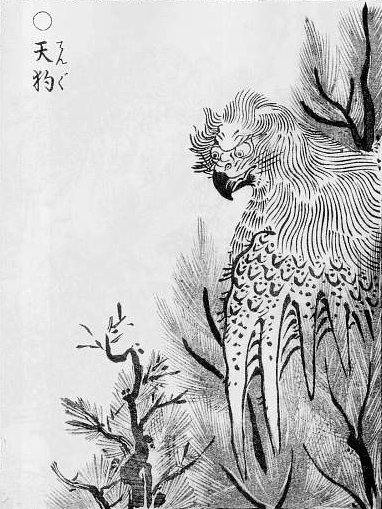
I spent time querying Claude Opus 4.7 on the waterfall I encountered at Kuramadera that was next to a place Kiichi Hōgen was said to have gone on retreat. Kiichi is revered as a possible tutor to Yoshitsune — in drama represented often by the Tengu lord Sōjōbō. I dive through a bit of Kurama area history and then turn towards an analysis, based on Japanese language sources, of the Tengu names found in the Yagyū Shinkage-Ryū Tengushō.
The essay moves in four stages: from the topography and modern theology of Mt. Kurama, through the Yagyū Shinkage-ryū’s tengu cipher and what each named tengu refers to, into the curricular envelope of which the Tengushō is part, and back to Kurama by way of a Shugendō-substrate sub-shrine that completes the circle. Readers oriented toward bujutsu may find sections 2 and 3 most directly relevant; readers oriented toward Japanese mountain religion, sections 1 and 4. The argument depends on the whole, but the parts can be read independently.
Visiting Kuramadera
Kyō Hachi-ryū
The Kyō Hachi-ryū (京八流), “Eight Schools of the Capital,” is a semi-legendary grouping rather than a historically documented set of ryūha. According to tradition, they descend from teachings given at Kurama-dera (鞍馬寺), in the mountains north of Kyoto, in the late Heian period — roughly the late 12th century. The reputed progenitor is Kiichi Hōgen (鬼一法眼), who is said to have taught the way of the sword to eight Buddhist monks on Mt. Kurama, and the school is said to be the origins of all swordsmanship. Kiichi Hōgen is variously described as an onmyōji or a warrior-monk, and the legend is famously entangled with Minamoto no Yoshitsune’s training as Ushiwakamaru — the “tengu” of Kurama are often rationalized as Kiichi Hōgen and his disciples.
The names of the eight schools are not reliably preserved. It does not go beyond being a legendary school of swordsmanship and there are doubts as to whether it actually existed. Even Edo-period budōka regarded the Kyō ryū as largely mythic. Different sources give different lists, and several traditions retroactively claimed Kyō Hachi lineage for prestige. The schools most often named as descendants (not as the original eight, but as later lines tracing back to that root) include the Yoshioka-ryū (吉岡流), the Kurama-ryū (鞍馬流, sometimes given as Kurama-hachi-ryū), the Chūjō-ryū (中条流, also read as Nakajō-ryū) founded by Chūjō Nagahide — itself the ancestor of Tomita-ryū and ultimately Ittō-ryū. Nen-ryū and Tsutsumi Hozan-ryū are also said to be associated with the proto ryūha (流派; school, tradition) of Kurama — recent video interviews of Katori Shintō-ryū Sugino dōjō senior members claim a connection between Shintō-ryū and Kiichi Hōgen as well.
Another folklore says that Yoshioka Naomoto, who first used the title of Kenpō, is the founder. Usually, the Kyō Hachi-ryū is paired with the Kantō Shichi-ryū or Kashima Shichi-ryū (関東七流), the seven eastern traditions associated with Kashima Jingū. These have a comparably murky pre-history but a more continuous documentary trail through Iizasa Chōisai and paired Katori and Kashima lineages.
The role of Kiichi Hōgen-ryū is itself the most prominent test case of this principle. The historically defensible position is that organized, transmissible ryūha with documented densho really begin in the 15th century with figures like Iizasa Chōisai Ienao (Katori Shintō-ryū) and Aisu Ikōsai (Kage-ryū); anything earlier, including the Kyō Hachi, is best treated as origin myth that later schools used to anchor their authority.
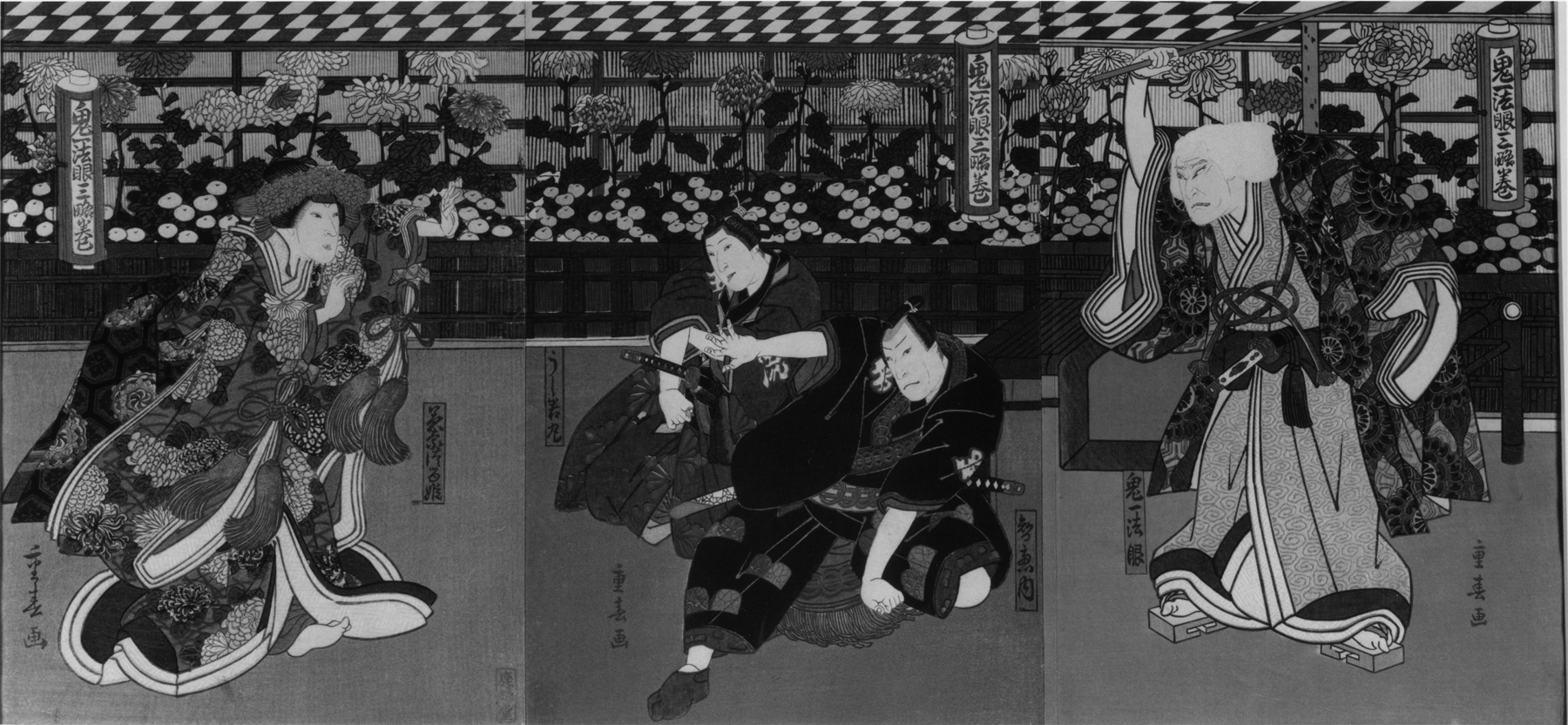
There is no historically documented Kiichi Hōgen-ryū. Instead, Kiichi Hōgen functions in the tradition as the legendary progenitor of the Kyō Hachi-ryū as a whole rather than as the eponymous founder of a single named line. “Hōgen” is itself an honorific title for a monk rather than a name, and the character is largely a literary one. He appears in the Gikeiki (義経記), the early-Muromachi war tale about Yoshitsune, and later in jōruri and kabuki, most famously Kiichi Hōgen Sanryaku no Maki (鬼一法眼三略巻). No densho, makimono, or lineage chart of a Kiichi Hōgen-ryū with verifiable transmission survives.
But, Kiichi Hōgen’s name does appear as a claimed source within the mythic prehistories of several later schools. The Bujinkan traditions, for instance, invoke him — in the Takagi Yōshin-ryū’s Ryuko no maki, Kiichi Hōgen is mentioned as a prominent figure whose teachings were embraced among many of the martial arts schools that came from western Japan, and a fragment attributed to him — “if it comes, meet it; if it leaves, send it away; 5 and 5 are 10, 2 and 8 are 10” — is preserved there.
Some early-Edo writers also tried to identify his style retrospectively with Chūjō-ryū on the basis of a short tachi and close-range technique, but this is speculation rather than evidence of a distinct Kiichi Hōgen-ryū existing at that time.
Maō-no-Taki
The waterfall beside the Kiichi Hōgen-sha (鬼一法眼社) at Kurama is named Maō-no-Taki (魔王の滝), “the Demon King’s Waterfall,” after Gohō Maō-son — the kami enshrined in the small hokora on the cliff above it. It sits in an area called Gohōkyō (護法境) just past the Fumyōden cable-car station, alongside the Hōjōike pond, the Yoshikura Inari-sha, and the Kiichi Hōgen-sha. Visitors often associate the waterfall with Kiichi Hōgen because the shrine’s torii is positioned facing the falls rather than the shrine building itself, but the falls’ formal name belongs to Maō-son.
The site is part of the long-established Kurama-dera approach and its sacralization is old, but the present physical structures are very recent. The Kiichi Hōgen-sha enshrines Kiichi Hōgen, who is said to have transmitted military arts to Ushiwakamaru; it was damaged by a fallen tree in the 2018 (Heisei 30) typhoon, dismantled, and rebuilt in 2025 (Reiwa 7). The Maō-no-Taki, which flows beside the Kiichi Hōgen-sha, also collapsed in the 2018 typhoon and was reconstructed in 2024 (Reiwa 6). So what one sees today is essentially a 2024–2025 restoration.
The Kiichi Hōgen association in the Kurama area more broadly is older but still secondary. The 1711 (Shōtoku 1) text Sanshū Meiseki-shi (山州名跡志) already records a “Kiichi Hōgen-zuka” at this locale, describing it as the place where the man said to be Yoshitsune’s military-arts teacher had a mound, though the text itself notes the origin was already unverified. The visible stone monument labeled Kiichi Hōgen no Koseki (鬼一法眼之古跡), next to Kurama Elementary School, was erected on 10 November 1915 (Taishō 4) by the school’s staff and students. So, the association is mid-Edo at the earliest as a recognized tradition on the ground, with the current place marker being from the early 20th-century.
Sōjōbō and Gohō Maō-son
The relationship between Sōjōbō and Gohō Maō-son is doctrinally formalized but historically layered, and most of the current synthesis is surprisingly recent. In present-day Kurama-kōkyō doctrine, Gohō Maō-son — also called Kurama-san Maō Daisōjō — is the great tengu and one body of the Sonten triad, and he holds Kurama-san Sōjōbō as a subordinate, or alternatively the two are identified as the same being. This teaching took its current form only after Kurama-kōkyō became independent from the Tendai school in 1949. So when the temple’s modern literature treats Sōjōbō as Maō-son’s lieutenant (or as a partial manifestation), that is essentially a Shōwa-era reformulation by Shigaraki Kōun and his successors.
Before that consolidation, the two figures had quite different pedigrees. Sōjōbō is the older, well-attested figure: he appears as the chief tengu of Kurama in the Muromachi-period Noh play Kurama Tengu, and Edo-period tengu compendia such as Zassetsu Nōwa (雑説嚢話, 1764) by Hayashi Jiken (林自見, possibly “Shiken”) list him as the second of the Hachi Daitengu or “eight great tengu of Japan”, after Atago Tarōbō. In the classical Hachi Tengu lists and in the Kurama Daimaō-son Wasan preserved in the Shingon Zaike Mantokushū, “Kurama-san Sōjōbō” appears, but “Kurama-san Maō Daisōjō” does not. The compound title “Maō Daisōjō” itself only seems to surface in print with Kita Sadakichi’s 1922 (Taishō 11) ethnographic study on possession cults, so it is a Taishō-era construction.
Maō-son in his current cosmological form is even more clearly modern. The Kurama-dera explanation holds that Maō-son descended from Venus 6.5 million years ago to save the earth, landing on the iwakura where Oku-no-in Maō-den now stands. This Venus/Sanat-Kumara identification is borrowed from Theosophy (via Blavatsky and Leadbeater) and was grafted onto Kurama’s older Bishamonten-centered cult by Kurama-kōkyō. That said, there are pre-modern threads that made the later fusion natural: the omaedachi statue of Maō-son kept in front of the hibutsu at the Hondō Kondō depicts him as a sennin-like figure with wings on his back, a long beard, and a high nose, with a halo made of leaves — the statue in the Tahōtō has the same form — and from this it is thought that the “Kurama tengu” was originally Gohō Maō-son. So iconographically, Maō-son was already tengu-shaped well before the modern doctrine formalized the chain of command — see Zassetsu Nōwa (雑説嚢話) by Hayashi Jiken/Shiken (林自見).
Maō-son as a religious figure — distinct from his current cosmological gloss regarding Venus — is attested at Kurama at least back to the late Muromachi period through a painting attributed to Kanō Motonobu (狩野元信, 1476–1559) and titled Suijaku Maō Daisōjō (垂跡魔王大僧正). The 1924 (Taishō 13) visit of Empress Teimei to Kurama-dera documents the pre-modern arrangement of the Hondō: the bettō Shigaraki Kōun records that when Empress Teimei made her royal visit on 3 December 1924, the Hondō housed the honzon Bishamonten in the center, the honji Senju Kannon Bosatsu in the east room, and the suijaku Maō Daisōjō in the west room; the “Maō-son” painting by Kanō Hōgen referenced here is the suijaku Maō Daisōjō by Kanō Motonobu.
The older arrangement had Maō-son in a strictly subordinate honji-suijaku role: Bishamonten is the honzon (the actual focus of worship), Senju Kannon is the honji (the underlying Buddhist truth), and Maō Daisōjō is the suijaku (the local-manifestation form).
Maō (魔王) in Buddhist cosmology is the king of Māra — the tempter who attacked Śākyamuni at Bodh Gaya. Prefixing gohō (護法, “dharma-protecting”) inverts the figure: the King of Demons is converted and now serving as protector. This is the same structural pattern that produced Daikokuten (Mahākāla, originally a wrathful Śiva form), Aizen Myō-ō, the Twelve Heavenly Generals of Yakushi, and many others — converted-demon protectors are a major class of Mikkyō deity. Read this way, Gohō Maō-son is simply Kurama-dera’s local converted-demon figure, paired with the orthodox Bishamonten as the temple’s protector. The tengu iconography slots in here because tengu in medieval Buddhism are also categorized as converted/demonic mountain spirits — the leaf-haloed, winged, beaked image of Maō-son is iconographically a high-ranking tengu of converted-demon type.
In the Kurama-kōkyō explanation, the honzon of the Hondō Kondō is the “Sonten,” a single unity of three bodies: Bishamonten in the center, Senju Kannon to the right, and Gohō Maō-son to the left. Sonten is described as “the universal energy that allows all life to live and exist.” Bishamonten is the symbol of light, the spirit of the sun; Senju Kannon is the symbol of love, the spirit of the moon-disc; and Maō-son is the symbol of power, the spirit-king of the great earth. The mantra:
"Tsuki no yō ni utsukushiku, taiyō no yō ni atatakaku, daichi no yō ni chikara-zuyoku, subete wa Sonten ni te mashimasu"
Beautiful as the moon, warm as the sun, strong as the earth, all is in Sonten"
is recited as the basic devotional formula. Maō-den reverence likely started as a pre-Buddhist rock formation iwakura (磐座; sacred rock seat) veneration.
At Kuramadera, the honzon Sonten in the Hondō is a hibutsu (secret Buddha) opened only once every 60 years, in the hinoe-tora (fire-tiger) year, because Bishamonten is said to appear in the tiger month, tiger day, and tiger hour; this is why the Hondō is flanked by stone tigers (komatora) instead of the usual komainu. Most recent opening: 1986. Next opening: 2046. The substitute omaedachi statues — those tengu-form Maō-son figures with the leaf halo — stand in for the hibutsu during the long closed periods, which is why their iconography is what visitors actually see today.
Sōjōbō is the legitimate medieval/early-modern chief tengu of Kurama and the figure of the Yoshitsune legends — possibly an encoding over time of the historical Kiichi Hōgen — while Maō-son is the temple’s tutelary “shadow side” of Bishamonten, whose iconography overlapped with tengu imagery.
In some folk religion, Sōjōbō’s superior is Gohō Maō-son, who is considered the “god” of tengu society, and Maō-son is said to be the night-form of Bishamonten, the protector deity of Kurama-zan. This is a folk-theological way of resolving the apparent doubling — Bishamonten as the orthodox honzon and Maō-son as the unorthodox tengu-king — into a single deity with diurnal and nocturnal aspects. It doesn’t appear in formal Kurama-kōkyō doctrine but captures the idea that the temple’s daylit, normative face is Bishamonten, and its night, mountain-ascetic, tengu face is Maō-son.
The explicit hierarchy placing Sōjōbō under Maō-den is likely a 20th-century sectarian articulation, and not something contemporary to the time in which martial traditions emerged venerating these figures. The orthodox-Buddhist substratum listing Gohō Maō as a converted-demon dharma-protector, structurally similar to Daikokuten or the Twelve Heavenly Generals — was present in pre-modern times, grafted onto what appears to have been an older iwakura cult at the Oku-no-in rock formation for which no documentation survives.
The Tengu of Yagyū Shinkage-ryū
The Tengushō kata-set of Kamiizumi Ise no Kami’s Shinkage-ryū is a Kage-ryū inheritance going back to Aisu Ikōsai’s late-15th-century founding revelation (see the companion essay on the Okugi); what Sekishūsai contributed in the late 16th century was the cipher labels in his Emokuroku, not the kata themselves. After this time, in Yagyū Shinkage-ryū, the eight Tengushō (天狗抄) kata have two parallel naming layers:
I. The working names – Kasha, Akemi, Zentai, Tebiki, Ranken, Nitō (or Nigusoku), Nitō-uchimono, Futari-gakari – are the technical names actually used in transmission.
II. The tengu names appear in the picture catalog (絵目録) attached to Sekishūsai Munetoshi’s Shinkage-ryū Heihō Mokuroku no Koto, where the picture-catalog Tengushō kata are individually labeled “Kōrin-bō, Fūgan-bō, Tarō-bō, Ei’i-bō, Chira-ten, Karan-bō, Shutoku-bō, Konpira-bō” totaling eight, while the Yagyū-ryū Shinpishō Tengushō gives the names “Kasha, Akemi, Zentai, Tebiki, Ranken, Nigusoku, Uchimono, Futarigakari”.
None of the names match by pronunciation. Old Yagyū commentary makes clear this was deliberate concealment — the tengu names served as cipher to hide (秘して) the actual technique names. The choice of tengu names specifically — rather than, say, Buddhist deities or animal names — aligns with Aisu Kage-ryū’s own founding-vision iconography of a deity-possessed monkey at Udo Jingū, later read through the Sarutahiko bridge to medieval tengu folk-religion; as described here. Were the cipher labels of Tengu names drawn from the standard Edo-period pantheon of enshrined tengu? Partially yes, in a way that aligns with the Tengu-kyō 48 Tengu (四十八天狗) list. Pairing the eight Tengushō tengu against the Edo Tengu-kyō and surviving shrines:
Tarō-bō: Mt. Atago
Tarō-bō (太郎坊) is Atago-yama Tarōbō, head of the Hachi Daitengu and the senior tengu of Japan in the eight tengu — Atago-yama Tarōbō of Kyoto, Hira-san Jirō-bō of Shiga, Kurama-yama Sōjōbō of Kyoto, Iizuna-san Saburō-bō of Nagano, Ōyama Hōki-bō of Kanagawa, Hikosan Buzen-bō of Fukuoka, Ōmine-san Zenki-bō of Nara, and Shiramine Sagami-bō of Kagawa, with Atago-yama Tarōbō as the foremost. He is enshrined at Atago Jinja on Mt. Atago, and separately at Tarōbō-gū (Aga Jinja) on Akagami-yama in Higashi-Ōmi.
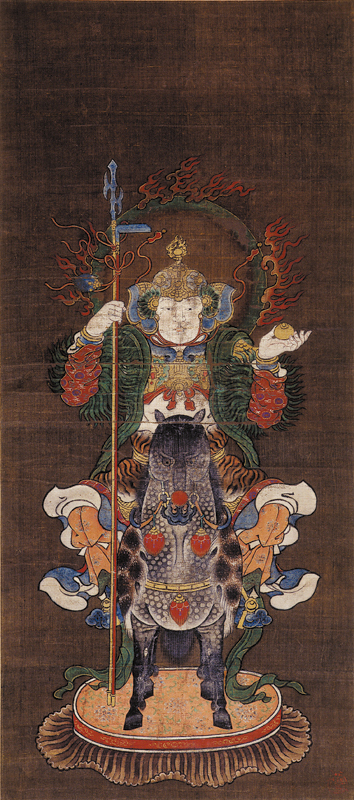 Atago Dai Gongen (attributed to Hasegawa Tohaku)
Atago Dai Gongen (the Great Avatar of Mount Atago) is the local Japanese avatar (gongen) of the Buddhist Bodhisattva Jizō (Kṣitigarbha).
See also Yoshitoshi’s Shinkei Sanjūrokkaisen (新形三十六怪撰, 36 Ghosts) for a depiction of Tarōbō.
Konpira-bō: Mt. Konpira
Konpira-bō (金毘羅房) is the Kuro-kenzoku Konpira-bō of Konpira-san in Kagawa Prefecture — i.e., Kotohira-gū.
Konpira-bō is associated with Konpira Daigongen (金毘羅大権現), the tutelary deity of Mt. Zōzu-san (象頭山) in Sanuki Province (modern Kagawa Prefecture, Shikoku). In the pre-Meiji honji-suijaku framework, the cultic center was Matsuo-ji Kongōin (松尾寺金光院), a Shingon temple-shrine complex; after the 1868 shinbutsu-bunri it was reorganized as Kotohira-gū (金刀比羅宮), the major shrine still standing on the mountain today. The Konpira deity was enshrined as the protective god of Kongōin Matsuo-ji on Zōzu-san; in the medieval period the name was changed to Konpira Daigongen under the influence of honji-suijaku doctrine, with Kongōin acting as bettō. In the Meiji period, when shinbutsu-konkō was prohibited, Kongōin was abolished and in the sixth month of Meiji 1 became Kotohira Jinja, then renamed Kotohira-gū in the seventh month. Post-Meiji, the formal kami is Ōmononushi-no-mikoto (大物主神), treated in State Shintō doctrine as the suijaku of the older Konpira deity.
The honji-suijaku genealogy goes deeper than that. “Konpira” is a transliteration of the Sanskrit Kumbhīra (कुम्भीर), originally a crocodile/makara water-deity in Indian mythology, absorbed into Buddhism as one of the Twelve Heavenly Generals (十二神将) attending Bhaiṣajyaguru (Yakushi Nyorai). Konpira Daigongen is essentially Kumbhīra grafted onto a jinushi-gami (local landowner kami) of Mt. Zōzu through the standard medieval gongen-formation pattern — a Buddhist deity localized through a shugen mountain cult.
In the Edo period, white-robed Konpira pilgrims (gyōnin) carrying tengu masks on their backs travelled the country spreading Konpira belief, and a custom emerged in which pilgrims going to Sanuki Zōzu-san Konpira Daigongen for the Konpira-mairi pilgrimage would carry a tengu mask on their back. The deity was iconographically depicted as a winged, feather-fan-bearing tengu, particularly in rain-making contexts (the Konpira cult also absorbed strong water/sea-protection and amagoi functions, partly via the Shiwaku-island sea-merchants who propagated the cult along their shipping routes).
The Konpira tengu is today counted as one of the three Sanuki tengu and called Kongō-bō; the other two are Chūjō-bō of Yakuri-ji and Sagami-bō of Shiramine-ji. So if you want the local tengu identity, it is Zōzu-san Kongō-bō (象頭山金剛坊), while in the Tengu-kyō 48-list the same figure appears under the more cosmic title Kuro-kenzoku Konpira-bō (黒眷属金比羅坊, “Black Retinue Konpira-bō”).
The Edo-period Nihon Daitengu Banzuke (Japan Great Tengu Ranking) places Atago-san and Kurama-san at yokozuna/ōzeki level and Shiramine Sagami-bō at komusubi, with Zōzu-san Kongō-bō, Goken-zan Chūjō-bō, and Zōzu-san Shukai-bō appearing only at maegashira rank from Sanuki. That is to say, Konpira-bō in the Tengu-kyō is a real cult identity but a junior one in the Edo pantheon.
This is consistent with the Yagyū Tengushō naming pool: Sekishūsai drew from across the entire 48-list, not just the elite eight, when assigning cipher labels to the individual kata.
Kōrin-bō: Mt. Kōya
Kōrin-bō (高林坊) corresponds to Kōyasan Kōrin-bō of Mt. Kōya in Wakayama Prefecture, a major mountain-cult center with its own chinju-sha system (Niutsuhime Jinja, Kōya Myōjin).
Kōrin-bō differs sharply from Konpira-bō. Konpira-bō is unusual in having an actual gongen attached to him; Kōrin-bō does not. He is best read as a place-tengu label for Mt. Kōya in the Tengu-kyō 48 list rather than as a discrete cultic figure with his own honji. There is no “Kōrin Daigongen” to which he is the tengu-attendant.
There are two Buddhist axes to Kōyasan.
First, the doctrinal honzon axis: Dainichi Nyorai (大日如来), the dharmakāya buddha central to Shingon mikkyō, enshrined in the Konpon Daitō (根本大塔) and Kondō (金堂) of the Danjō Garan. Second, the founder cult — Kōbō Daishi Kūkai (弘法大師空海), believed to be in continuous nyūjō (永遠の瞑想; eternal samādhi) at Oku-no-in. Oku-no-in is the site of Kōbō Daishi’s mausoleum; Daishi entered nyūjō at the age of 62 in 835, and for 1,200 years has been believed to continue his eternal meditation in this place. Around these, the Mikkyō pantheon of Fudō Myō-ō, Aizen Myō-ō, the Eight Patriarchs, the Twelve Heavenly Generals, and so on populate the temple halls. For an esoteric mountain like Kōya, where you would normally expect a head-tengu of some substantive standing, the cult focus is so heavily on Daishi-shinkō and the dharmakāya Buddha that a tengu cult never crystallized — Kōrin-bō may have remained a more generic figure, although there are several Shintō kami associated to the area.
Second, The gongen / kami axis: the Kōya Shisho Myōjin (高野四所 明神). Kōrin-bō, qua mountain-spirit, sits within the tutelary kami system of Kōya rather than the Buddhist hall system. The shrine is also called the Niu Shisho Myōjin or Amano Taisha, and is known from antiquity as the tutelary deity (chinju) of Kōyasan. From the first to the fourth hall it enshrines four pillars: Niu Myōjin, who had long been worshipped there, Kariba (Kōya) Myōjin, who was connected to the opening of Kōyasan, and Kehi Myōjin and Itsukushima Myōjin, both added by 1208 (Jōgen 2):
- Niu Myōjin / Niutsuhime Ōkami (丹生明神 / 丹生都比売大神) — first hall. The mother kami, jinushi-gami of the mountain. Cinnabar/mining associations through the historic Niu clan (丹生氏) before Kūkai.
- Kariba Myōjin / Kōya Myōjin / Kōya Mikogami (狩場明神 / 高野明神 / 高野御子大神) — second hall. The son-kami of Niutsuhime; according to the tradition, when Kūkai opened Kōyasan in 816 (Kōnin 7), Kōya Mikogami manifested as a hunter accompanied by two dogs, one black and one white, who guided Kūkai to the site. The Konjaku Monogatari preserves this story. He is also known as Kōya Myōjin or Inukai Myōjin.
- Kehi Myōjin (気比明神) — third hall. Agricultural / grain deity, summoned from Kehi Jingū in Echizen in the Kamakura period via takusen.
- Itsukushima Myōjin (厳島明神) — fourth hall. Sea / commerce / arts deity, summoned from Itsukushima in Aki, identified post-medieval with Benzaiten.
These four kami are the gongen-level layer of Kōyasan that a tengu of the mountain — Kōrin-bō, if you will — would conceptually attend on. In the medieval temple iconography they are typically rendered together as the Kōya Shisho Myōjin-zu (高野四所明神図).
Gongen and Myōjin (明神) are not synonymous — the latter is a designation from Shintō that does not have a Buddhist association. Gongen (権現, “provisional manifestation”) imply a Buddhist deity’s dharmakāya being associated with the entity as an intermediary.
Tendai-Sannō Shintō at Hiei produced Sannō Gongen and the Twenty-One Sannō; Kumano produced Kumano Sansho Gongen and Twelve Gongen; Hakusan, Hakone, Atago at certain layers, and Konpira (Kotohira) all promoted their tutelary kami to gongen status. Kōyasan did not, despite operating a fully developed honji-suijaku system internally. The Shingon orthodoxy on Kōya kept the Shisho Myōjin functionally subordinate to the Buddhist hall-pantheon — Dainichi at the Daitō, Daishi at Oku-no-in — rather than promoting the kami themselves into gongen co-equality. The Shisho Myōjin’s role at the Garan is chinju (鎮守, tutelary-protector) — protecting the temple — rather than being doctrinally identified as manifestations of Buddhist deities in their own right. So a honji-butsu was assigned (varying attributions across sub-temple tradition; Jūichimen Kannon and Fudō are the commonest for Kariba, though this varies), but the kami stayed kami.
The most commonly cited pairings within Kōyasan jōō-ji (高野山定置) practice are: Niu Myōjin ↔ Dainichi Nyorai (or in some accounts Aizen Myō-ō); Kariba Myōjin ↔ Fudō Myō-ō (or Jūichimen Kannon in some kakejiku); Kehi Myōjin ↔ Yakushi Nyorai; Itsukushima Myōjin ↔ Jūichimen Kannon (and later, popularly, Benzaiten as Shintō-side counterpart).
Kariba Myōjin is the Shintō-side designation of Kōya’s tutelary hunter-kami, son of Niutsuhime, with a Buddhist honji assigned (most often Jūichimen Kannon) but never formally promoted to gongen status — unlike Konpira-bō’s associated Konpira Daigongen, which represents the maximal honji-suijaku synthesis of an imported Buddhist deity with a local mountain cult.
Konpira-san was a shugen (mountain-religion) site whose deity was iconographically a tengu and whose pilgrims literally wore tengu masks, so the Tengu-kyō name Konpira-bō (or Kongō-bō, the local form) maps onto a real cultic identity. Kōyasan was a Shingon orthodoxy site that, from Kūkai onward, deliberately subordinated mountain-ascetic and tengu lore to the formal honji-suijaku of the Shisho Myōjin and to Daishi-shinkō. The mountain did host shugen activity at the periphery (the Kōya Hijiri 高野聖, the linked Katsuragi shugen circuit), and the Konjaku Monogatari contains tengu-incident stories around Kōyasan; but no Kōya tengu got the cult-elevation Konpira did. Kōrin-bō is therefore in the catalog because every famous mountain needs an entry, not because there was a specific tengu shrine there for Sekishūsai to point to.
Functionally for the Yagyū cipher this didn’t matter: the label needed only to sound like a tengu name pulled from the pantheon.
Chira-ten: A Visitor to Mt. Hiei
Chira-ten (智羅天) is the Hieizan-associated tengu of literature: in Konjaku Monogatari, vol. 20, story 2 — Shintan Tengu Chira-Eiju Kono Chō ni Watarukoto — a powerful tengu from China named Chira-Eiju is described as having crossed to Japan and met with the tengu of this country. He gets badly mauled in a power-contest with the Hiei monks; the figure is more a cautionary literary trope than an object of cult, so there is no shrine, but the Hieizan/Yokawa landscape is the implicit setting for this figure.
The Yagyū Tengushō is thus drawing not only on tengu catalogues from the early Edo period, but general literature of the time. The 智羅天 of Sekishūsai’s catalog and the 智羅永寿 (Chira-Eiju) of Konjaku Monogatari vol. 20, tale 2, are also the same figure as Zegai-bō (是界坊 / 是害房) and, in some manuscripts, Zenkai-bō (善界坊). In Konjaku-shū vol. 20, tale 2 the figure appears as “Shintan Tengu Chira-Eiju watarukoto,” and the same story is the source of the Noh play “Zegai” composed by Takeda Hōin Munemori, based on this story and on the Zegai-bō Emaki. The earliest extant complete copy of the Zegai-bō Emaki is the Manshu-in (Kyoto) two-scroll set, dated 1354 (Bunna 3). The reading 智羅天 in the Yagyū document is most plausibly a contraction or scribal shorthand for Chira[-eiju] tengu, with 天 doing the work of 天狗.
In the Noh drama Zegai cycle, Zegai-bō, a tengu proud of having lured all the self-conceited people of China into the tengu-realm, comes to Japan to expand his domain; he visits Tarō-bō, the tengu of Mount Atago, and tells him about his plan to obstruct the Buddha-Dharma in Japan; Tarō-bō agrees and recommends Mt. Hiei; Zegai-bō is hesitant because he fears Fudō Myō-ō, the immovable defender who fiercely guards the temple; but Tarō-bō pushes him and offers to be his guide, and the two depart together on a cloud for Mt. Hiei.
Tarō-bō (#3) and Chira-ten (#5) in the Yagyū Tengushō are not unrelated tengu names selected from the 48-list — they are paired protagonists in a single famous story — their kata are physically also quite similar.
The Konjaku version of the tale specifies the high priests of Yokawa who repulse Zegai-bō. The named figures across the textual layers include Yokei Risshi (余慶律師) of Iimuro, Jie Daishi Ryōgen (慈恵大師良源) — better known as Ganzan Daishi (元三大師) — and Jinin Wajō (慈忍和尚) of Iimuro. The defeat scenes vary by version: in some Zegai-bō is humiliated by adult priests, in others by young temple-boys (童部, dōbu) — which is the more comic register favored in the emaki and Noh.
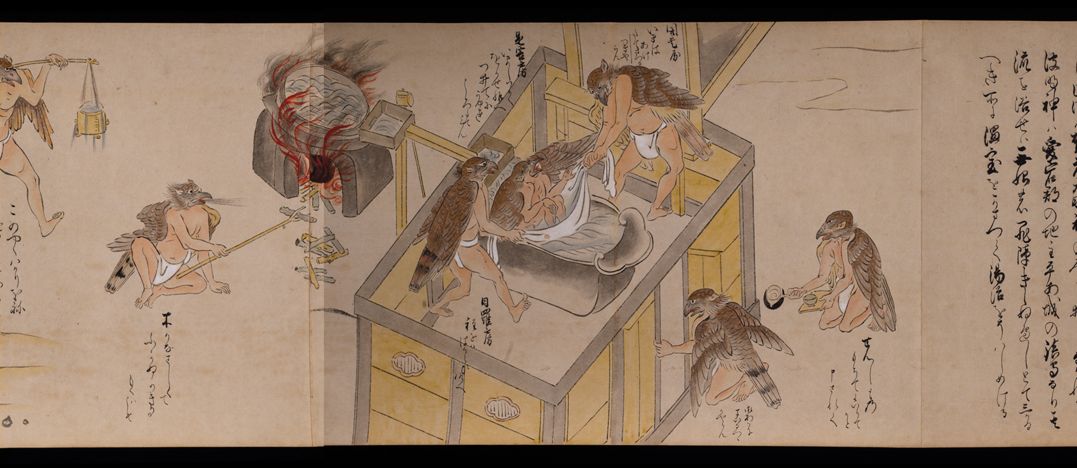
In the emaki tradition, Zegai-bō is beaten very strongly by young novices and even has his wings burned; he is badly hurt, and the Japanese tengu eventually tend to him in a hot bath at Kamogawa to heal him, and after his recovery hold a large farewell party for him before he returns to China.
Other Tengu
Fūgan-bō (風眼坊), Ei’i-bō (栄意坊), Karan-bō (火乱房), and Shutoku-bō (修徳房) do not appear in the Tengu-kyō 48 list under those exact characters, and it is not clear if there is a documented shrine for any of them.
Several look like they may be either local lesser-tengu names, deliberate fabrications for the cipher, or variants whose readings have drifted — 修徳房 could conceivably be a graphic variant of Shūtoku, faintly evoking Sutoku-in, but the canonical Sutoku tengu in the Hachi Daitengu is Shiramine Sagami-bō, not 修徳. Given the picture catalog’s stated purpose of concealment, it would not be surprising if Sekishūsai or his scribes invented or mangled some of the names precisely to prevent outsiders from decoding the contents.
Order of Precedence
Of the eight Tengushō cipher-names, three (Tarō-bō, Konpira-bō, Kōrin-bō) map cleanly onto major enshrined mountain tengu, one (Chira-ten) is a literary Hieizan-area tengu without a shrine, and four appear to be obscure or possibly artificial — consistent with the catalog’s explicit role as a secret-keeping device rather than a devotional pantheon. No attribute of a given tengu encodes anything about the kata it labels. The function of the substitution, per the Yagyū lineage’s own commentary in Yagyū Genshū-den no Kenkyū (柳生厳周伝の研究) is concealment of names from outsiders reading the densho, nothing more.
The mapping, as preserved in Sekishūsai’s Shinkage-ryū Heihō Mokuroku no Koto picture catalog, is discussed in Akabane Tatsuo’s research (Yagyū Genshū-den no Kenkyū). Akabane cites Kanbe Kinshichi’s view that the Hōzan-ji-held catalog ascribed to Sekishūsai is itself a e-soragoto (絵空ごと), a stylized representation rather than a literal record. So the catalog’s job is to circulate the sequence and the images under names that mean nothing to an outsider; the densho holder reads it knowing which list maps to which.
The order is not perfectly invariant across Yagyū lines. From Sekishūsai’s documents downward, the Edo Yagyū transmission via the Yagyū-ke Komokuroku Kudensho gives the sequence as Kasha, Akemi, Zentai, Tebiki, Ranken, Nigusoku-uchimono, and Futari-kakari. In contrast, Renya’s revised Uchitachi Mokuroku Kudensho and Joryūsai’s Uchitachi Mokuroku both give Kasha, Akemi, Zentai, Tebiki, Nitō, Nitō-uchimono, Futari-kakari, Ranken as the list, placing Ranken last and Futari-kakari second-to-last.
In the Yagyū Tengushō mapping, Konpira-bō points to a Daigongen with a fully developed Buddhist-to-kami identity, while Kōrin-bō points to a myōjin-tier mountain pantheon where the kami were never theologically merged into their Buddhist counterparts in the same way.
The Yagyū-ryū Shinpishō gloss on the eighth Tengushō kata, titled “Tengushō #8 Konpira-bō,” is in fact a commentary on Futari-gakari — referring to 細道の二人相とて、跡先より挟まれたる時 or “being flanked front-and-rear in a narrow path”, which is a two-opponent situation — in contemporary Yagyū practice considered to be the oku (奥) kata of the set.
Sekishūsai’s original Emokuroku order (which is the only one with the tengu names attached) defines the cipher; later technical re-orderings reshuffled the kata sequence without reshuffling the cipher labels, which is partly why the correspondence looks inconsistent if you cross-reference Edo-line modern publications with Owari-line modern publications.
People occasionally try to read semantic content into pairings — e.g., Kōrin (高林, “tall grove”) as a hint at the lateral footwork of Kasha, or Karan (火乱, “fire-chaos”) as a gloss on the two-sword scramble of Nigusoku, but this is not supported by historical densho commentary. Sekishūsai’s catalog uses tengu names because tengu names were the natural pool of plausibly-meaningful-sounding but technically-empty labels for a Sengoku-era warrior with mountain-religion background; the choice of which tengu got slot #3 versus slot #6 carries no doctrinal weight.
Some Contrasts to Shugendō Figures
We see above the mikkyō gongen associations of various Tengu, and in the case of Kōya-san, different Shintō manifestations being possible associations with Kōrin-bō.
Zaō-gongen
In the case of Mt. Yoshino Kinpusen-ji Zaō-dō (蔵王堂), Zaō-gongen is associated to the Buddhas of the past, present, and future (Shakyamuni, Kannon Bosatsu as a surrogate, and the future Miroku/Maitreya). In Zaō-gongen, a single wrathful figure carries three honji simultaneously, mapped to the three times rather than to three Buddhist deities of equal ontological status. This is tied to Shugendō’s soteriological schema: when En no Gyōja prayed during his thousand-day austerity for a Buddha to appear, Shaka Nyorai, Senju Kannon, and Miroku Bosatsu manifested in turn; finding their gentle forms unsuitable for a degenerate age, he prayed again, and amidst thunder there appeared the wrathful form of Zaō.
The reason a figure like Dainichi is not the honji of Zaō despite being the universal dharmakāya buddha of mikkyō is that Zaō-gongen sits outside the Shingon orthodox lineage. He is the central deity of Shugendō (修験道) — a syncretic mountain-ascetic tradition whose institutional bases are Kinpusen-ji and the Yoshino-Ōmine-Kumano shugen network. Shugendō historically drew from both Tendai (the Honzan-ha 本山派) and Shingon (the Tōzan-ha 当山派) lineages but is doctrinally independent of either, and its honji-suijaku scheme is built around the buddhas of the three times rather than the dharmakāya buddha.
Zaō is a Japanese avatar of three buddhas and no single Indian Buddhist ancestor. Kongō-Zaō-bosatsu, “Kongō-Zaō” meaning “the king who embodies indestructible ultimate truth and governs all things,” is of indigenous Japanese origin stemming from En’s vision.
In the honji-suijaku doctrine, Zaō-gongen was identified with Emperor Ankan (Hirokuni-oshitate-kanahi-no-mikoto), so at the time of the Meiji-era shinbutsu-bunri many shrines that had enshrined Zaō-gongen rededicated themselves with Emperor Ankan as enshrined kami; Zaō-gongen was also syncretized with Ōnamuchi, Sukunabikona, Kuninotokotachi, Yamatotakeru, and Kanayamabiko in Shintō contexts, so post-Meiji Zaō-gongen shrines typically dedicate to one of these five kami groups. So if you see a shrine today dedicated to Ankan-tennō or to Ōnamuchi-no-mikoto and described as a former Zaō shrine, that is the post-1868 shinbutsu-bunri reassignment of a Shugendō Zaō cult onto an Imperial-era-defensible Shintō kami. The Buddhist three-buddha honji-attribution survives at the temple-side institutions like Kinpusen-ji, while the shrine-side institutions had to find Shintō equivalents.
Sanbō Kōjin
Yuki Jinja on Mt. Kurama maintains seven sub-shrines (massha 末社), and one of them is the Sanbō Kōjin-sha (三宝荒神社) and historically belonged to the integrated Buddhist-Shintō cult that the 1868 shinbutsu-bunri tried to disentangle. The Yuki Jinja Sanbō Kōjin (三宝荒神), the “Wrathful Deity of the Three Jewels” sub-shrine is precisely the medieval, Shugendō-substrate, Three-Jewels-protector-in-a-single-figure layer that the Sonten triad up at the Hondō is not. The two cult-objects coexist on the same mountain at different elevations and represent different historical strata: Sanbō Kōjin at the Yuki Jinja level (the older shugen / chinju-sha layer), Sonten at the Hondō (the Kurama-kōkyō reformulation) — structurally a much closer parallel to Zaō-gongen than the main Sonten triad of the upper Kuramadera complex is.
Yuki Jinja documentation describes the Sanbō Kōjin-sha as having been enshrined “since ancient times” (古くから). Given that Yuki Jinja itself was relocated to Kurama in 940 (Tenkei 3) by Suzaku Tennō’s edict as the chinju-sha for the city’s northern defense, the Sanbō Kōjin sub-shrine is plausibly part of the Heian-period Kurama cult layer, contemporary with or earlier than the formal Yuki Jinja installation. That’s structurally a thousand years older than the Sonten’s current doctrinal formulation.
Sanbō Kōjin is a converted-demon dharma-protector whose name literally announces his function: Sanbō (三宝, Three Jewels — Buddha, Dharma, Sangha) plus Kōjin (荒神, “wrathful/rough deity,” a class of converted-demon protector typically associated with fire and the hearth). The iconography is canonically three-faced, six-armed (三面六臂), wrathful, often standing on flames — visually very close to Zaō-gongen’s wrathful three-eyed single-faced form, but with the multiplicity moved from temporal axis to spatial-facial axis. Sanbō Kōjin is described as a three-faced, six-armed wrathful deity who proclaims “I am the kōjin who protects the Three Jewels”; the three faces are understood as Dainichi, Fudō, and Monju. So here you do get Dainichi as one of the embedded honji — answering, indirectly, the question as to whether Dainichi figured into any of these triadic mountain-cult constructs: he does.
There is a legend that while En no Ozunu was praying on Mt. Kongō, a red cloud appeared in the kimon (northeast) direction, the kōjin manifested, and he built a hokora there to enshrine him. The Shugendō-setsu version adds the formal declaration: in the Shugendō tradition, while En no Gyōja was practicing on Katsuragi-san, he received audience with Sanbō Kōjin; at that time Sanbō Kōjin spoke to En no Gyōja, saying “I am a kōjin who punishes evildoers, and I take refuge in the Three Jewels,” and from this Sanbō Kōjin came to be venerated as a kōjin who upholds and protects the Three Jewels. So Sanbō Kōjin and Zaō-gongen share the same En no Gyōja → Yoshino/Katsuragi shugen origin pattern. Both are Japanese-original dharma-protectors with no Indian Buddhist ancestor, generated by Shugendō’s specific theological problem of how to articulate a wrathful, multi-aspected, mountain-resident protector figure that doesn’t fit the imported Buddhist pantheon cleanly.
Unlike Zaō’s relatively stable Shaka-Senju-Miroku attribution, Sanbō Kōjin’s honji attributions proliferate across schools: in Nichiren-shū and Hokke-shū, based on the line in the Onkikuden “Sanbō Kōjin is the Jūrasetsunyo (Ten Rākṣasīs),” Sanbō Kōjin is sometimes identified as the same body as the Jūrasetsunyo; he is also syncretized with Fugen Bosatsu and called “Fugen Sanbō Kōjin.” The Dainichi-Fudō-Monju attribution is associated specifically with the Hikari Sanbō Kōjin lineage near Kōyasan. Other texts give yet more: the Daikōjin-kyō describes the figure as a tennyo (heavenly maiden), or identifies the kōjin as the same body as Monju Bosatsu, Fudō Myō-ō, or Kangiten; these various forms came to be enshrined throughout Japan from the Edo period onward. So Sanbō Kōjin functions as a kind of theological wildcard — the figure stays constant but the embedded honji vary sub-temple by sub-temple, often three at a time but not always the same three.
With Sanbō Kōjin on Kurama, we see a cleaner Three-Jewels-in-one-figure deity on the mountain than the Sonten triad provides. The Sonten is a post-1949 cosmological re-synthesis of three heterogeneous deities along a sun-moon-earth axis. A Sanbō Kōjin hokora is an orthodox medieval sanbō-shugo embedded in a single wrathful triple-faced form, with Dainichi (or another Buddhist deity, depending on the sub-tradition) as one of the three honji. So Kurama hosts both a modern, Theosophy-inflected, cosmic-element triad (Bishamonten/Senju Kannon/Maō-son as Sonten — light/love/power, sun/moon/earth) and a medieval, Shugendō, sanbō-shugo single figure (Sanbō Kōjin as three-faced wrathful protector). These coexist on the same mountain because Kurama has been multiple things sequentially: a shugen mountain, a Tendai monastery, and now Kurama-kōkyō; each layer left its deities in place, and the small Sanbō Kōjin-sha is presumably a survival of the shugen layer rather than a Kurama-kōkyō addition. Mt. Kurama in fact hosts an orthodox sanbō-shugo deity directly: the small Sanbō Kōjin-sha is one of the seven sub-shrines of Yuki Jinja, the chinju-sha of Kurama-dera, where Sanbō Kōjin Ōkami is enshrined as a deity of fire and the hearth in continuity with En no Gyōja’s Shugendō tradition — a survival of the medieval Three-Jewels-protector cult underneath the Kurama-kōkyō Sonten triad that dominates the modern temple’s doctrinal presentation.
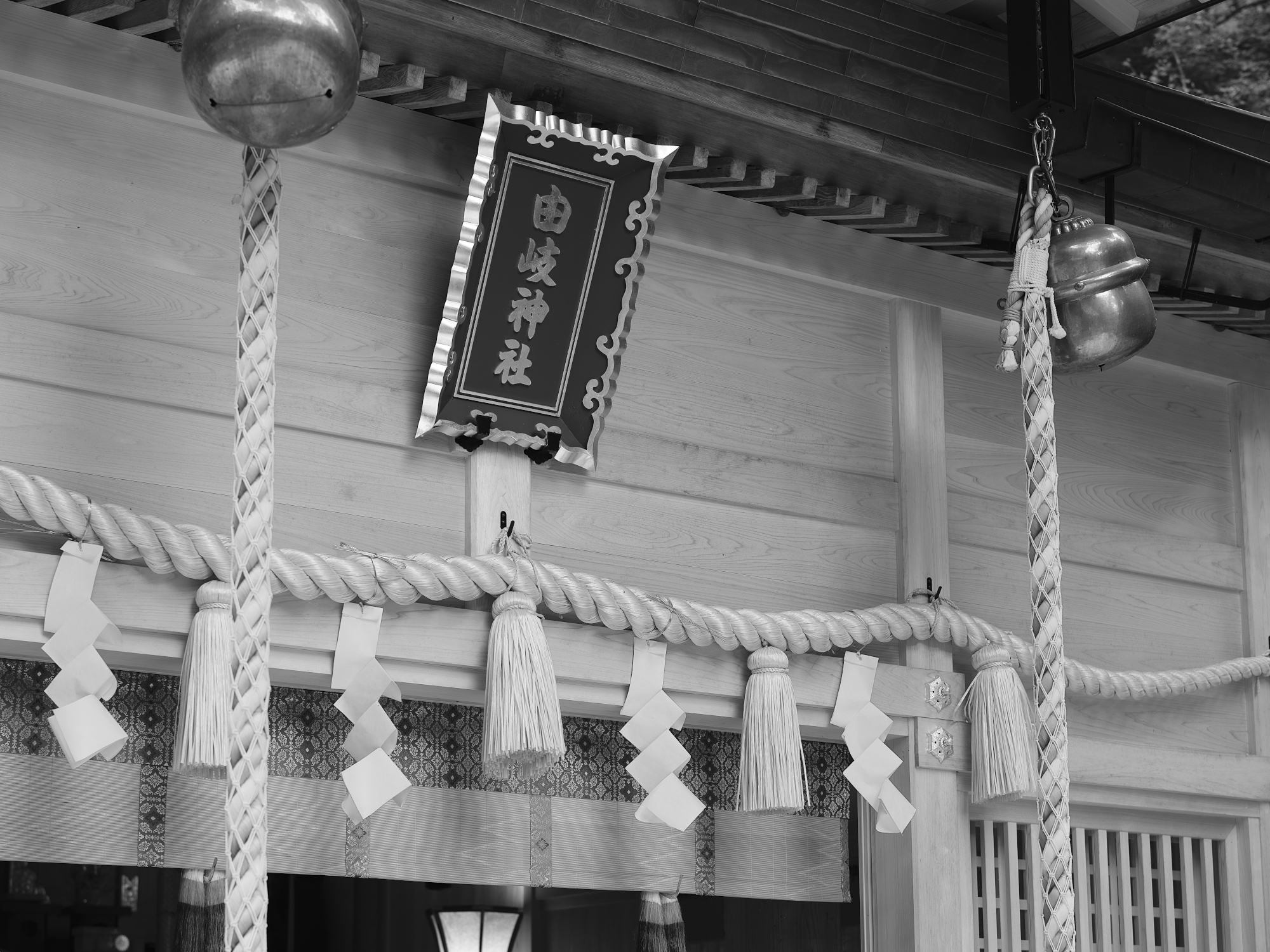
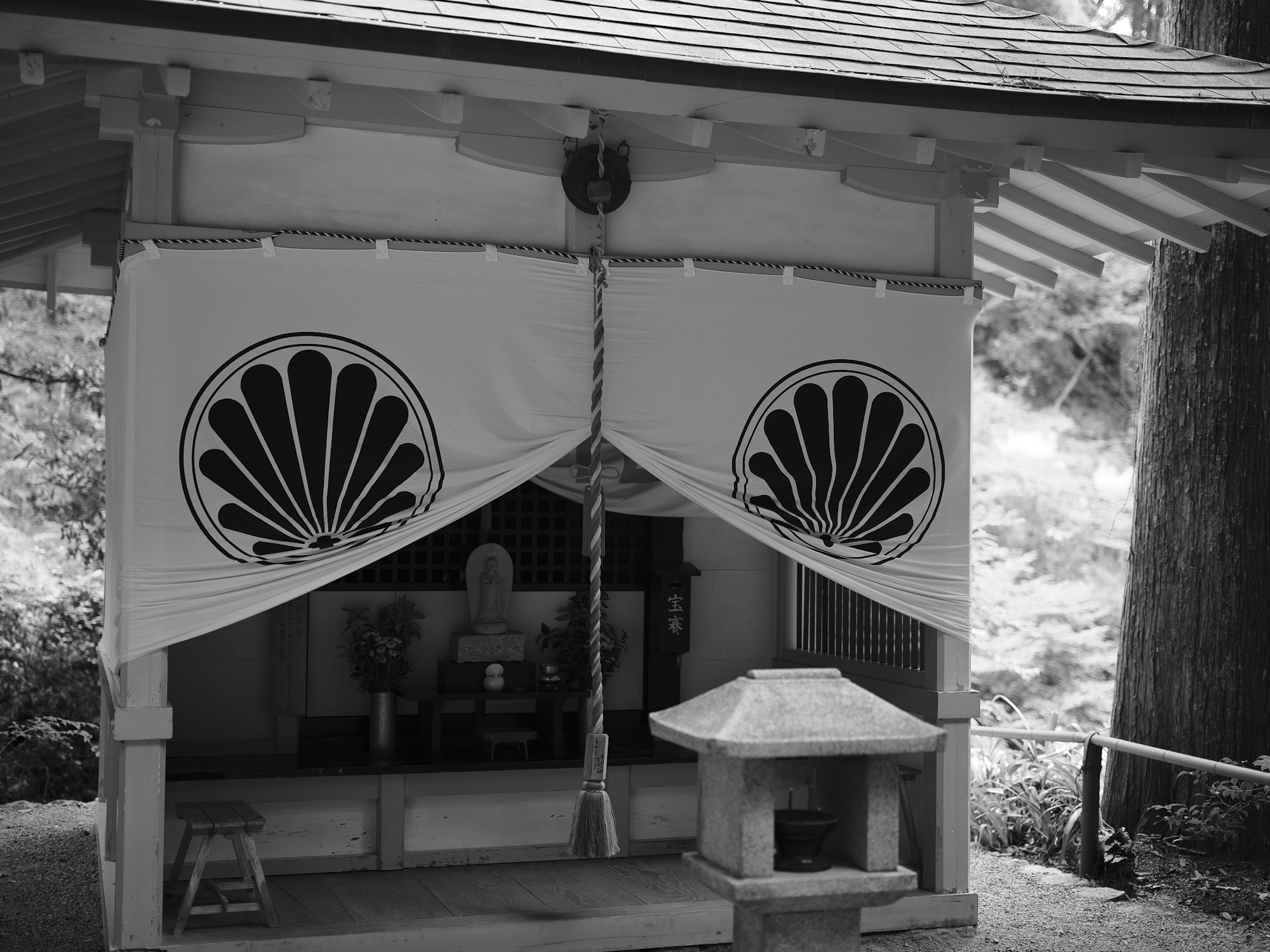
Yuki Jinja’s main cult is fire-related (it controls the famous Kurama-no-Himatsuri / 鞍馬の火祭 on October 22nd, one of Kyoto’s three great festivals). The Sanbō Kōjin-sha as hi-no-kami / kamado-no-kami (deity of fire and hearth) is integrated with that fire-cult identity. So the sub-shrine is not just generic sanbō-shugo — it is Yuki Jinja’s fire-Sanbō Kōjin, which is a specific local development of the broader Sanbō Kōjin cult.
The Jizō statue inside the structure is consistent with the syncretic register. Jizō Bosatsu and Sanbō Kōjin are both gohō-shin (dharma-protector) figures, and in folk-religion settings the two are not infrequently paired or co-located. The Jizō statue may be a syncretic addition or a separate sub-fixture sharing the hokora, rather than the primary cult image.
References
- I want to recommend those interested in Shugendō read Ishizuchi-san on Western Mikkyō. Those interested in practice in the west would also do well to visit karunamitra.org for an attempt to correct misconceptions about the tradition.
- Kyohachiryū School. japanesewiki.com — Concise overview of the Kyō Hachi-ryū as legendary, with the Yoshioka/Kurama/Chūjō descendant claims.
- Kyohachi-ryū (thread archive). E-Budō Forum, 2008. e-budō.com — English-language discussion summarizing the Kiichi Hōgen → eight-monks legend and the lack of documentary support.
- Samurai legends: the birthplace of Kyo Hachi-ryū. Muza-chan, 2013. muza-chan.net
- Kyohachi ryū (tag archive). Light in the Clouds blog. lightinthecloudsblog.com — Extended treatment of Kurama-ryū / Kuramahachi-ryū as a partial preservation of the legend.
- 鬼一法眼. ja.wikipedia.org — Notes that “Hōgen” is an honorific not a name; documents the 1915 Taishō-era stone monument.
- Kiichi Hōgen. en.wikipedia.org
- Ruha, Pertti (trans.). Kiichi Hōgen. Classical Martial Arts Research Academy, 2017. classicalmartialartsresearch.wordpress.com — Discusses the Bujinkan / Takagi Yōshin-ryū Ryūko no Maki citation.
- 鬼一法眼之古跡. 徘徊の記憶, 2020. visual.information.jp — Local history treatment citing the 1711 Sanshū Meiseki-shi reference to the Kiichi Hōgen tomb.
- 鬼一法眼社. 平清盛の京を歩く, Kyoto City Tourism Association. ja.kyoto.travel — Notes Maō-no-Taki flowing beside the shrine; identifies Sōjōbō / Kiichi Hōgen folk-conflation.
- 鞍馬寺. ja.wikipedia.org — Documents the 2018 typhoon damage and 2024/2025 reconstruction of Maō-no-Taki and the Kiichi Hōgen-sha; iconographic note on Maō-son as a tengu-form sennin.
- 鞍馬天狗. ja.wikipedia.org — Key statement that the Sōjōbō / Maō Daisōjō hierarchical identification dates to Kurama-kōkyō’s 1949 split from Tendai.
- 大天狗. ja.wikipedia.org — Useful note that “-bō” names are properly read as collective place-names rather than individual tengu identifiers.
- 鞍馬寺 その8. 徘徊の記憶, 2021. visual.information.jp — Documents Kita Sadakichi’s 1922 article as the earliest appearance in print of “Kurama-san Maō Daisōjō”; cites Chigiri Mitsutoshi’s Tengu no Kenkyū.
- 鞍馬天狗 (護法魔王尊) と牛若丸 in 鞍馬山. たびこふれ, 2021. tabicoffret.com — Sets out the modern Sonten triad (Bishamonten / Senju Kannon / Gohō Maō-son) and the 1949 founding of Kurama-kōkyō.
- 鞍馬寺・奥の院魔王殿. ニッポン旅マガジン. tabi-mag.jp — Source for the 6.5-million-years-from-Venus narrative as currently taught at Oku-no-in Maō-den.
- 護法魔王尊とは?金星から山霊の正体に迫る アマテラスチャンネル. amaterasu49.media — Discusses the Sanat Kumara / Theosophy identification.
- 有名な大きい霊峰・名山には必ずなんらかの天狗が祀られている. 訊ね歩き. tazunearuki.info — listing of the 48 tengu of the Tengu-kyō with their mountain associations, including Atago Tarōbō, Kōyasan Kōrin-bō, and Kurokenzoku Konpira-bō.
- 伊藤信博. 天狗のイメージ生成について — 十二世紀後半までを中心に. 名古屋大学言語文化論集, vol. 29 no. 1. PDF, lang.nagoya-u.ac.jp — Academic treatment of medieval tengu image-formation; useful for the Tengu-kyō as an Edo construct.
- 巻二十第二話 中国の天狗が痛めつけられる話. 今昔物語集 現代語訳. hon-yak.net — Source for Chira-Eiju (智羅永寿), the Shintan tengu defeated by the Hieizan monks; relevant to the Tengushō name 智羅天.
- 陰流. 黒田藩傳 柳生新陰流兵法 修猷館. syuyukan.jimdofree.com — Lists the eight Tengushō technical names (花車・明身・善待・手引・乱劔・二具足・打物・二人懸) and identifies the last three as 天狗抄奥.
- 新陰流とは. 新陰流兵法 関西転心会. shinkageryu-west.com — Cites Sekishūsai’s Shinkage-ryū Heihō Mokuroku no Koto and gives the eight Emokuroku tengu names explicitly: 高林坊・風眼房・太郎房・栄意坊・智羅天・火乱房・修徳房・金比羅房.
- 柳生流新秘抄 5、天狗抄 8金毘羅房. ミツヒラ blog, 2021. mat-sekiunn.cocolog-nifty.com — Direct manuscript evidence of the positional cipher: “Tengushō #8 Konpira-bō” glossing Futari-gakari.
- 柳生流新秘抄 5、天狗抄 1花車. ミツヒラ blog, 2021. mat-sekiunn.cocolog-nifty.com — Quotes Akabane Tatsuo’s reading of Kanbe Kinshichi on the Emokuroku as 絵空ごと (stylized rather than literal) and confirms the eight-for-eight substitution.
- 新陰流兵法目録事 12. note.com, 2022. note.com/juzen — Technical commentary on each of the eight Tengushō kata; useful counterpart to the cipher labels.
- 教伝内容:教修技法. 柳生新陰流兵法 二蓋笠会. yagyushinkageryu.com — Standard Owari-line kata enumeration including Tengushō and Ōgi-no-Tachi.
- 赤羽根龍夫. 新陰流の極意. Kasumi-shobō. Amazon listing — Modern scholarly treatment by the Harukaze-kan researcher; includes transcriptions and analysis of Sekishūsai’s transmission documents.
- 由岐神社for the sub-shrine list and Sanbō Kōjin-sha entry for Mt. Kurama
- 三宝荒神 for the En no Gyōja origin narrative and honji attributions.
- Kōya Shisho Myōjin: 文化遺産オンライン.
- < ahref=”https://buddha-statue-world.jimdoweb.com”>蔵王権現