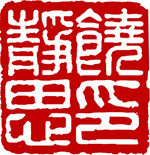
Katōda Shinkage-ryū
Matsuzaki Namishirō ( 松崎浪四郎 ), personal name Naoyuki (直之), was a swordsman of the late Bakumatsu and Meiji eras, born on 30 March 1833 in Shōjima-machi, Kurume, the son of the Kurume-han samurai Matsuzaki Hachiemon.
In 1844 he entered the Katōda Shinkage-ryū ( 加藤田神陰流 ) kenjutsu practice of Katōda Heihachirō (加藤田平八郎), the ninth-generation head of the Kurume-han Katōda line. At the same time, he took up Hōzōin-ryū sōjutsu (宝蔵院流槍術; spear) under Mori Heiemon. He received his Shinkage license in 1848, Hōzōin license in 1849, and the inner license (oku-menkyo, 奥免許) in Katōda Shinkage-ryū in 1854 . He was reputed to “always take the first point” and came to be called the foremost swordsman of Kyūshū.
The art he mastered was a Kurume-han Shinkage line founded by Katōda Shinsaku (加藤田新作), a student of Nakamura Gonnai of Mujūshin-kenryū (無住心剣流) who was invited to the domain in 1716 . Its name was attached from the ninth generation onwards under Katōda Heihachirō, author of the Katōda Nikki (加藤田日記). After Heihachirō’s death, in 1875 his son Daisuke opened a dōjō teaching Katōda Shinkage-ryū kenjutsu (剣術) together with Yōshin-ryū naginata (薙刀術) and kusarigama (鎖鎌術).
Of Heihachirō’s twelve inner-license holders, the two best remembered are Matsuzaki Namishirō and Umezaki Yaichirō (梅崎弥一郎, 1847–1913), a fellow disciple who also took up Tsuda Ichiden-ryū and later became a Dai Nippon Butokukai Kendō Hanshi. The two received the Seirenshō together in 1895. We discuss details of both men below.
Katōda Shinkage-ryū itself is not represented in either the Nihon Kobudō Kyōkai or the Nihon Kobudō Shinkōkai today and appears to survive only as documentary record rather than as a living transmission in Japan.
Musha Shugyō and Gekken
In 1855 he set out on a warrior’s pilgrimage (musha shugyō, 武者修行) to Edo. In a celebrated series of bouts at the Oka-han Edo residence he defeated Momoi Shunzō (桃井春蔵) of Kyōshin Meichi-ryū and Saitō Shintarō (斎藤新太郎) of Shintō Munen-ryū, drew with Ueda Umanosuke, and lost to Chiba Eijirō (千葉栄次郎) of the Genbukan — that is, he bested the representatives of two of Edo’s three great dōjō and fell only to the third.
There is a phrase:
“dignity to Momoi, technique to Chiba, power to Saitō”
(位は桃井、技は千葉、力は斎藤)
that arises from these encounters and spread in the Meiji period.
Shigakukan
The Shigakukan (士学館) of Kyōshin Meichi-ryū (鏡新明智流), associated with “dignity”. Opened in 1773 by the first Momoi Shunzō, Momoi Naoyoshi (桃井直由), at Kayaba-chō, and moved by the second Shunzō to Ōtomi-chō on the Asari-gashi, where it took the name Shigakukan. In Matsuzaki’s day the head was the fourth Momoi Shunzō, Momoi Naomasa (桃井直正, 1825–1885); a Numazu-han samurai’s second son who took full transmission at twenty-four and sharply raised the school’s standing and enrollment. This is the “Momoi” Matsuzaki defeated, and the “位の桃井” of the saying. Among its men were the Tosa figures Takechi Hanpeita and Okada Izō.
Genbukan
The Genbukan (玄武館) of Hokushin Ittō-ryū (北辰一刀流), the “technique” house. Founded in 1822 by Chiba Shūsaku (千葉周作) at Nihonbashi Shinagawa-chō, later moved to Kanda Otamagaike. The founder Chiba Shūsaku (1792/94–1855) was still the nominal head but was in his final year; the man Matsuzaki actually faced — and the only one of the three to beat him — was Shūsaku’s gifted second son, Chiba Eijirō (千葉栄次郎). So in the saying’s terms Matsuzaki fell only to “技の千葉,” technique. The Genbukan was the largest and most famous of the three.
Renpeikan
The Renpeikan (練兵館) of Shintō Munen-ryū (神道無念流), the “power” house. Founded in 1826 by the first Saitō Yakurō (斎藤弥九郎, 1798–1871), who had trained under the third-generation Shintō Munen-ryū head Okada Jūmatsu (岡田十松) at the Gekkenkan, at Kudanshita near the Manaita-bashi; it later stood at Kudan-zaka-ue, on what is now the Yasukuni Shrine grounds. Yakurō remained the patriarch, but daily instruction was led by his sons, and the one Matsuzaki beat was Saitō Shintarō (斎藤新太郎), later the second Yakurō — the “力の斎藤,” power. Katsura Kogorō (Kido Takayoshi) was the Renpeikan’s best-known student.
[ There is also a phrase 江戸四大道場 or “four great dōjō” that includes the Shingyōtō-ryū (心形刀流) dōjō of Iba Gunbei (伊庭軍兵衛) with the above. ]
Matsuzaki bested dignity (Momoi) and power (Saitō). He was stopped only by technique (Chiba Eijirō).
Shunpūkan
It was during this period that Matsuzaki Namishirō formed his lifelong friendship with Yamaoka Tesshū (山岡鉄舟). Matsuzaki fought in the battle of Iwaki-Taira during the Boshin War, on behalf of the Kurume domain, and in 1870 was appointed official kenjutsu instructor (shinan-yaku, 指南役), receiving one-generation samurai (shizoku) status; among the domain’s instructors he was made chief.
It is said that Matsuzaki participated in the Battle of Taharazaka during the Satsuma Rebellion. When the domains were abolished, the post of shinan-yaku lapsed with the institutions that had sustained it, and for the next several years Matsuzaki served as a civil official. From 1872 he held office in Mizuma Prefecture (三潴県) as a village headman (kochō, 戸長) and head of its second district, retiring in March 1876 when Mizuma was absorbed into Fukuoka Prefecture.
In the Meiji period Yamaoka, by then a chamberlain to the emperor, brought Namishirō to Tokyo (1883–84), where he trained at Yamaoka’s Shunpūkan (春風館). This is where Matsuzaki’s late identity as a Zen-influenced kenshi took place.
Yamaoka Tesshū (山岡鉄舟, 1836–1888) is one of the bakumatsu no san-shū, the three “shū” — with Katsu Kaishū and Takahashi Deishū. He had trained in Jiki Shinkage-ryū, Hokushin Ittō-ryū, and Nakanishi-ha Ittō-ryū in the sword, and Ninshin-ryū (忍心流) in the spear. Out of his own practice and Zen training he deepened the Ittō-ryū maxim that “one sword becomes ten thousand and the ten thousand return to one,” proclaimed “no sword beyond the mind” (心外無刀), founded Mutō-ryū (無刀流) in 1880, and opened the Shunpūkan dōjō in 1882. Its full name is Ittō Shōden Mutō-ryū (一刀正伝無刀流). The ideal Yamaoka set down for it is the opposite of a prize-fighting hall: Mutō-ryū swordsmanship does not contend over win-or-lose between self and other, but requires only the forging of the mind, the tempering of technique, and the taking of a natural victory — sword and Zen as one (剣禅一如).
That ethos did not mean soft training. The Shunpūkan was known for an extraordinarily severe trial called tachikiri or seigan (立ち切り/誓願), in which a single practitioner fought 1,400 bouts over seven days, with spiritual cultivation held as central. This is the environment Yamaoka brought Matsuzaki into in 1883–84. Yamaoka taught at the Imperial Household Ministry’s Saineikan (済寧館) and ran the Kensō Jūjutsu Eizoku-sha (剣槍柔術永続社), which became a model for the Dai Nippon Butokukai — and Matsuzaki is counted among his disciples.
Matsuzaki fought a match against Yamaoka and won — but as a direct result of that bout he cut his shinai down from three shaku eight sun to the Mutō-ryū length of three shaku two sun. The mature Matsuzaki that modern kendō remembers is, in large part, the Matsuzaki of the Shunpūkan. Matsuzaki’s very last recorded match, at the 1895 Butokukai, was against Kagawa Zenjirō (香川善治郎) — the man who succeeded Yamaoka as the second-generation head of Mutō-ryū.
Kagawa Zenjirō
Kagawa Zenjirō went on to hold the Dai Nippon Butokukai’s kendō hanshi title, and he carried Mutō-ryū into the modern educational-kendō system as an instructor at the Hiroshima Higher Normal School kendō club — one of the principal training grounds for the nation’s kendō teachers — helping promote Mutō-ryū kendō there. He died on 7 March 1921, at seventy-two.
Namishirō later took charge of a dōjō at the Washio residence, and took part in matches at the Imperial Household Ministry’s Saineikan (済寧館) and in the budō-preservation society Eizoku-sha (永続社) alongside Yamaoka, Sakakibara Kenkichi, and others.
Sakakibara Kenkichi’s 1873 gekiken-kōgyō public exhibitions did more than anything to keep swordsmanship alive through the post-Meiji Restoration collapse. He was the 14th-generation Jiki Shinkage-ryū head of the Odani-ha and is remembered as Yamada Jirōkichi’s teacher.
In an imperial-viewing match Matsuzaki Namishirō defeated Hemmi Sōsuke (逸見宗助).
Hemmi Sōsuke
Hemmi Sōsuke (逸見宗助, 1843–1893) was the son of Hemmi Chūzō Nobutaka (逸見忠蔵信敬), seventeenth-generation head of Tatsumi-ryū (立身流), the comprehensive Sakura-han (佐倉藩) tradition of swordsmanship, iai, and grappling in which he was raised. Sent to Edo by his domain in 1861, he trained at the Shigakukan under Momoi Shunzō — the same Kyōshin Meichi-ryū hall whose master Matsuzaki had bested — and became head student within a year. After the Restoration he turned to land reclamation until, around 1879–80, on Yamaoka Tesshū’s recommendation, he was among the first swordsmen taken into the newly created police fencing corps (gekken-sewagakari, 撃剣世話掛) of the Metropolitan Police. There he became a central architect of the Keishichō-ryū (警視流), the police synthesis of kenjutsu, iai, and jūjutsu, rising to police inspector (keibu, 警部) and opening his own Shōbukan (尚武館) dōjō. Reckoned among the foremost swordsmen of the early-Meiji police, he was the man Matsuzaki defeated in the imperial-viewing match.
Namishirō’s opponents throughout his later career include Tokuno Sekishirō (得能関四郎) and Shimoe Hidetarō (下江秀太郎) as well as Okumura Sakonta (奥村左近 太), who defeated him in late 1884 and remained a recurring rival once he was in Kyōto.
Tokuno Sekishirō
Tokuno Sekishirō (得能関四郎, 1842–1908; imina Michihisa, 通久) was a Jiki Shinkage-ryū (直心影流) master from the Numata domain (沼田藩) in Kōzuke. He entered the Edo dōjō of the domain’s instructor Naganuma Shōbei (長沼笑兵衛) at fifteen and took menkyo kaiden at twenty-one. After the Restoration he worked as a Tokyo city patrol officer, then in 1880 joined the Metropolitan Police, where — like Hemmi — he helped establish the Keishichō-ryū. He crossed Matsuzaki across the tournament boards of the mid-1880s: a draw at the Imperial Household Ministry’s Saineikan in 1884, and a loss to Matsuzaki at the Yayoi national tournament that same year. At the first Dai Nippon Butokukai taikai in 1895 he defeated Okumura Sakonta and received one of the first Seirenshō, and in 1903 he was among the first awarded the Butokukai’s Hanshi title; with Shinkai Tadaatsu (真貝忠篤) and Negishi Shingorō (根岸信五郎) he was counted one of the “three elders of the Tokyo kendō world.” He died in 1908.
Shimoe Hidetarō
Shimoe Hidetarō (下江秀太郎, 1848–1904; imina Tsuneaki, 恒明) was a Hokushin Ittō-ryū (北辰一刀流) swordsman from the Utsunomiya domain (宇都宮藩) in Shimotsuke. Sent to the Genbukan in 1858, he trained under Chiba Eijirō (千葉栄次郎) — the one man of the three great dōjō who had defeated Matsuzaki in 1855 — and, after Eijirō’s death, under his brother Chiba Dōsaburō (千葉道三郎); at nineteen he became the Genbukan’s head student, and a red-lacquered daishō (大小) presented by his lord earned him the sobriquet “Hidé of the red scabbard” (朱鞘の秀). After serving as Utsunomiya’s sword instructor and, briefly, as a fencing teacher to the new government’s justice apparatus, he joined the Metropolitan Police in 1879 as one of its fencing instructors, where a ferocious one-hand thrust (katate-zuki, 片手突き) made him “the demon Hidé” (鬼秀), reckoned the finest thrust in Japan. It was this Keishichō swordsmanship that Matsuzaki measured himself against when he challenged the Tokyo police and faced Shimoe. He died in 1904.
Shimoe was Chiba Eijirō’s student. In facing him, Matsuzaki was meeting a direct heir of the one Genbukan line that had beaten him three decades earlier.
Okumura Sakonta
Okumura Sakonta (奥村左近太, 1842–1903) was an Okayama man — born the son of the Okayama-han samurai Okumura Anshin, with the childhood name Torakichi — and one of the notable Meiji kenshi, ranked in the standard lists alongside Sakakibara Kenkichi, Takayama Minesaburō, Tokuno Sekishirō, and Yamada Jirōkichi. He entered the Jiki Shinkage-ryū dōjō of Abe Ugenji at thirteen in 1855, and also trained in Kitō-ryū jūjutsu, Heki-ryū archery, spear, gunnery, and horsemanship.
His distinguishing turn came on the road: from 1859 he made repeated musha-shugyō journeys, and after watching Takahashi Senjirō of Tamiya Shinken-ryū wield two swords, he spent some two years working out his own two-sword method, with the large sword in the left hand. In 1863 he completed his training, took menkyo kaiden in Jiki Shinkage-ryū, and founded his own school, Okumura Nitō-ryū (奥村二刀流) — so his signature was a two-sword (nitō) style, and he is recorded as having taught both his Bizen Okayama (Kamogata-han) line of Jiki Shinkage-ryū and his own Okumura Nitō-ryū.
On 8 November 1884, at the Metropolitan Police’s national-scale gekken tournament held at the Mukōgaoka Yayoi-sha in Hongō, Okumura lost only to Kuchihara Yoshiji of Ryūgō-ryū, while defeating Shinkai Tadaatsu, Matsuzaki Namishirō of Katōda Shinkage-ryū, and Ueda Umanosuke of Kyōshin Meichi-ryū, and drawing with Hemmi Sōsuke — a performance that made his name nationally.
Okumura died on 11 January 1903, and his line carried on through his son: Okumura Torakichi (1878–1971) inherited both Jiki Shinkage-ryū and Okumura Nitō-ryū, became a kendō hanshi, and served as kendō instructor to the Imperial Palace Police and as a kendō teacher at Butokukai headquarters.
Takayama Minesaburō
The next year Okumura won the Kusunoki-kō 550th-anniversary tournament at Minatogawa Shrine in Kobe, beating Takayama Minesaburō, and was given a blade forged by Gassan Sadakazu; and at the first Dai Nippon Butokukai Butoku-sai in 1895 he lost to Tokuno Sekishirō but was judged especially excellent and awarded the Seirenshō — the same honor Matsuzaki received at that same event.
Takayama Minesaburō (高山峰三郎, 1835–1899) was a Jiki Shinkage-ryū (直心影流) swordsman from the Ōzu domain (大洲藩) in Iyo, born into a family of domain Confucianists. Taken to Edo as a boy, he first studied Jiki Shinkage-ryū under Fujikawa Sadachika (藤川貞近), trained further in two Ittō-ryū lines, and entered Momoi Shunzō’s Shigakukan; later, in Kyoto, he became head instructor at the thousand-strong dōjō of Toda Isshinsai (戸田一心斎). In the Meiji period he served as a Shiga Prefecture police inspector (keibu, 警部), and he is best remembered for a celebrated feat at the Metropolitan Police — defeating thirty-six of its fencing instructors in succession. One of the provincial masters who, like Okumura, made their name challenging the Keishichō across the great tournaments of the 1880s, he was among Matsuzaki’s recurring rivals — Sonoda gives their long contest a chapter of its own.
Matsuzaki’s Legacy in Kendō
Late in life Matsuzaki is recorded as having reformed his transmission under the name Yamaoka-ryū (山岡流), in homage to Tesshū.
He returned to his Fukuoka dōjō in 1885 and once more took up prefectural office, serving from September 1886 to December 1887 as a secretary (shoki, 書記) and deputy chief prison warden (kanshu fukuchō, 看守副長) in Fukuoka Prefecture; he was then engaged as a kenjutsu instructor for the Kyōto Prefectural Police from 1888, and in 1895 was among the recipients of the Seirenshō (精錬証) at the first Dai Nippon Butokukai taikai in Kyōto.
He died at his home in Kyoto on 19 June 1896, aged sixty-four, and was buried at Rinka-in (隣華院), a subtemple of Myōshin-ji (妙心寺) — the Rinzai Zen monastery whose mountain name is Shōbōzan (正法山) — under the kaimyō Kenkō-in (剣光院; “Hall of the Sword’s Light”) Gensō Ryōkū Koji (玄叟了空居士).
Takano Sasaburō
His documented influence runs into modern kendō through Takano Sasaburō (高野佐三郎), who named him the finest swordsman in Japan, said he had received his inner (hiden) teachings, and praised his match-method — pressing (seme) and breaking the opponent’s spirit before striking, in a kendō he called Zen-deep in an essay later reprinted by the All Japan Kendō Federation.
Takano Sasaburō (高野佐三郎, 1862–1950) was one of the two principal architects of modern kendo. Born in Chichibu in Musashi province, he was trained from infancy in Nakanishi-ha Ittō-ryū (中西派一刀流) by his grandfather Takano Sakichirō, sword instructor to the Oshi domain, and at age five performed the school’s fifty-six kumitachi before the daimyō. A defeat at seventeen sent him to Tokyo, where he eventually studied under Yamaoka Tesshū.
Takano became a Metropolitan Police swordsman in 1886, counted among the police’s “three Saburō”. From there he built the modern art: invited to the Tokyo Higher Normal School in 1908, he taught there for more than thirty years, training the nation’s kendo teachers; he served as one of the five chief compilers of the standardized Dai Nippon Teikoku Kendō Kata (大日本帝国剣道形) in 1912, received the Butokukai’s kendō hanshi title in 1913, and published his classic textbook Kendō (剣道) in 1915.
Ranked beside Nakayama Hakudō (中山博道) as the supreme authority of early-Shōwa kendo, Takano was called the “sword-saint of the Shōwa era” and in the AJKF’s Gendai Kendō Hyakka-shin Takano named Matsuzaki the finest swordsman in Japan, said he had received his teachings, and singled out his seme — the pressing and breaking of the opponent’s spirit before the cut — as a swordsmanship of Zen depth.
Coming from the man who did more than almost anyone to shape modern kendo, that judgment is the chief reason Matsuzaki’s name and method survived into kendō circles today.
Umezaki Yaichirō
Matsuzaki’s colleague Umezaki Yaichirō lived to 1913. He is also well documented as having studied Katōda Shinkage-ryū (加藤田神陰流). He also practiced Tsuda Ichiden-ryū and also became a Butokukai kendō hanshi (1909).
In Japanese sources he appears as a dōmon (同門; fellow disciple of the same school) of Matsuzaki within the Katōda Shinkage-ryū line — both men trained in that Kurume tradition under Katōda Heihachirō (加 藤田平八郎) — and the two of them jointly received the Seirenshō (精錬 証) at the 1895 Butokukai Taikai. They are co-recipients standing in the same group — one was not the student of the other, albeit Umezaki was the junior, by 14 years.
Tsuda Ichiden-ryū
Tsuda Ichiden-ryū (津田一伝流) a Kurume-han offshoot of Asayama Ichiden-ryū (浅山一伝流). The founder, Tsuda Ichizaemon Masayuki (津 田一左衛門正之, 1821–1871), was a kenjutsu instructor to the eleventh Kurume daimyō Arima Yorishige (有馬頼咸); he was the son of Tsuda Den-kyōmei (津田伝教明), the sixteenth head of Asayama Ichiden-ryū, learned that art from his father, mastered its inner teachings by around twenty, then deepened his study in Kyōto and Edo and formed his own convictions about the sword. The Kurume lord, hearing of his reputation while in Edo, had him open a new branch, and Masayuki added his own innovations to the ancestral methods and named it Tsuda Ichiden-ryū.
The parent Asayama Ichiden-ryū is itself a comprehensive system with kenjutsu and jūjutsu/torite — its torite even fed into Seigō-ryū when the latter’s second head learned Ichiden-ryū grappling — but the Tsuda branch was specifically a sword school.
Tsuda Ichiden-ryū was a progressive, competition-oriented art, not a classically-minded kata tradtitions. The school became widely known precisely through Masayuki’s innovations in protective equipment (剣道 具) and in match training (試合稽古) — and his sword theory drew the strong approval of Otani Seiichirō Nobutomo (男谷精一郎信友), the bakufu’s foremost Jiki Shinkage-ryū swordsman and Kōbusho instructor.
Strikingly, in 1871, with the abolition of the han and of the domain instructor system, Masayuki protested by burning the entire body of densho and taking his own life at fifty-two; his senior students raised a memorial stone, the “Tsuda Ichiden-ryū Suitai-sensei monument,” at Sasayama Shrine (篠山神社) in 1903.
The line nonetheless continued through his son: Tsuda Kyōshū (津田教脩 or 津田教修, b. 1850) became the second-generation head in 1872, then entered the army and, as head of the gymnastics department at the Army Toyama School, was central in revising the military kenjutsu manual away from its French model toward Japanese sword and spear method, helping establish single-hand military sword technique (片手軍刀術) and bayonet technique (銃剣術).
Other Arts
Namishirō practiced sword and spear but was not a documented jujutsu-ka. It also appears Katōda Shinkage-ryū and Tsuda Ichiden-ryū both had no iai or battō in their documented curricula. The schools’ own accounts describes them as kenjutsu lines of practice. Matsuzaki’s kenjutsu was forged through shiai and inspired by the swordsmanship and philosophy of Yamaoka Tesshū later in life. From historical records, his teachings most likely survive as influence on higher-level kendō of Sasaburō and his own legacy, rather than through the direct kata-geiko transmission of the Katōda Shinkage-ryū he himself practiced as a youth.
Sources and Further Reading
Matsuzaki Namishirō (松崎浪四郎)
- 園田徳太郎 (Sonoda Tokutarō), Kenshi Matsuzaki Namishirō-den (剣士松崎浪四郎伝; “Biography of the Swordsman Matsuzaki Namishirō”). Chikugo Bunko (筑後文庫) vol. 1. Kurume: Kurume Toshokan Tomo-no-kai (久留米図書館友の会), 1957. — The principal biography. National Diet Library digital copy: DOI 10.11501/3450006; call no. GK82‑9 .
- 小林正憲・黒木俊弘・荒木英之・大坪寿 (Kobayashi Masanori, Kuroki Toshihiro, Araki Hideyuki, Ōtsubo Hisashi), “Kurume‑han, Matsuzaki Namishirō o meguru kenjutsu jiai no ichi‑kōsatsu” (久留米藩・松崎浪四郎をめぐる剣術試合の一考察; “A Study of the Kenjutsu Matches of Matsuzaki Namishirō of the Kurume Domain”). Budōgaku Kenkyū (武道学研究; Journal of Budo) 19(2): 123–124, 1986. — Peer‑reviewed; open access via J‑Stage.
- 一川格治 (Ichikawa Kakuji), “Kōgeki to iu koto” (攻撃ということ; “On Attacking”), in Gendai Kendō Hyakka‑shin (現代剣道百家箴). All Japan Kendō Federation, 1972. — Source for Takano Sasaburō’s (高野佐三郎) appraisal of Matsuzaki. AJKF reprint.
Reference works and biographical dictionaries
- 綿谷雪・山田忠史 (Watatani Kiyoshi & Yamada Tadashi), eds., Bugei Ryūha Daijiten (武芸流派大事典; “Encyclopedia of Martial‑Art Lineages”), expanded rev. ed., Tōkyō Kopii Shuppanbu, 1978. — The standard reference for ryūha; the authority for Katōda Shinkage‑ryū.
- 間島勲 (Majima Isao), Zenkoku Shohan Kengō Jinmei Jiten (全国諸藩剣豪人名事典; “Biographical Dictionary of the Domain Swordsmen”), 1996.
- 綿谷雪 (Watatani Kiyoshi), Shin Nihon Kengō Hyaku‑sen (新・日本剣豪100選; “New Selection of 100 Japanese Swordsmen”), 1990.
- 堀正平 (Hori Shōhei), Dai Nihon Kendō Shi (大日本剣道史; “History of Greater Japanese Kendo”). Tokyo: Kendō Sho Kankōkai (剣道書刊行会), 1934, ~840 pp.; reprinted by Taiiku to Supōtsu Shuppansha, 1985. — The comprehensive prewar history of Japanese swordsmanship; it treats Matsuzaki directly, and Sonoda’s biography devotes a chapter to assessing its handling of him.
- 横山健堂 (Yokoyama Kendō, 1872–1943; pen name of Yokoyama Tatsuzō 横山達三), Nihon Budō Shi (日本武道史; “History of Japanese Martial Arts”). Tokyo: Sanseidō (三省堂), 1943. — A broad history of the Japanese martial traditions; like Hori’s work it discusses Matsuzaki, and Sonoda’s biography includes a chapter responding to its treatment of him.
These dictionaries are also the principal published sources for Matsuzaki’s documented contemporaries discussed here — Umezaki Yaichirō (梅崎弥一郎), Okumura Sakonta (奥村左近太), Kagawa Zenjirō (香川善治郎), Takayama Minesaburō (高山峰三郎), Tokuno Sekishirō (得能関四郎), and the rest of the Butokukai‑era circle — supplemented by the kendō‑history literature below.
Katōda Shinkage‑ryū and the Kurume sword arts
- 加藤田平八郎 (Katōda Heihachirō), Katōda Nikki (加藤田日記; “Katōda Diary”). — Primary record kept by the ninth‑generation head of the Kurume Katōda line; a key source for the school and its milieu.
- Katōda Shinkage‑ryū (加藤田神陰流), Tsuda Ichiden‑ryū (津田一伝流), and its parent Asayama Ichiden‑ryū (浅山一伝流): treated in the Bugei Ryūha Daijiten above; these dormant Kurume lines have little dedicated monographic literature.
- On Tsuda Ichiden‑ryū’s modern military‑sword legacy through Tsuda Kyōshū (津田教修) at the Army Toyama School: consult histories of the 陸軍戸山学校 (Rikugun Toyama Gakkō) and Toyama‑ryū battōjutsu (戸山流抜刀術).
The three great Edo dōjō and their schools
- The grouping “Edo san‑dai dōjō” (江戸三大道場): the Genbukan (玄武館 — Hokushin Ittō‑ryū 北辰一刀流; Chiba Shūsaku 千葉周作), the Renpeikan (練兵館 — Shintō Munen‑ryū 神道無念流; Saitō Yakurō 斎藤弥九郎), and the Shigakukan (士学館 — Kyōshin Meichi‑ryū 鏡新明智流; Momoi Shunzō 桃井春蔵). The defining appraisal — “i wa Momoi, waza wa Chiba, chikara wa Saitō” (位は桃井、技は千葉、力は斎藤) — is attributed to Matsuzaki and spread in the Meiji period; the “three great dōjō” designation is itself a Meiji‑era retrospective rather than an Edo‑period one. Treated in standard bakumatsu‑kenjutsu histories and in the Bugei Ryūha Daijiten.
Yamaoka Tesshū, the Shunpūkan, and Mutō‑ryū
- 湯浅晃 (Yuasa Akira), “Yamaoka Tesshū no kenjutsu‑ron — kindai ‘kendō’ no hatsumei・sōshutsu” (山岡鉄舟の剣術論――近代「剣道」の発明・創出). AJKF “Kenjutsu Rekishi Yomimono” series, no. 10. https://www.kendo.or.jp/knowledge/books/rekishiyomimono_10/
- 小倉鉄樹 (Ogura Tetsuju), Ore no Shishō (おれの師匠; “My Master”). — Memoir of Yamaoka Tesshū by a direct disciple.
- 大森曹玄 (Ōmori Sōgen), Yamaoka Tesshū (山岡鉄舟) and Ken to Zen (剣と禅; “Sword and Zen”). — Treatments by a Rinzai Zen master and Mutō‑ryū exponent; useful on the ken‑zen ichinyo (剣禅一如) dimension relevant to Matsuzaki’s late “Yamaoka‑ryū” period.
- Kotobank (コトバンク) entries for 江戸三大道場, 無刀流, etc., drawing on the Sekai Dai‑hyakka Jiten and Nihon Kokugo Daijiten.