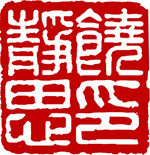
Kawashima Takashi
A memorial stele (武人ノ碑) to Kawashima Takashi stands in the precincts of Kitashimizu Fudō-in (北清水不動院), Yokoshiba (横芝), Chiba, the birthplace of Kawashima Takashi (川島堯), gō 〔Ryūun 龍雲〕, who is honoured on it as the sixteenth-generation orthodox successor (十六代正統者; sixteenth-generation legitimate successor) of Jiki Shinkage-ryū.
The text below is transcribed from the photographically reproduced inscription in the town newsletter Kōhō Yokoshiba (広報よこしば), No. 165, 1 June 1978 (Shōwa 53), p. 9 — column “Steles of Yokoshiba” (横芝の碑), installment 68, contributed by Ozawa Harumitsu (小沢春光) of the Cultural Properties Council.1
The inscription dates his birth to the fourth month of Meiji 16 (1883) and his death to the eighth month of Shōwa 33 (1958);2 the headline writes the school 真心影流 while the engraved text uses the standard 直心影流;3 and the stele’s own “seventy-three-year life” does not square with those dates.4
Title graphs on the stele face: 武人ノ碑 — Bujin no hi — “Stele of the Martial Man.”
The inscription (stele face / 表面)
郷土ノ偉人川島堯、明治十六年四月此ノ地ニ生レ、昭和三十三年八月此ノ地ニ没ス。
Kyōdo no ijin Kawashima Takashi, Meiji jūroku-nen shigatsu kono chi ni umare, Shōwa sanjūsan-nen hachigatsu kono chi ni bossu.
Kawashima Takashi, an eminent man of this district, was born at this place in the fourth month of Meiji 16 (1883) and died at this place in the eighth month of Shōwa 33 (1958).
幼少ヨリ文ニ志シ、〔海保漁村ニ比肩ス〕。
Yōshō yori bun ni kokorozashi, 〔Kaiho Gyoson ni hiken su〕.
From childhood he aspired to letters, 〔rivaling the Confucian scholar Kaiho Gyoson〕.
二十余歳ニシテ武人タラムト志シ、一刀流及ビ不二心流ノ免許ヲ得タリ。
Nijūyo-sai ni shite bujin taran to kokorozashi, Ittō-ryū oyobi Fujishin-ryū no menkyo o etari.
In his twenties he resolved to become a warrior and received the licenses of Ittō-ryū and Fujishin-ryū (不二心流).
二十九歳ノ春、台湾警察剣道師範トシテ赴任スルヤ、益々難業ヲ積ミ、弟子ヲ持ツ〔モ〕…
Nijūkyū-sai no haru, Taiwan keisatsu kendō shihan to shite funin suru ya, masumasu nangyō o tsumi, deshi o motsu 〔mo〕…
In the spring of his twenty-ninth year, on taking up the post of kendō instructor to the Taiwan police, he accumulated ever harder training and took on disciples, 〔yet〕…
自ラハ…道ニヨリ後進ヲ善導セムト、無一物ノ…
Mizukara wa … michi ni yori kōshin o zendō sen to, muichimotsu no …
…he himself sought only to guide his juniors through the Way, owning nothing…
心ハ赤誠至純、生来非凡ノ…
Kokoro wa sekisei shijun, seirai hibon no …
His heart was utterly sincere and pure, by nature extraordinary…
力量ハ連続七十人ノ門人ニ対シ、些カモ呼吸ヲ乱サズ。
Rikiryō wa renzoku shichijū-nin no monjin ni taishi, isasaka mo kokyū o midasazu.
In strength, facing seventy disciples in succession, he never once disturbed his breathing.
弓ハ〔寸弓〕ヲ引キ、今為朝ト称セラル。
Yumi wa 〔sun-yumi〕 o hiki, ima Tametomo to shōseraru.
In archery he drew the 〔sun-yumi〕 and was called a latter-day Tametomo.
既ニ台湾ニ比肩スル剣士無ク、弓亦武徳会範士トナルモ、己ヲ持スルニ最モ厳正、道ヲ学ムルニ最モ懸命ナリ。
Sude ni Taiwan ni hiken suru kenshi naku, yumi mata Butokukai hanshi to naru mo, onore o jisuru ni mottomo gensei, michi o manabu ni mottomo kenmei nari.
By then no swordsman in Taiwan could rival him, and in archery too he became a Butokukai hanshi; yet he held himself to the strictest discipline and studied the Way most earnestly.
直心影流十五代山田次郎吉ニ入門、遂ニ〔武道ノ真髄ヲ得〕、請ハレテ同流十六代ヲ継グ。
Jikishinkage-ryū jūgo-dai Yamada Jirōkichi ni nyūmon, tsui ni 〔budō no shinzui o e〕, kowarete dōryū jūroku-dai o tsugu.
He entered the school of Yamada Jirōkichi, fifteenth-generation head of Jiki Shinkage-ryū, at last 〔grasped the essence of the martial Way〕, and on being asked, succeeded as the sixteenth generation of that school.
文武両道ハ日本人ノ道也、武道ハ元ヨリ競技ニ非ズ。
Bunbu ryōdō wa Nihonjin no michi nari, budō wa moto yori kyōgi ni arazu.
The dual path of letters and arms is the Way of the Japanese; budō was never, from the first, a sport.
戦後道徳ノ混乱セル日本ノ将来ヲ思フトキ、…〔無〕刀ノ剣ヲ奮ヒ、無弓ノ弓ヲ引ク。
Sengo dōtoku no konran seru Nihon no shōrai o omou toki, … 〔mu〕tō no ken o furui, mukyū no yumi o hiku.
Thinking of the future of a Japan whose morals were thrown into confusion after the war, …he wielded the sword of no-sword and drew the bow of no-bow.
七十三年ノ生涯ハ真ノ武人也。此ノ道ノ蘊奥ニ果テハナキモノ〔ト…〕。
Shichijūsan-nen no shōgai wa shin no bujin nari. Kono michi no un’ō ni hate wa naki mono 〔to…〕.
His seventy-three-year life was that of a true martial man. 〔He held that〕 there is no end to the depths of this Way.
Reading notes for individual lines: the Fujishin-ryū reading,5 the term sun-yumi,6 and the Kaiho Gyoson comparison7 each carry caveats.
The uramen (裏面; reverse/hidden side): those who raised the stele
The article states that the reverse bears the names of “thirteen initiators, believed to be his disciples” (門弟と思われる発起人十三名) together with “ten supporters” (賛助者十名; ten supporting members), twenty-three in all. The stele was raised in the memorial month of Shōwa 35 (1960), two years after his death. Kanji are given as read from the reproduction; given-name rōmaji are tentative.8
Initiators — thirteen (発起人十三名; thirteen founding members)
| # | Name (kanji) | Rōmaji (tentative) | Note |
|---|---|---|---|
| 1 | 大西英隆 | Ōnishi Hidetaka | Later counted 17th generation; founder of the Hyakuren-kai |
| 2 | 伊藤竹松 | Itō Takematsu | |
| 3 | 川島栄太郎 | Kawashima Eitarō | Shares the Kawashima surname (kin?) |
| 4 | 斎藤要 | Saitō 〔Kaname〕 | Segmentation uncertain (whether 要 closes this name) |
| 5 | 林義郎 | Hayashi Yoshirō | |
| 6 | 井上新太郎 | Inoue Shintarō | |
| 7 | 並木靖 | Namiki Yasushi | Author of Katsu Kaishū no genten (勝海舟の原点), cited by the article |
| 8 | 大橋恒治 | Ōhashi 〔Tsuneji / Kōji〕 | |
| 9 | 石橋恒一 | Ishibashi 〔Kōichi / Tsuneichi〕 | |
| 10 | 安井正行 | Yasui 〔Masayuki〕 | |
| 11 | 作田守康 | Sakuta 〔Moriyasu〕 | Surname/reading tentative |
| 12 | 伊藤雅之 | Itō Masayuki | |
| 13 | 秋葉隆昌 | Akiba 〔Takamasa / Takaaki〕 |
Supporters — ten (賛助者十名)
| # | Name (kanji) | Rōmaji (tentative) | Note |
|---|---|---|---|
| 1 | 浅野清 | Asano Kiyoshi | |
| 2 | 伊藤馨 | Itō Kaoru | |
| 3 | 斎藤元一 | Saitō 〔Gen’ichi / Motoichi〕 | |
| 4 | 平山喜代治 | Hirayama 〔Kiyoji〕 | |
| 5 | 芹川昌栄 | Serikawa 〔Masae / Shōei〕 | |
| 6 | 伊藤孝 | Itō Takashi | |
| 7 | 秋葉堯 | Akiba Takashi | 堯 is the same character as Kawashima’s given name |
| 8 | 秋葉信夫 | Akiba Nobuo | |
| 9 | 伊藤一 | Itō Hajime | |
| 10 | 宇都木昭三 | Utsugi 〔Shōzō〕 | Surname reading Utsugi/Utsuki tentative |
A companion stele at Kashima Jingū
The article adds that within the precincts of Kashima Jingū (鹿島神宮) in Ibaraki — around the Sakashita pond (坂下の池; pond below the slope) — a stele likewise bears the name of Kawashima Takashi inscribed as “sixteenth-generation orthodox of Shinkage-ryū” (十六代正統). That a second inscription at the school’s spiritual home assigns him the sixteenth generation is independent corroboration of the designation on the Yokoshiba stone.
Other Jiki Shinkage-ryū Stelae
Some information on stelae related to competing narrative, omitting Kawashima, and its broader social context can be found at the companion article Reading the 1968 JSKR Founder’s Stele at Kashima.
End Notes
-
Provenance. This is a transcription of a 1978 newsprint reproduction of the inscription, not a reading from the stone itself. Clause divisions and several readings are provisional and should be verified against the stele in situ at Kitashimizu Fudō-in (北清水不動院), Yokoshiba, Chiba. ↩
-
Death date. The inscription gives the eighth month of Shōwa 33 (1958); the article independently states the stele was raised “two years after,” in Shōwa 35 (1960) — internally consistent. A separate kyūdō biography gives the death as August Shōwa 32 (1957). The one-year discrepancy is unresolved; the contemporaneous stele favours 1958. ↩
-
Orthography (真 vs 直). The newsletter’s headline writes the school 真心影流 (with 真); the engraved inscription quoted in the body uses the standard 直心影流 (with 直). The 真心 form appears to be the newsletter’s own variant. ↩
-
“Seventy-three years.” This does not square with a birth in 1883 and a death in 1957/58 (about 75 years, 76 by Japanese count). The figure looks like an error on the stele or in the newsprint; flagged rather than silently corrected. ↩
-
不二心流 — Fujishin-ryū. A late-Edo kenjutsu school founded c. 1818 (Bunsei 1) by Nakamura Isshinsai (中村一心斎; originally Nakamura Hachihei 中村八平), who took the name after a hundred-day austerity on Mt. Fuji and the realization “in my heart there is no divided mind” (我が心に二心無し) — 不二 punning on the mountain and on “non-dual.” Trained earlier in Asayama Ichiden-ryū and Kawara Shōshin-ryū and as head student of Suzuki Onohachirō’s Shintō Munen-ryū dōjō; it spread widely as a “village kenjutsu” (在村剣術). See 全日本剣道連盟「幕末在村剣術と現代剣道 第1回 不二心流・中村一心斎の巻」 (Kazuma Kōji). ↩
-
寸弓. Meaning uncertain — possibly a particular bow, or a measured full draw. Flagged. ↩
-
海保漁村. Taken as the Kazusa-born Confucian scholar Kaiho Gyoson (1798–1866); the comparison suits the “aspired to letters” clause and the shared Chiba/Kazusa region. A place-name reading cannot be wholly excluded. ↩
-
Name readings. Kanji are given as read from the scan. Given-name rōmaji are tentative because the carved names carry no furigana and most readings are ambiguous (e.g. 恒治 Tsuneji/Kōji; 隆昌 Takamasa/Takaaki; 喜代治 Kiyoji). Item 4 (斎藤要) depends on whether 要 closes that name; the parenthetical otherwise totals exactly thirteen with 斎藤要 read as one name. All should be checked against the stone. ↩