Haguro Shugendō
Inner Dharma started largely not because of my practice of aiki-jūjutsu but because of my interest in Shugendō, a blend of Buddhism, Taoism, and mountain asceticism practiced in Japan. Shugendō did have a strong philosophical influence on many classical Japanese martial arts, but there are very few yamabushi related martial traditions surviving in Japan — likely why this was chosen by a group trying to establish itself as interesting in the crowded NYC martial arts scene of the 1970s and 1980s.
The dōjō I trained at also maintained a set of religious practices under the mentorship of members of a Japanese family in NYC what was claimed to be a line of Shugendō practice from Japan. This family history was borrowed by the martial arts school in an attempt to create a greater sense of authenticity to its martial practice, but even the family lineage it turns out was suspect.
Having since had contact with budō practitioners in Japan who actively practice Hagurō Shugendō, it is important to stress that aiki-jūjutsu schools in NYC in the 1980s had no formal relationship to Japanese Shugendō — this is borne out by the mistakes made in the verbal teachings at our dojo, and in a hand-written Japanese letter provided to senior students in 2004 as well as our final promotion diploma, titled menkyo-kaiden.
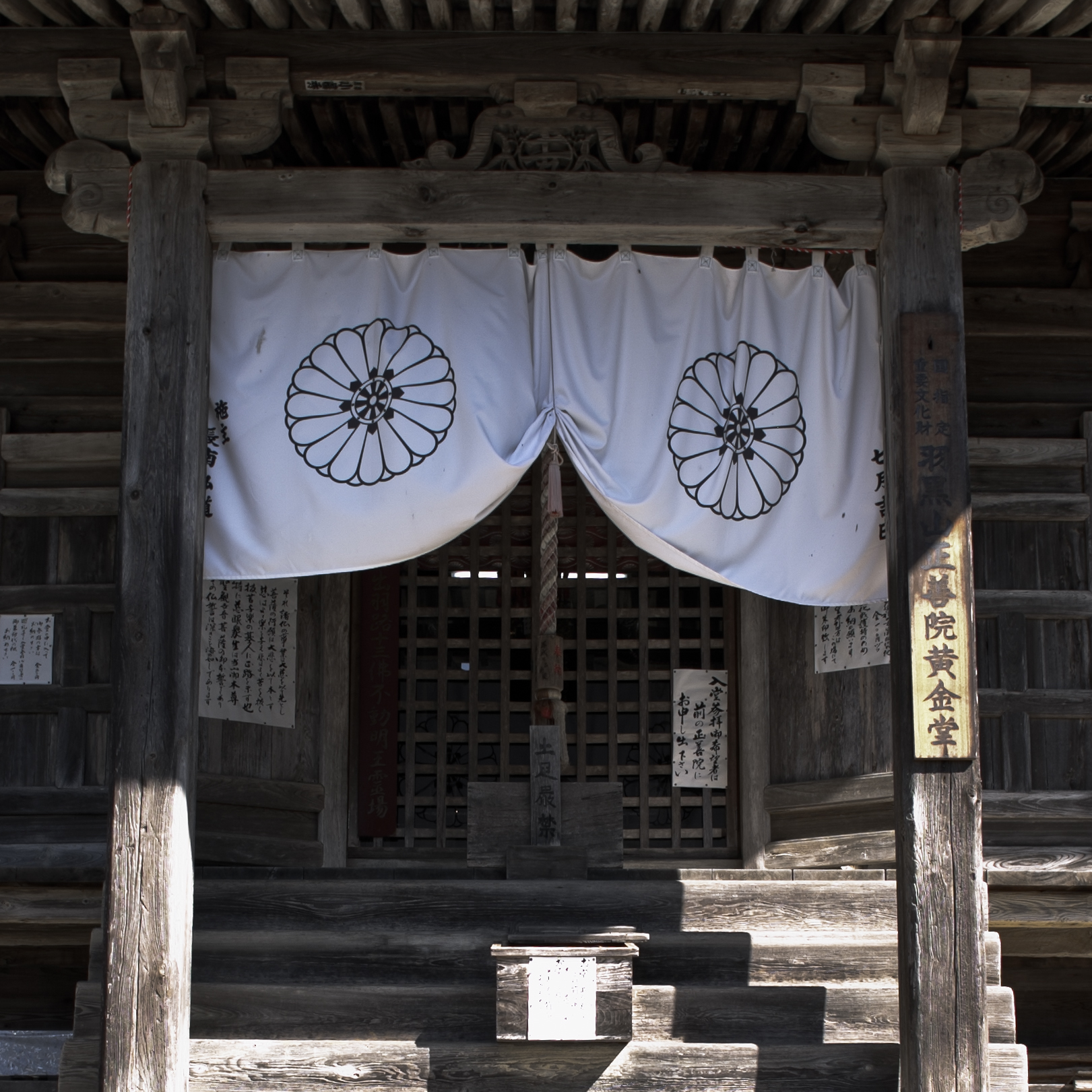
Haguro Shugen Honshū Shrine in Haguro-machi
The Shugendō lineage was claimed to be related to Haguro Shugen Honshū in the
19th century, but that organization was founded in 1947,
as the postwar reconstitution of the Haguro
Shugendō tradition, established after WWII at Arasawa-ji/Shōzenin
under Japan's postwar constitutional guarantee of religious
freedom.
This is fifteen years after the death of the historical figure the school claimed
as its founder or reviver (named Nishiyama Shiro or Nishiyama Tashiro at times) was
said to have died.
Additionally, no Nishiyama is found in available Shugendō records — the
gūji (head priest) installed at Dewa when Buddhism and Shintō were split
and Shugendō banned, was a person named Nishikawa.
Reference was also repeatedly made to Shōbō as being the religion's
founder in the year 874. This is the wrong founding date and figure for Haguro Shugendō.
Shōbō is instead associated to Shugendō near Kyōto (
When I visited Haguro Shugen Honshū in 2004, the attendant there was quite friendly, and patient with my halting Japanese, but unaware of anyone in the United States had been practicing religion related to their activity. Later, members of expatriate budō community who did practice Haguro Shugendō formally in Japan were thankful I had publicly affirmed our NYC group was not associated to Mt. Haguro — they had never heard of our teacher and were quite taken aback by his claims.
As for Shugendō? There are many more sources available in English now than in 2005, when I was reading a photocopy of H. Byron Earhart's early work, and the writings of Carmen Blacker. But, there are also fringe groups of various kinds — sacred mountains remain beautiful but at times can be perilous places to inhabit.
I realized I would have to find my own Shugendō, and much of my writing on Inner Dharma since that time has been concerned with exactly that.