While researching my first book, I became intrigued by the late Edo period Kōbusho, the martial academy of the Tokugawa that several prominent Jikishinkage-ryū swordsmen taught at. I began researching the institution, its figures both teacher and students, and started working my way through the transition from the Edo to Meiji period and beyond. This wound up growing to become a substantial part of this site and I have now made the content available as a companion volume to The Truth of the Calm Spirit.
I examine details of many late Edo practitioners of Jikishinkage-ryū, the bakumatsu Kōbusho many of them taught at, and important traditions that had lasting impact as Japan modernized, including important 19th and 20th century Japanese martial figures. The Kōbusho itself ran roughly a decade. Preparations began in 1854 (Ansei 1) under the rōjū Abe Masahiro after Perry; it was formally opened as the Kōbusho in the 4th month of 1856 (Ansei 3) at Tsukiji Teppōzu, with master-instructors and kyōju-kata appointed in swordsmanship, spearmanship and gunnery, and with archery, jūjutsu and swimming also being taught. Kōbusho trainees were selected from skilled martial artists drawn from the hatamoto, gokenin, and the domains.
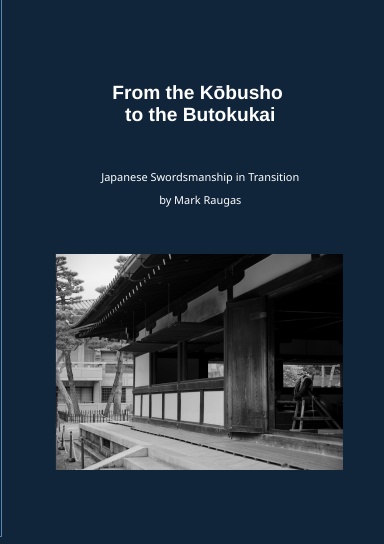
From the Kōbusho to the Butokukai: Swordsmanship in Transition (opens in a new tab), Inner Dharma, 2026. 360 pages. The late Edo period Kōbusho, the martial academy of the Tokugawa, its swordsmen and their styles, and the institutions that followed it into the modern era.1
The work covers over 20 traditions and 45 practitioners from this time period.
Contents Includes: Overview of the Kōbusho Organization, Major Teachers and its roster, the 1839 Kenpō Ryakki of Kubota Sugane, Bakumatsu Units (Yūgekitai, Seieitai, Shōgitai), Gekken-kōgyō, Battōtai, Keihōkan, Keishichō, Dai Nippon Butokukai, Budō Senmon Gakkō, Nativist Shintō from Kokugaku to the Ketsumeidan, and Kobudō Preservation.
Samurai and later swordsmen discussed include:
Amano Hachirō (opens in a new tab), Amano Shōshō (opens in a new tab), Awa Kenzō, Chiba Shūsaku, Chūjō Kinnosuke, Fujita Taiichirō, Fukuda Hachinosuke, Hakomori Yosaburō Suokuni, Henmi Sōsuke, Honme Yarijirō (opens in a new tab), Iba Sōtarō, Imahori, Inoue Hachirō, Kajikawa Yoshimasa, Kawaji Toshiyoshi (opens in a new tab), Kobayashi Sadayuki, Kondō Yanosuke, Kunii Zen’ya, Matsudaira Chikaranosuke, Matsuoka Yorozu, Matsushita Seiichirō, Matsuzaki Namishirō, Mitsuhashi Kan’ichirō, Mitsuhashi Torazō, Mochida Moriji, Monna Tadashi, Naitō Takaharu, Nakayama Hakudō, Nakayama Tatsusaburō (opens in a new tab), Odani Seiichirō (opens in a new tab), Okumura Sakonta (opens in a new tab), Saimura Gorō, Sakakibara Kenkichi (opens in a new tab), Shibata Emori, Shimada Toranosuke (opens in a new tab), Shimoe Hidetarō, Shingai Tadaatsu, Takahashi Deishū, Takahashi Hatsuji, Takano Sasaburō, Takayama Minesaburō (opens in a new tab), Toda Hachirōzaemon, Tokunō Sekishirō (opens in a new tab), Ueda Umanosuke, Umezaki Yaichirō, Yamada Jirokichi (opens in a new tab), and Yamaoka Tesshū.
Major schools related to the figures above are treated alongside them, each carrying its own chapter or section:
Chūya-ha Ittō-ryū, Hokushin Ittō-ryū, Hōzōin-ryū, Kashima-shinden Jikishinkage-ryū, Jitokuin-ryū, Kashima Shin-ryū, Katōda Shinkage-ryū, Kitō-ryū, Kyōshin Meichi-ryū, Musashi-ryū, Ryūgō-ryū, Seigō-ryū, Shingyōtō-ryū, Shintō Munen-ryū, Tamiya-ryū, Tatsumi-ryū, Tenjin Shin’yō-ryū, Totsuka-ha Yōshin-ryū, and Tsuda Ichiden-ryū.
End Notes
-
These volumes attempt to be precise but are not academic histories. Instead they are close readings of historical sources. In doing so, we relate the statements made about many older martial traditions by their witnesses and practitioners, but each surviving faction or group will have their own in-tradition orthodoxy ↩